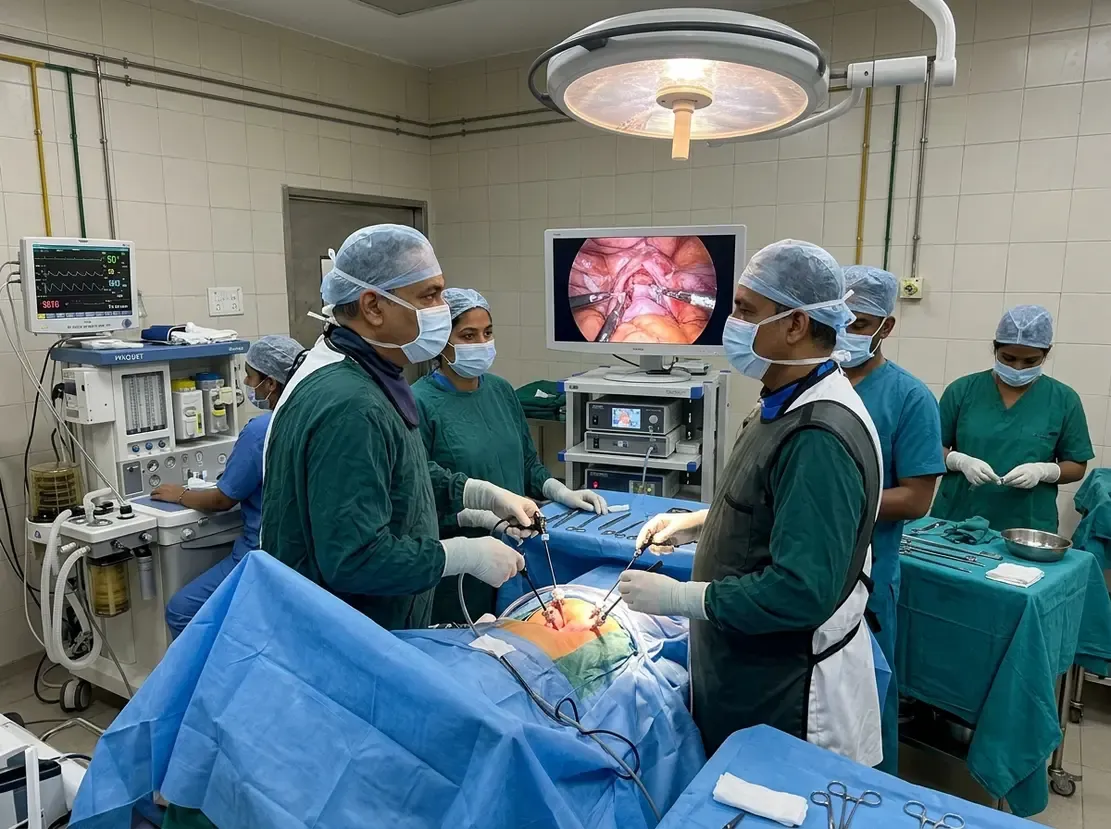
Is Outpatient Hysterectomy Safe? New Evidence Revealed

Hysterectomy remains the second most frequent major surgical intervention performed among women globally. In addition, minimally invasive approaches allow clinicians to transition these procedures to day-surgery settings. A major population-based study evaluated the real-world uptake and safety of outpatient hysterectomy over a fourteen-year period. Consequently, these findings offer valuable benchmarks for surgical departments seeking to expand same-day discharge protocols safely.
Rising Trends in Outpatient Hysterectomy
Surgical teams increasingly perform gynecological operations without overnight hospital admission. Specifically, researchers examined 228,934 elective hysterectomies performed between 2010 and 2024. The proportion of cases completed as outpatient surgery rose dramatically from low baseline levels to 38 percent by 2025. Furthermore, this transition gained momentum as healthcare centers adapted to post-pandemic bed constraints. Therefore, ambulatory hysterectomy now represents a routine care standard rather than an experimental pathway.
However, successful day-case completion requires careful procedural intent. Among 18,281 patients scheduled for same-day discharge since 2021, surgeons successfully completed 86 percent as true outpatients. Conversely, hospitals admitted only 14 percent of scheduled outpatients on the day of surgery. This observation indicates strong predictability when clinicians establish robust outpatient protocols.
Clinical Factors Driving Day-Case Success
Patient selection plays a pivotal role in achieving successful ambulatory outcomes. Notably, outpatients in the cohort were generally younger and presented with fewer baseline systemic comorbidities. Moreover, operating room scheduling influenced outcomes significantly. Patients who underwent surgery earlier in the morning achieved higher rates of same-day discharge. In contrast, late-day start times increased unplanned overnight admissions due to lingering anesthesia effects.
Additionally, surgical technique strongly dictated the ambulatory setting. Laparoscopic-assisted vaginal hysterectomy accounted for 67 percent of outpatient cases, compared to only 27 percent of inpatient procedures. Similarly, total laparoscopic hysterectomy represented 26 percent of outpatients versus 15 percent of inpatients. Surgical experience also contributed meaningfully to procedural speed and reduced operative complications.
Patient Safety and Economic Implications
Many clinicians worry about potential complications after discharging surgical patients on the same day. However, propensity-weighted analyses confirmed that outpatient pathways maintain excellent clinical safety profiles. Outpatients demonstrated equivalent 90-day readmission rates compared to their admitted counterparts. Furthermore, patients experienced fewer 6-month complications following minimally invasive ambulatory care. Therefore, same-day discharge does not compromise post-surgical recovery or patient safety.
In addition, the outpatient approach yielded substantial economic advantages for the healthcare delivery system. Day-case surgery reduced 30-day perioperative health system costs significantly by minimizing ward overhead and length of stay. Consequently, hospitals conserved inpatient bed capacity for acute medical emergencies. As health systems worldwide face resource constraints, adopting structured same-day protocols delivers sustainable financial and clinical value through advanced clinical training.
Frequently Asked Questions
Q1: What percentage of planned outpatient hysterectomies achieve same-day discharge?
Recent population data show that 86 percent of patients scheduled for outpatient hysterectomy achieve successful same-day discharge without requiring overnight admission.
Q2: Does outpatient hysterectomy increase 90-day readmission rates?
No, propensity-weighted analyses demonstrate that carefully selected outpatients experience readmission and complication rates comparable to, or lower than, admitted inpatients.
Q3: Which surgical factors best predict same-day discharge success?
Minimally invasive laparoscopic techniques, earlier operating start times, shorter surgical duration, and greater surgeon experience strongly predict successful day-case completion.
References
- Habbous S et al. Uptake and outcomes associated with outpatient hysterectomy in Ontario, Canada. Am J Obstet Gynecol. 2026 Sep 18. doi: undefined. PMID: 42759743.
- Zakaria MA, Levy BS. Outpatient vaginal hysterectomy: optimizing perioperative management for same-day discharge. Obstet Gynecol. 2012 Dec;120(6):1355-61. doi: 10.1097/aog.0b013e3182732ece. PMID: 23168760.
- Dedden SJ, Geomini PMAJ, Huirne JAF, Bongers MY. Minimally invasive outpatient hysterectomy for a benign indication: A systematic review. Eur J Obstet Gynecol Reprod Biol. 2024 May;296:255-263. doi: 10.1016/j.ejogrb.2024.03.018.