
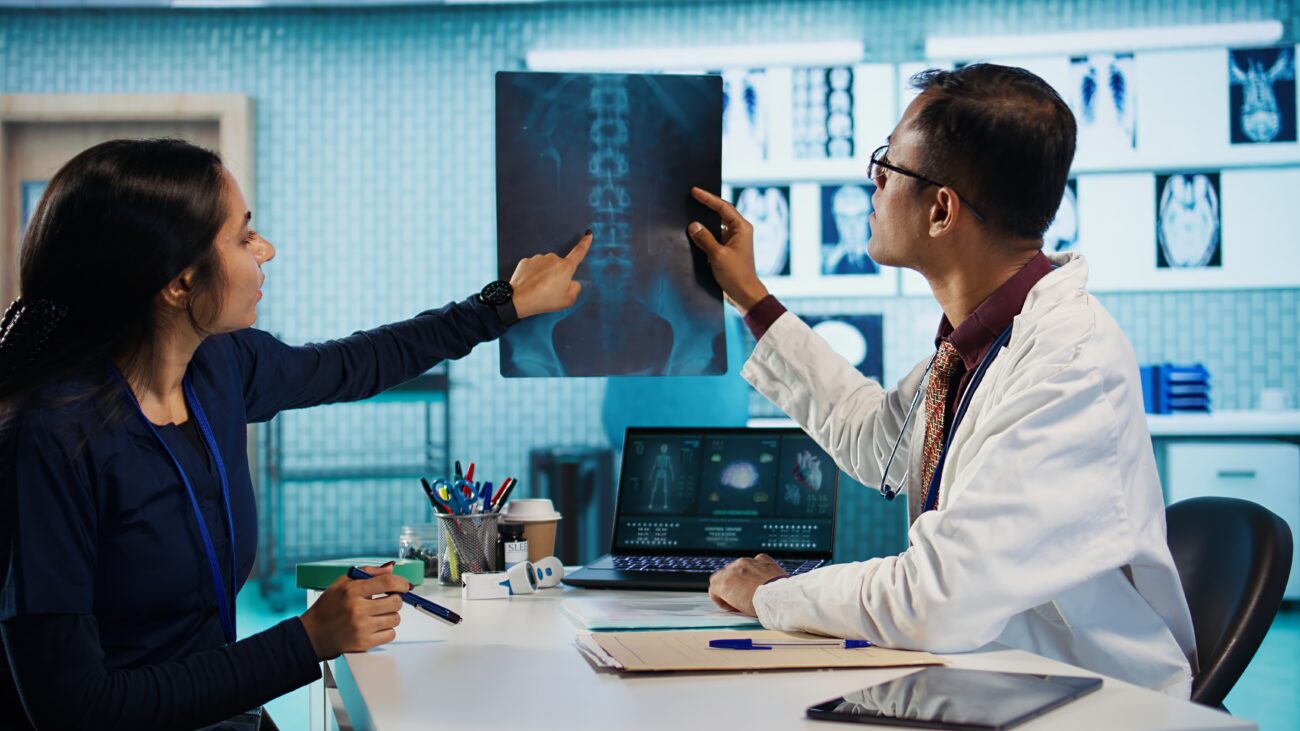
Radiology is rapidly emerging as one of the most sought-after and dynamic medical specialities, offering a unique blend of clinical relevance and technological innovation. From guiding early diagnoses to supporting complex treatment decisions, radiologists today are integral to every stage of patient care. For MBBS graduates in India contemplating their next steps, radiology presents a compelling career path, but the question of when and how to specialise remains a critical one.
Should you wait for a traditional MD or DNB seat, or explore new-age learning pathways that offer flexibility and global exposure? How can one build radiology skills without pausing clinical practice?
This article explores these questions in depth. We examine the challenges of conventional postgraduate training, the rise of e-learning and virtual simulation, and how hybrid academic models are enabling young doctors to upskill confidently and practically. Whether you’re early in your MBBS journey or weighing your postgraduate options, understanding the evolving landscape of radiology education can help you make an informed and future-ready decision.
The Conventional Route: Value and Limitations
For decades, radiology postgraduate courses in India, such as MD Radiodiagnosis and DNB Radiology, have served as the cornerstone of formal specialisation. These programmes provide comprehensive hospital-based training, in-depth exposure to imaging modalities, and a strong clinical foundation. They continue to be the most recognised and respected routes for radiology career advancement.
However, as the demand for radiology expertise grows and learning preferences evolve, many MBBS graduates encounter practical barriers when navigating these traditional pathways:
- Highly competitive entry: Seats in premier institutions are limited, making access extremely selective.
- Geographical relocation: Admission may require doctors to move, potentially disrupting personal commitments or ongoing clinical work.
- Fixed academic schedules: Timetables are typically rigid, offering limited scope for individualised pacing or flexibility.
- Variable exposure: Depending on the institute, access to subspecialties or advanced imaging technologies may vary.
While these programmes remain foundational and irreplaceable in shaping competent radiologists, there is growing recognition of the need for complementary learning models. Scalable, structured online options can help doctors build diagnostic confidence early, bridge interim learning gaps, and stay aligned with global best practices—without compromising the value of traditional postgraduate training.
Why Timing Matters in Radiology Career Planning
The best time to pursue radiology specialisation after MBBS may differ for each individual, but early exposure—ideally during internship or soon after graduation—offers clear strategic benefits:
- Informed decision-making: Early engagement with imaging helps doctors assess their affinity for radiology and choose between pathways such as MD/DNB, diploma programmes, or international fellowships.
- Stronger diagnostic foundations: Doctors who begin interpreting basic imaging early often develop sharper clinical judgement and adapt more readily to advanced radiological reasoning.
- Enhanced competitiveness: Early upskilling supports stronger performance in entrance exams, interviews, and clinical assessments for both Indian and international radiology postgraduate courses.
For those exploring radiology diploma courses for doctors or international pathways, early training in core imaging principles equips them with the confidence and clarity needed to navigate more advanced specialisation later.
The Rise of E-Learning: Flexible, Practical, Globally Relevant
E-learning has significantly reshaped radiology education, offering a flexible and scalable alternative to traditional postgraduate pathways. For MBBS doctors balancing clinical work with academic growth, online radiology courses provide access without compromise.
- Self-paced learning: Doctors can build expertise on their own schedule, without stepping away from hospital duties or relocating.
- Global mentorship: Courses led by UK-accredited faculty expose learners to a wide range of imaging protocols and case diversity.
- Targeted feedback: Through virtual assessments, diagnostic case reviews, and structured quizzes, doctors receive personalised guidance to strengthen clinical interpretation.
OC Academy offers curriculum-based training aligned with international benchmarks, ideal for those pursuing global certifications, radiology fellowships with FRCR training, or transitioning into subspecialty diagnostic roles through structured certification courses.
From Theory to Practice: The Power of Virtual Simulations
Radiology education extends far beyond textbook concepts—it demands the ability to interpret clinical images accurately and consistently. Virtual simulations and diagnostic practice tools now play a vital role in building this competence. Advanced e-learning platforms typically include:
- DICOM viewers that simulate real-world clinical workstations
- Case-based learning modules that reflect daily diagnostic challenges
- Structured reporting practice to develop clarity and diagnostic consistency
One such example is the Certification in radiology anatomy course, which strengthens a doctor’s understanding of cross-sectional anatomy across all major modalities. By integrating radiological images with anatomical structures, the course helps doctors develop interpretation accuracy, a critical foundation for advanced diagnostic training and subspecialty readiness.
This type of simulation-based learning not only enhances clinical skills but also makes high-quality radiology education accessible, regardless of geography or hospital setting.
Hybrid Learning Models: Bridging the Theory–Practice Divide
While online learning provides accessibility and academic depth, radiology remains fundamentally rooted in the clinical context. Hybrid learning models—which combine structured digital modules with clinical observerships or hospital-based mentorship—offer an effective bridge between theory and real-world application.
OC Academy’s hybrid approach integrates virtual coursework with optional hands-on exposure, enabling learners to:
- Apply knowledge in clinical settings under the supervision of experienced consultants
- Balance ongoing responsibilities with flexible academic progression
- Build stepwise expertise, from foundational interpretation to subspecialty focus areas
This model is particularly well-suited for early-career doctors, practising general physicians, and professionals from other clinical specialities seeking cross-training in diagnostic imaging.
Online Radiology Specialisation: Who Is It For?
Modern e-learning and hybrid models are reshaping how doctors approach radiology specialisation, offering flexibility without compromising academic rigour. These formats are particularly valuable for:
- MBBS graduates between exams who want to explore radiology with structured exposure before committing to long-term training
- Practising physicians seeking to enhance clinical decision-making by incorporating imaging interpretation into their routine practice
- FRCR and international exam aspirants who require targeted preparation through curriculum-aligned, globally benchmarked content
- Clinicians evaluating subspecialties like cardiac imaging or foetal assessment before pursuing formal fellowships or diplomas
Whether you’re aiming for global credentials, refining clinical acumen, or exploring new radiology domains, these programmes offer a structured, credible pathway forward.
Conclusion
For MBBS graduates in India, radiology offers an exciting opportunity to blend clinical acumen with technological expertise. As the field evolves with AI, advanced imaging, and global diagnostic standards, timely and structured learning becomes a vital differentiator.
Pursuing an MD or DNB in radiology remains a gold standard in formal medical education, laying a strong foundation for long-term clinical excellence. At the same time, courses for radiology, delivered through flexible, simulation-based, and hybrid formats, enable doctors to start building diagnostic skills early, supplement ongoing training, or prepare for international pathways like the FRCR.
Whether you’re aiming to deepen clinical capabilities, explore subspecialties, or future-proof your practice, structured academic upskilling offers a credible and practical path forward.
FAQs
1. Is radiology a good specialisation after MBBS?
Yes, radiology is a highly respected and future-focused medical speciality that offers excellent career growth. It plays a vital role in clinical diagnosis, treatment planning, and patient monitoring across multiple disciplines. For MBBS graduates seeking a dynamic and intellectually stimulating field, radiology is a smart and rewarding choice.
2. When is the best time to start preparing for a radiology career?
The ideal time to start preparing is during your internship or soon after completing MBBS. Early exposure to imaging fundamentals helps clarify your interest, strengthens clinical reasoning, and improves your chances of success in MD/DNB or diploma programmes. It also builds a solid foundation for advanced radiology training later.
3. Can I pursue radiology training without leaving my current clinical practice?
Yes, many modern radiology courses are designed to fit around busy clinical schedules. Online and hybrid learning formats allow doctors to build diagnostic skills without relocating or taking a career break. These flexible models are especially valuable for early-career doctors and working professionals.
4. Do I need an MD or DNB to succeed in radiology?
MD and DNB programmes are essential for formal radiology specialisation and remain the most recognised pathways in clinical practice. At the same time, online certification courses offer a way to enhance skills, deepen subspecialty knowledge, and prepare for global exams like the FRCR. These upskilling options are designed to support, not substitute, formal medical education.
5. Can I start learning radiology before securing a postgraduate seat?
Yes. Early exposure to radiology during or soon after MBBS helps strengthen clinical reasoning and diagnostic confidence. Foundational learning through online modules, case-based simulations, or anatomy-focused courses prepares you to make informed career decisions and improves your performance in both national and international entrance exams.