
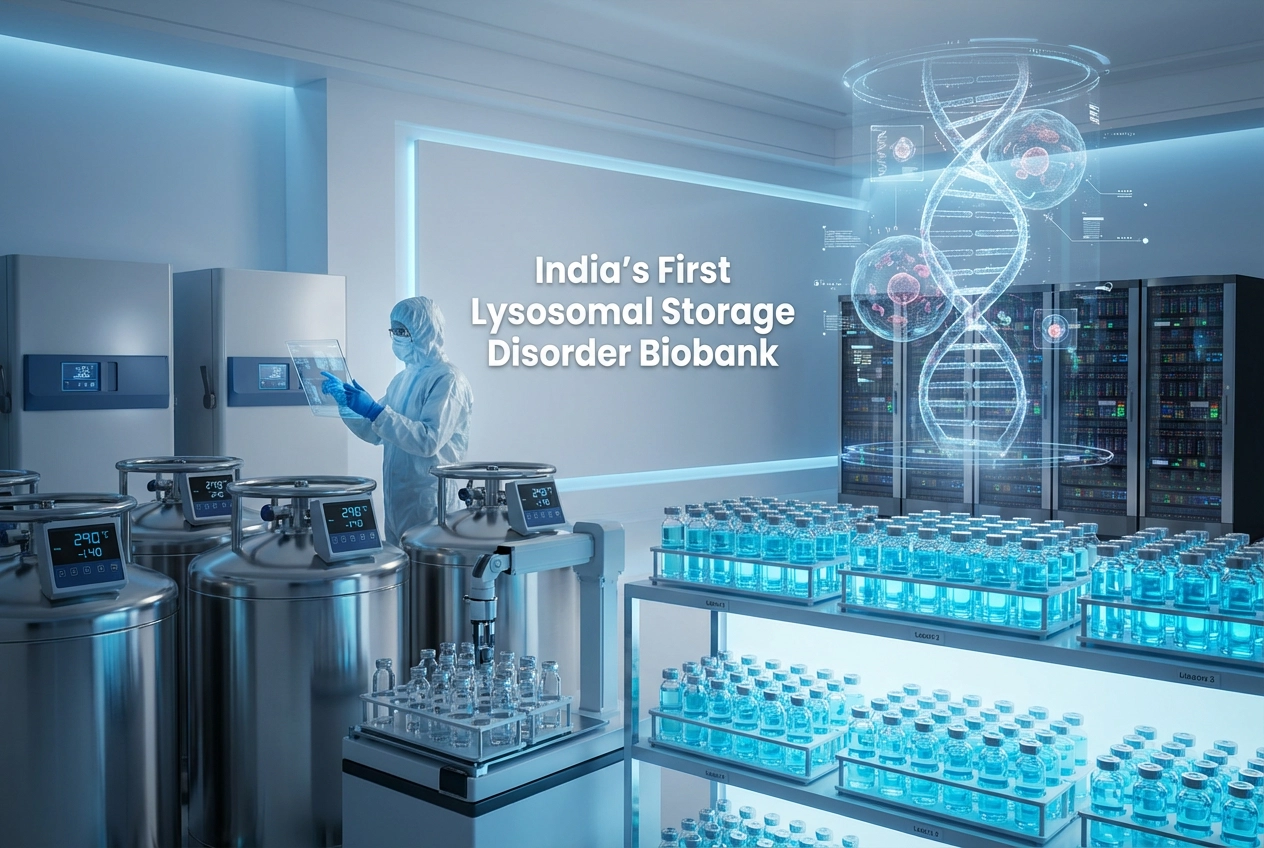
India Launches First National Rare Disease Biobank in Gujarat
The FRIGE Institute of Human Genetics has established India’s first national Lysosomal Storage Disorder biobank. This groundbreaking facility represents a major advancement in managing rare genetic conditions across the country. Consequently, researchers now have access to a robust repository of clinical data and biological samples. Furthermore, this initiative aims to provide much-needed hope for families dealing with expensive treatment costs.
Features of the Lysosomal Storage Disorder Biobank
Located in Ahmedabad, the institute spent over two decades developing this extensive resource. Currently, it houses data from more than 530 patients. This repository includes plasma, serum, and whole blood genomic DNA samples. Because the biobank integrates clinical profiles with genetic mutations, clinicians can achieve faster diagnoses. Moreover, the facility supports long-term healthcare outcomes for patients suffering from these rare disorders.
Advancing Affordable Diagnosis Through Innovation
Annual treatment for these conditions often exceeds Rs 1 crore. Therefore, the team focuses on creating indigenous and cost-effective medical solutions. With funding from the Gujarat State Biotechnology Mission (GSBTM), researchers developed a molecular probe-based sequencing asset. As a result, the institute can now provide comprehensive diagnosis for 19 different lysosomal storage disorders. These advancements significantly reduce the financial burden on affected families. Developments in genomic medicine and health are critical to expanding such diagnostic capabilities.
Future of Genetic Research in India
India currently aims for greater self-reliance in advanced medical research. This biobank strengthens Gujarat’s position as a national hub for genetic innovation. Additionally, the project bridges the gap between research and practical patient care. By identifying disease-causing mutations quickly, scientists can accelerate the development of gene therapy. This comprehensive approach ensures that India remains at the forefront of rare disease management. Professionals interested in advancing their knowledge in complex research areas can explore an MSc in Genomic Medicine and Healthcare.
Frequently Asked Questions
Q1: How does the biobank assist in clinical diagnosis?
The biobank integrates DNA data with detailed clinical profiles, allowing researchers to identify specific disease-causing mutations faster and develop more affordable diagnostic kits.
Q2: What types of biological samples are stored at the facility?
The repository holds various biological samples, including serum, plasma, whole blood genomic DNA, and urine precipitates from over 530 patients.
References
- Gujarat-Based Biobank powers India’s fight against rare diseases – ETHealthworld
- What to know about India’s pioneering national biobank for rare Lysosomal Storage Disorders – The Indian Express
- Development and application of single molecule molecular inversion probe based novel integrated genetic screening for LSDs – PubMed
Disclaimer: This article was automatically generated from publicly available sources and is provided for informational and educational purposes only. OC Academy does not exercise editorial control or claim authorship over this content. It is not a substitute for professional medical advice, diagnosis, or treatment. Always consult a qualified healthcare provider and refer to current local and national clinical guidelines.