Does Maternal Egg and Peanut Intake Stop Baby Allergies?
Does Maternal Egg and Peanut Intake Stop Baby Allergies?
Food allergies represent a growing public health challenge worldwide. Consequently, clinicians have sought reliable strategies for infant allergy prevention during early development. Therefore, investigators designed the landmark PrEggNut study to address this critical clinical question. Specifically, they evaluated whether high maternal allergen intake shields children from developing allergies.
The PrEggNut Study Design and Methods
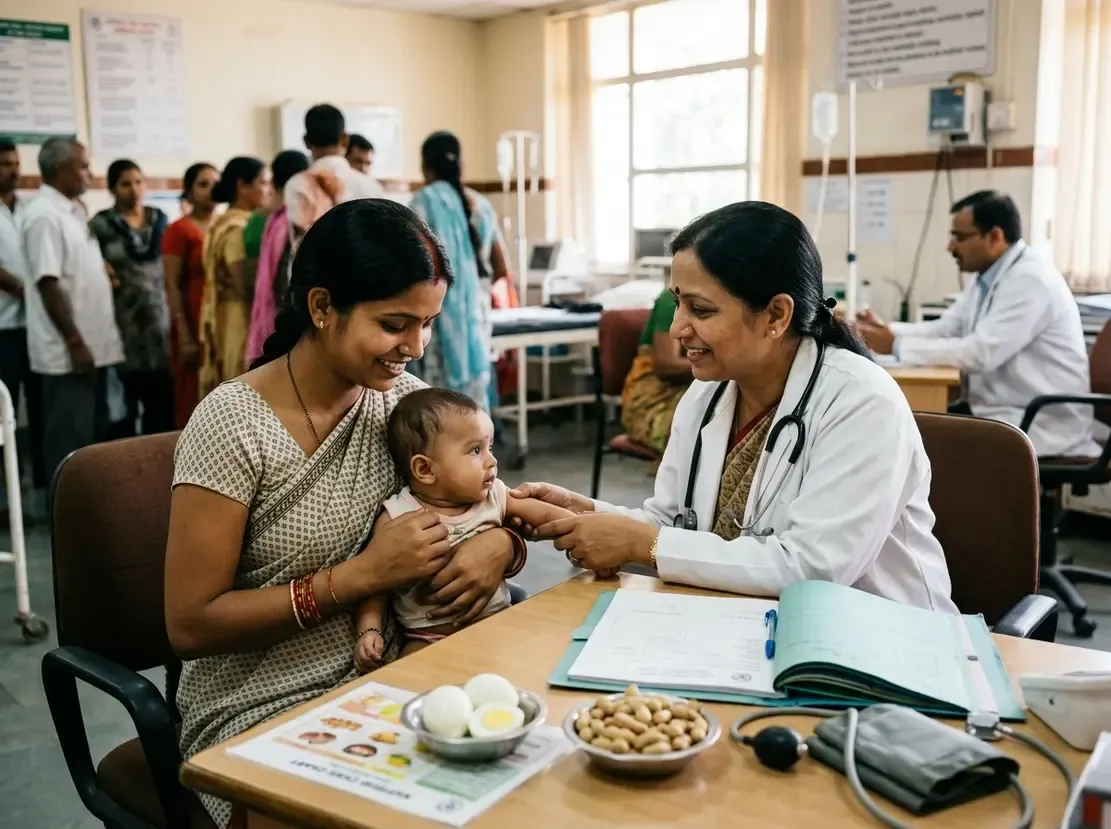
Earlier studies demonstrated that direct oral exposure protects infants against food allergies. However, doctors lacked robust randomized data regarding maternal diet interventions. The PrEggNut trial enrolled 2,137 pregnant women across multiple Australian medical centres. Importantly, all participating infants had at least two biological family members with documented atopic disease. Researchers randomly assigned the mothers into two distinct dietary arms before 23 weeks of gestation. The high-intake group consumed at least six eggs and 60 peanuts each week. In contrast, the standard-diet group consumed no more than three eggs and 30 peanuts weekly. Furthermore, participants maintained their assigned diets through four months of lactation.
PrEggNut Trial and Infant Allergy Prevention
The primary outcome assessed IgE-mediated egg or peanut allergy at one year of age. Ultimately, 1,070 mothers joined the high-intake cohort and 1,067 joined the control arm. Moreover, the trial demonstrated striking equivalence between both groups. In the high-intake arm, 7.8% of infants developed an egg or peanut allergy. Similarly, 8.4% of infants in the standard-diet arm developed an allergy. Thus, the observed difference did not reach statistical significance. In addition, the relative risk was 0.93 with a confidence interval crossing unity. Both groups showed comparable safety profiles and adverse event rates throughout the study period.
Clinical Implications for Practice
These rigorous findings provide clear guidance for obstetricians and pediatricians. In particular, maternal allergen loading does not confer extra immune protection to high-risk newborns. Therefore, clinicians should not prescribe burdensome, high-dose egg or peanut diets to pregnant women. However, mothers should not avoid these nutrient-dense foods either. Instead, normal, balanced maternal nutrition remains the most appropriate recommendation. In addition, pediatric guidance should still emphasize timely direct allergen introduction when the infant begins complementary feeding, concepts often expanded upon in a Certification Course In Healthy Child. For example, introducing cooked egg and peanut butter around six months builds proven immune tolerance.
Frequently Asked Questions
Q1: Does eating more eggs and peanuts during pregnancy protect my baby from allergies?
No. The PrEggNut clinical trial proved that consuming extra eggs and peanuts during pregnancy and breastfeeding does not lower the risk of infant food allergies compared to standard intake.
Q2: Should pregnant women avoid allergenic foods to prevent atopy in their children?
No, mothers should not avoid allergenic foods unless they have a personal allergy. Restricting common allergens provides no preventive benefit and may compromise maternal nutrition.
Q3: What is the most effective approach for infant allergy prevention?
Current guidelines recommend introducing common allergenic foods, such as smooth peanut butter and well-cooked egg, directly into the infant's diet around six months of age. Practitioners seeking to deepen their expertise in maternal and infant care can explore various Paediatrics Speciality Courses.
References
- Palmer DJ et al. Trial of a Maternal Diet Rich in Eggs and Peanuts to Reduce Infant Allergy. N Engl J Med. 2026 Sep 17. doi: 10.1056/NEJMoa2605659. PMID: 42748429.
- Jenmalm MC. Maternal allergen consumption and infant food allergy -- reassurance, not prescription. N Engl J Med. 2026 Sep 17. doi: 10.1056/NEJMe2610158.
- Palmer DJ, Sullivan TR, Campbell DE, et al. PrEggNut Study: protocol for a randomised controlled trial investigating the effect of a maternal diet rich in eggs and peanuts from <23 weeks' gestation during pregnancy to 4 months' lactation on infant IgE-mediated egg and peanut allergy outcomes. BMJ Open. 2022;12(6):e056925.