Measles Outbreak Response: Zero Cases in Balaghat
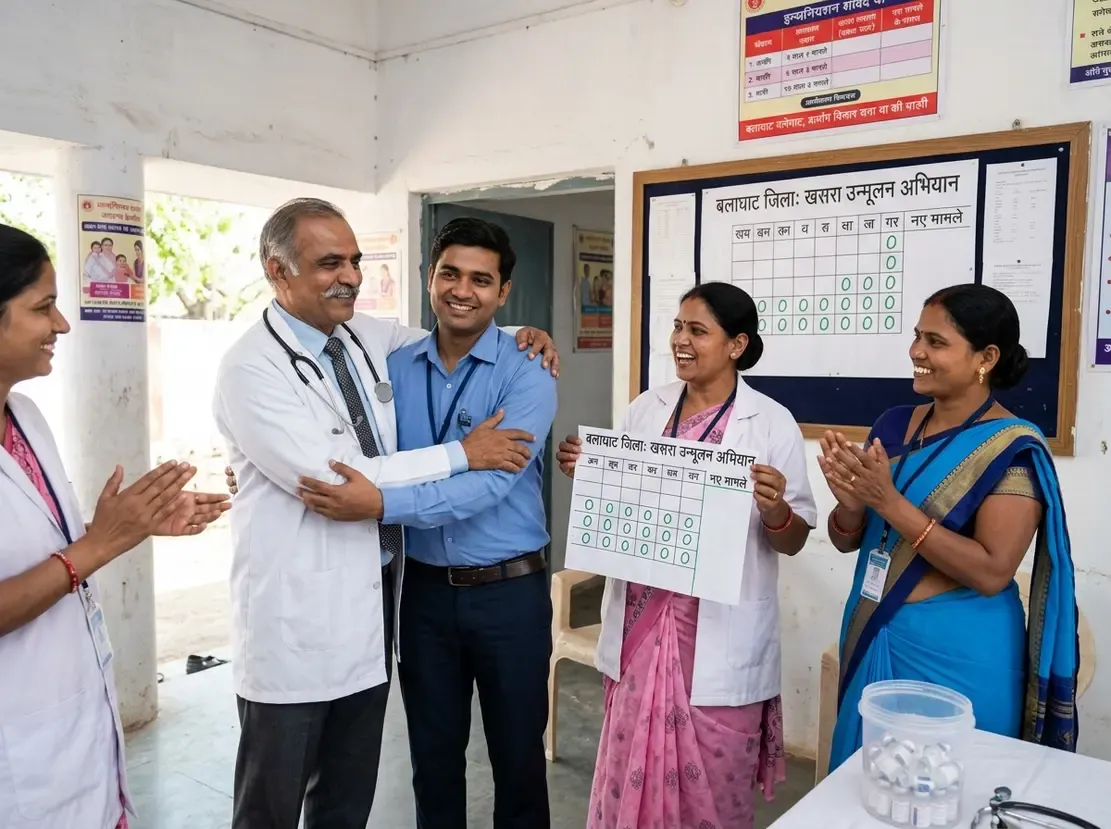
A targeted measles outbreak response in Madhya Pradesh's Balaghat district has achieved a major public health milestone. Health authorities reported no new confirmed cases of measles over the past seven days. This clinical stabilisation follows aggressive field surveillance, emergency immunisation drives, and dedicated pediatric clinical management across affected tribal habitations.
The outbreak initially surfaced in the Birsa block during early July 2026. Multiple tribal settlements reported clusters of acute fever, maculopapular rash, and associated child fatalities. Consequently, the Union Health Ministry and state authorities launched an extensive cross-departmental containment strategy to arrest transmission in vulnerable communities.
Multidisciplinary Measles Outbreak Response in Tribal Belts
To investigate the unusual clinical clustering, the Centre deployed a National Joint Outbreak Response Team (NJORT) on August 12. This multidisciplinary team unified experts from public health surveillance, the Immunisation Division, and the National Centre for Vector Borne Diseases Control (NCVBDC). Furthermore, independent investigative teams from ICMR-Jabalpur and Netaji Subhas Chandra Bose Medical College joined the local containment operation.
Field surveillance quickly expanded from three pilot villages to approximately 50 hamlets. Additionally, six mobile medical units reached remote habitations of Particularly Vulnerable Tribal Groups (PVTGs) across Birsa and Baihar blocks. Doctors conducted house-to-house fever screenings, rapid diagnostic evaluations, and emergency referrals to halt community-level spread.
Clinical Complexities and Syndromic Overlap
Retrospective clinical reviews and verbal autopsies highlighted considerable syndromic overlap among affected children. Health officials stressed that fatal cases could not stem from a single viral pathogen alone. Instead, severe disease resulted from complex interactions between measles, falciparum malaria, respiratory distress, and advanced dehydration.
Underlying host vulnerability played an equally critical role. Systematic screening identified 7,711 children suffering from severe acute malnutrition (SAM). Among these pediatric patients, 518 required immediate admission to Nutrition Rehabilitation Centres (NRCs). Clinicians also evaluated and managed 13,406 cases of pediatric diarrhoea and 274 presentations of severe pneumonia.
Integrated Containment and Immunisation Strategy
Field teams implemented an outbreak-response immunisation drive alongside symptomatic care. Healthcare workers administered an additional dose of the Measles-Rubella (MR) vaccine to 14,637 children aged 1 to 10 years, regardless of prior vaccination history. Concurrently, under the Dastak campaign, field staff screened 1.58 lakh children and administered therapeutic Vitamin A supplementation.
Environmental sanitation and vector control ran in parallel. Workers purified over 600 drinking-water sources and completed indoor residual spraying across 4,338 households. Moreover, local authorities expanded pediatric inpatient infrastructure at the Songudda Primary Health Centre and erected a temporary field hospital at Kundekasa to ensure uninterrupted clinical access.
Frequently Asked Questions
Q1: Why was supplemental MR vaccination administered regardless of prior immunisation?
During an active outbreak, an outbreak-response immunisation (ORI) campaign provides an immediate, non-selective booster dose. This approach closes critical immunity gaps, overcomes primary vaccine failure, and rapidly establishes high herd immunity to disrupt transmission chains in closed communities.
Q2: How did malnutrition and co-infections exacerbate disease severity in Balaghat?
Measles induces transient immune suppression, which markedly elevates the risk of severe bacterial pneumonia and diarrhoeal dehydration. When combined with severe acute malnutrition and concurrent malaria parasitaemia, pediatric patients face rapid clinical deterioration, multi-organ compromise, and heightened mortality.
Q3: What clinical protocols were deployed for remote tribal patient management?
The health department deployed mobile medical units for point-of-care screening, Vitamin A dosing, rapid malaria diagnostics, and prompt referral. Additionally, decentralised triage centres and reinforced primary health units provided isolated inpatient care and nutritional stabilisation.
References
- No new measles cases in MP's Balaghat for 7 days amid intensified response - ETHealthworld
- Centre Steps Up Outbreak Response In MP's Tribal Belt, Deploys National Team In Balaghat - ETV Bharat
- Measles and rubella in India - World Health Organization (WHO)