Hospitals Face Stricter Medical Device Reporting Rules
The Indian Pharmacopoeia Commission (IPC) recently released an updated guidance document for healthcare institutions. Consequently, healthcare facilities across the country must now step up their surveillance systems. Clinicians and administrators must actively monitor and report suspected medical device adverse events without delay. Furthermore, the guidance applies even when teams have not confirmed a causal link. This regulatory push aligns with Version 1.3 of the Materiovigilance Programme of India (MvPI) guidelines. In addition, the initiative received technical collaboration from the World Health Organization (WHO) India.
Mandatory Timelines for Medical Device Adverse Events
The updated MvPI framework establishes strict reporting timelines for healthcare facilities. First, hospitals must report serious adverse events (SAEs) involving patient death or severe clinical deterioration within 15 days. Moreover, teams must report suspected unexpected serious adverse events to the licensing authority within the same 15-day window. Conversely, institutions must report non-serious incidents that could cause future harm within 30 days.
Whenever clinicians feel uncertain about an incident, they should prioritize reporting it safely. Therefore, healthcare teams must document all near-miss events and malfunctions promptly. For instance, reportable occurrences include out-of-specification test results, software glitches, and use errors. Similarly, packaging defects, labelling inaccuracies, and design flaws warrant formal escalation. Early reporting allows regulatory authorities to detect safety signals before widespread harm occurs.
Institutional Requirements and Departmental Surveillance
Healthcare institutions must create dedicated monitoring structures under the revised national guidance. Accordingly, hospitals should establish a Medical Device Adverse Event Monitoring Centre (MDMC) or appoint a nodal officer. These designated officers will coordinate incident reporting and sensitize clinical staff. Additionally, facilities must run regular training programs for nurses, resident doctors, and biomedical engineers.
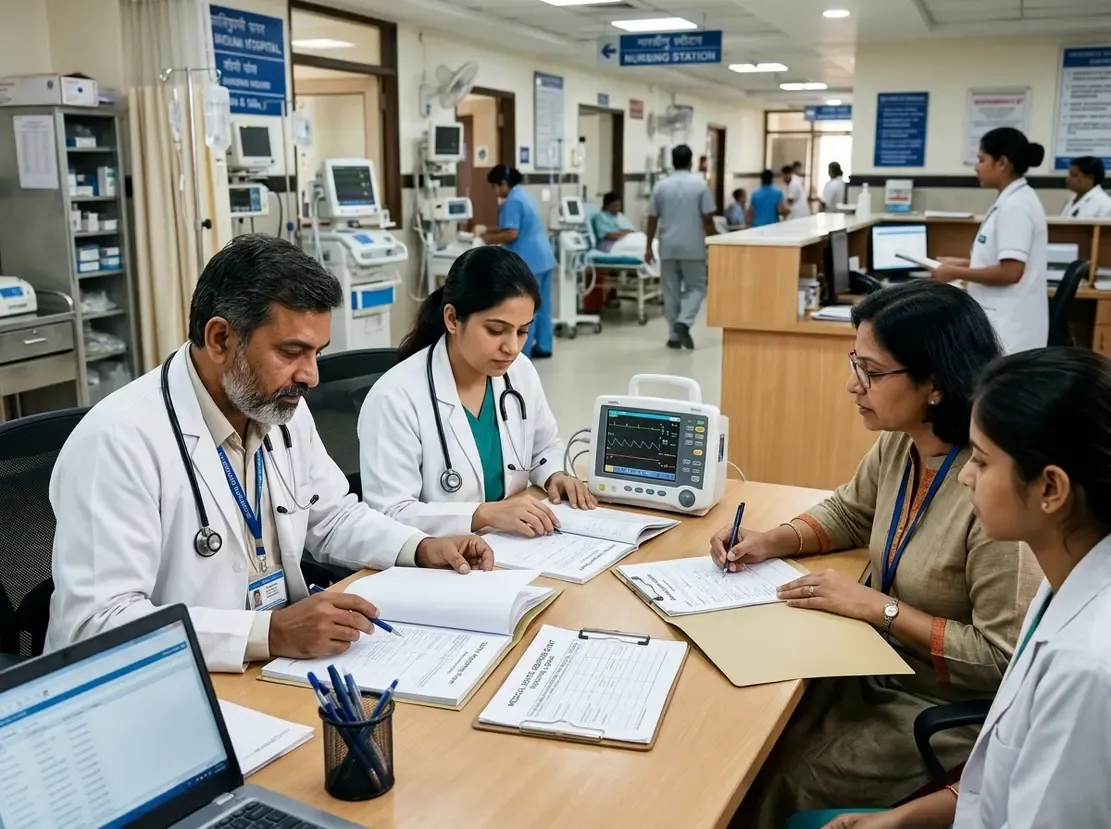
Furthermore, the guidelines mandate active surveillance for high-risk clinical departments. Critical care units, cardiac catheterization labs, operation theatres, and emergency wards house vulnerable patients and complex hardware. Therefore, departmental heads must display a designated list of monitored critical devices prominently in these units. Staff members must review these critical tools on a weekly or monthly schedule based on their risk category. Besides regular audits, biomedical teams must archive calibration logs, maintenance records, and detailed root cause analyses.
Digital Platforms and Patient Involvement
Healthcare workers can log incidents directly through the centralized Adverse Drug Reactions Monitoring System (ADRMS). This digital portal enables real-time tracking, structured case evaluation, and rapid safety signal generation. Meanwhile, patients and caregivers can also report suspected device failures directly to regulatory bodies. For this purpose, the IPC operates a national toll-free helpline at 1800-180-3024 with multilingual support.
Notably, the MvPI network has expanded significantly since its founding in 2015. The national system now links more than 775 monitoring centres across India. As modern medicine integrates artificial intelligence, connected biosensors, and software as a medical device, novel risks inevitably emerge. Consequently, robust clinical reporting remains the cornerstone of modern patient safety and device regulation.
Frequently Asked Questions
Q1: What is the reporting deadline for serious medical device incidents in India?
Hospitals must report serious adverse events involving patient death or severe health deterioration within 15 days to the MvPI. Similarly, healthcare facilities must inform the relevant licensing authority about suspected unexpected serious adverse events within 15 days.
Q2: Should clinicians report medical device malfunctions if patient injury did not occur?
Yes, healthcare teams must report near-miss incidents and malfunctions even if no patient suffered physical harm. If an equipment failure or calibration error could potentially cause serious harm during future clinical use, staff must report it within 30 days.
Q3: How can patients and consumers report suspected medical device issues?
Patients can notify their treating clinicians or contact the Indian Pharmacopoeia Commission directly. Specifically, consumers can call the IPC toll-free helpline at 1800-180-3024, which supports reporting in multiple Indian languages, or submit details through the ADRMS digital portal.
References
- Hospitals told to step up monitoring, reporting of 'adverse events' related tomedical devices - ETHealthworld
- Centre's New MvPI Guidance Tells Hospitals To Step Up Surveillance Of Critical Medical Devices - ETV Bharat
- Materiovigilance Programme of India (MvPI) - National Health Systems Resource Centre