
Why India Urgently Needs Explicit PM2.5 Health Targets
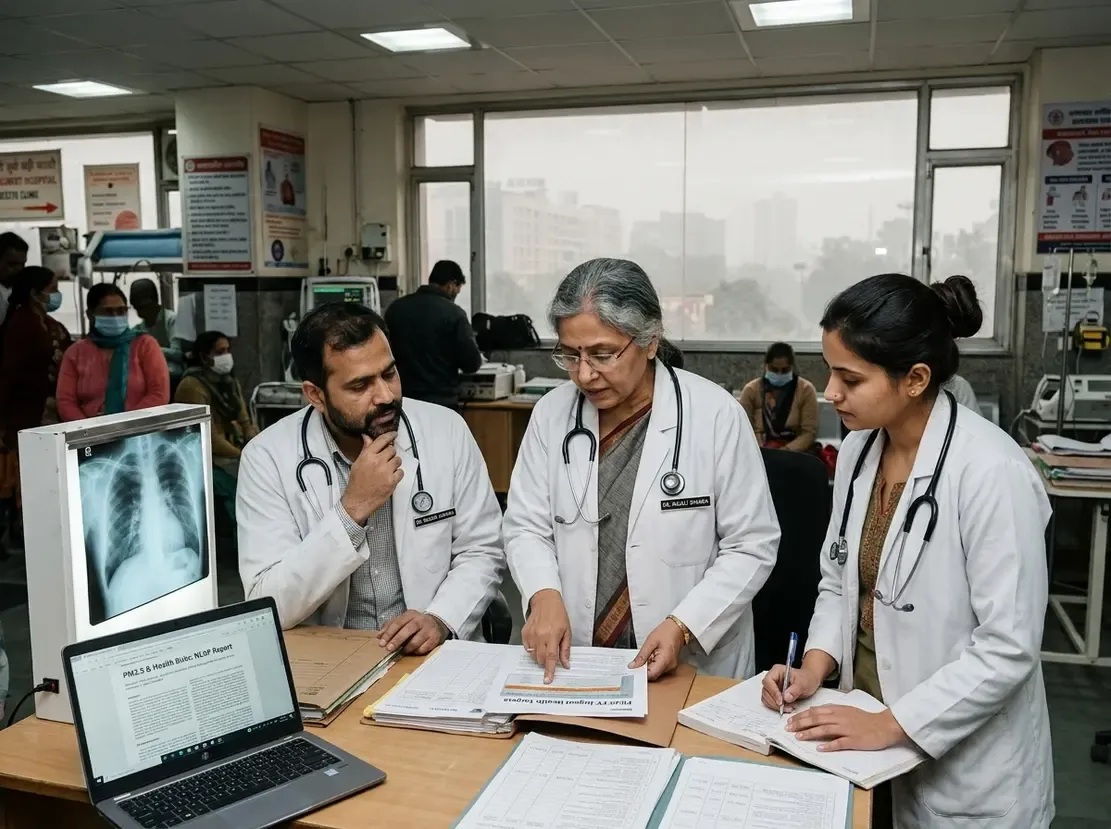
Air pollution represents one of the largest public health emergencies currently facing the country. Therefore, health leaders advocate establishing formal PM2.5 targets in India under the National Clean Air Programme. A recent FICCI-EY knowledge paper emphasises that policymakers must evaluate air quality through human health outcomes. In fact, ambient air pollution caused over two million deaths across the nation in 2023 alone.
Why PM2.5 Targets in India Are Essential for Health
Historically, national anti-pollution frameworks placed primary attention on coarse particulate matter like PM10. However, fine particulate matter measuring 2.5 microns or smaller poses a substantially greater medical hazard. These microscopic particles penetrate deep into the pulmonary parenchyma and cross into the systemic circulation. Consequently, chronic inhalation triggers widespread endothelial injury and persistent systemic inflammation. Establishing dedicated fine-particle reduction benchmarks ensures accountability across both industrial and municipal sectors. In addition, clear benchmarks direct financial resources toward high-impact environmental health interventions.
Clinical Consequences of Fine Particulate Inhalation
Prolonged exposure to toxic particulates drives several severe chronic non-communicable disorders. Specifically, clinicians observe heightened rates of ischemic heart disease, recurrent myocardial infarctions, and strokes. Pulmonary clinics face worsening burdens of refractory asthma, chronic obstructive pulmonary disease, and interstitial fibrotic changes. Furthermore, emerging clinical evidence links ambient particulate exposure to progressive cognitive impairment and dementia. Paediatric populations suffer impaired lung development alongside recurrent respiratory tract infections. As a result, hospitals experience immense seasonal surges in acute respiratory admissions and critical care demands.
Recommended Interventions and the Physician Role
The FICCI-EY paper presents practical solutions to eliminate emissions across urban and industrial corridors. For example, construction sites must mandate closed-loop dust management to contain fugitive particulate clouds. Similarly, industrial zones should operate emissions markets driven by real-time continuous stack monitoring. Healthcare institutions must simultaneously build robust surveillance systems to track pollution-related hospital visits. Moreover, physicians should counsel vulnerable cardiac and respiratory patients regarding air quality index advisories. Preventive patient guidance includes personal exposure reduction, indoor air filtration, and strict medication compliance. Ultimately, sustained clinical advocacy will transform clean air into a year-round national health priority.
Frequently Asked Questions
Q1: Why is PM2.5 more dangerous than PM10?
Coarse particles remain mostly in the upper airways. In contrast, fine PM2.5 particles penetrate alveolar sacs and easily enter systemic circulation. Hence, PM2.5 causes vascular inflammation alongside deep tissue lung damage.
Q2: How can clinicians help patients during high pollution seasons?
Doctors can monitor daily air quality indices and issue timely preventative advisories. Additionally, practitioners should optimize chronic inhaler therapy and recommend certified N95 respirators for outdoor exposure.
Q3: What key reform does the FICCI-EY paper recommend?
The report recommends embedding mandatory PM2.5 reduction targets directly within national pollution programs. Therefore, policymakers can evaluate anti-pollution measures by measurable public health gains.
References
- India needs clear PM2.5 targets to tackle air pollution, says FICCI-EY paper - ETHealthworld
- FICCI and EY India. Clean air, healthy India: Strategic recommendations paper, 2026.
- The Lancet Planetary Health. Evaluating the national burden of PM2.5 in India: Spatiotemporal mortality analysis, 2024.


