Why India Must Set Clear PM2.5 Targets for Public Health

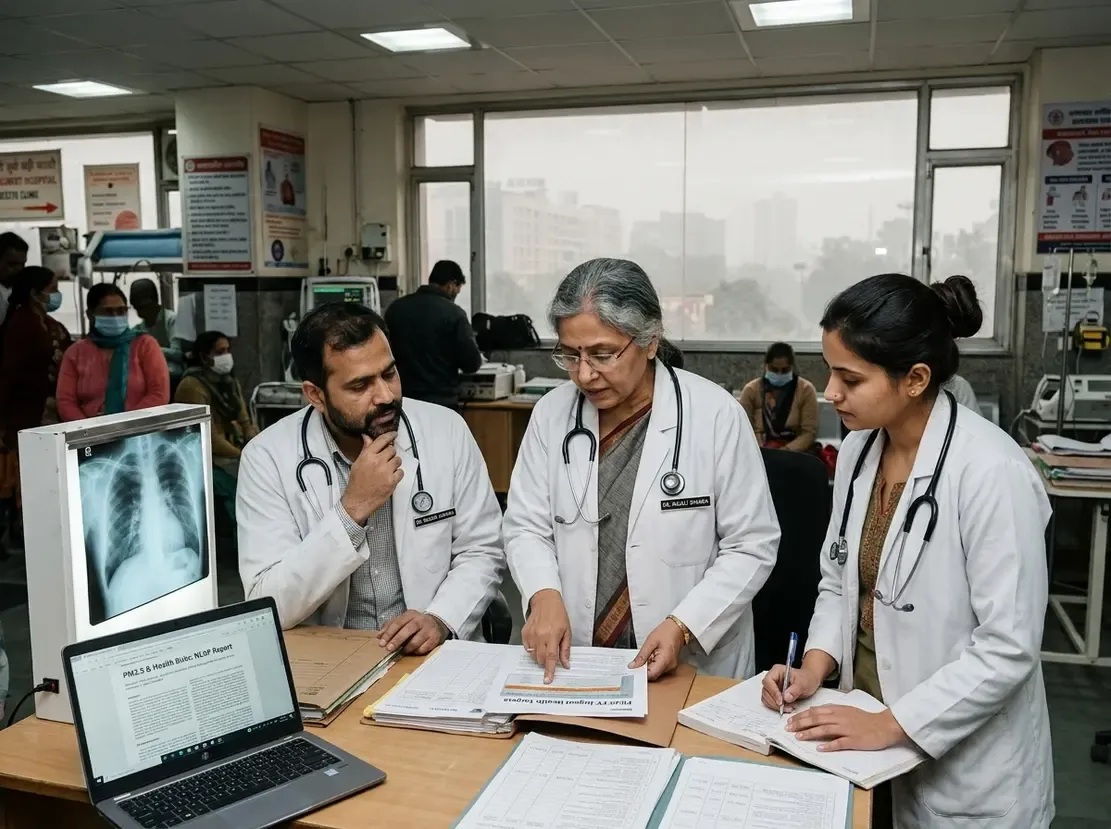
India faces a major respiratory crisis that demands immediate regulatory reform. Consequently, a joint FICCI-EY paper urges the government to establish explicit PM2.5 targets in India under the National Clean Air Programme. Furthermore, ambient air pollution caused over two million attributable deaths across the country in 2023. Therefore, medical experts insist that authorities must treat clean air as an urgent clinical priority.
The Clinical Urgency for PM2.5 Targets in India
Fine particulate matter measuring 2.5 microns or less penetrates deep into the alveolar spaces. Subsequently, these microscopic particles cross the alveolar-capillary membrane directly into systemic circulation. Chronic exposure triggers systemic vascular inflammation, endothelial dysfunction, and platelet aggregation. As a result, patients face heightened risks of acute myocardial infarction, ischemic stroke, and chronic obstructive pulmonary disease. Moreover, recent clinical research links fine particles directly to accelerated cognitive decline and neurodegenerative disorders. Furthermore, prolonged exposure exacerbates pediatric asthma and compromises early lung development. Because conventional regulatory metrics often focus on coarser PM10 dust, they fail to track these hazardous micro-particles. Thus, establishing strict fine-particle limits remains critical to safeguard vulnerable clinical populations.
Ten Strategic Interventions Proposed by FICCI-EY
The FICCI-EY paper outlines ten actionable interventions to curb emissions before peak pollution episodes. First, authorities must enforce closed-loop dust management at all large construction and demolition sites. Urban centers should also establish intra-city monitoring networks to identify specific pollution hotspots rapidly. In addition, municipal planners must deploy smart traffic signaling systems to curb vehicle idling and gridlock. Industrial facilities require live stack-emission data systems to operate efficient emission trading markets. Meanwhile, operators must retrofit traditional brick kilns to zig-zag firing technology to slash toxic soot. Power infrastructure should replace heavy diesel backup generators with clean battery-hybrid systems. In agricultural sectors, governments must scale technologies that convert crop residues into marketable bio-fuels. Similarly, builders can incorporate recycled plastic and industrial waste into durable civil infrastructure. Ultimately, these measures reduce total toxic output while preserving economic productivity.
Transitioning from Seasonal Panic to Year-Round Surveillance
Historically, Indian cities have responded to toxic smog with reactive, winter-only emergency restrictions. However, leading healthcare administrators warn that intermittent measures cannot prevent chronic cardiovascular and respiratory morbidity. Clinical leaders emphasize that healthcare institutions must integrate daily air-quality data into hospital health surveillance. For example, clinicians should monitor pollution spikes to anticipate acute asthma exacerbations and cardiac admissions. Additionally, hospitals must provide proactive health advisories to high-risk elderly and pediatric patients. Clear government standards and predictable regulations will support systematic multi-sectoral collaboration. Consequently, clean-air programs will achieve measurable gains in patient survival rather than superficial regulatory milestones.
Frequently Asked Questions
Q1: Why does fine particulate matter pose greater clinical danger than PM10?
Coarser particles settle primarily in the upper respiratory tract. In contrast, PM2.5 penetrates deep into pulmonary alveoli and enters systemic circulation. Consequently, it triggers severe vascular inflammation, coronary plaque rupture, and ischemic events.
Q2: How can Indian hospitals participate in air pollution mitigation?
Hospitals can correlate local air quality metrics with emergency admissions for cardiorespiratory distress. Furthermore, clinicians can issue preventive advisories, optimize patient pharmacotherapy before peak seasons, and track long-term environmental morbidity through enhanced clinical expertise gained via emergency medicine training.
Q3: What key reform does the FICCI-EY paper recommend for NCAP?
The report recommends establishing mandatory PM2.5 reduction benchmarks rather than relying solely on PM10 dust mitigation. Therefore, clean-air progress will directly reflect measurable reductions in human exposure and clinical disease burdens.
References
- India needs clear PM2.5 targets to tackle air pollution, says FICCI-EY paper - ETHealthworld
- India's clean air agenda: From pollution control to better health - EY
- Air Pollution Costs India Up To 9.5% Of GDP, 2 Million Deaths Linked: New Report Calls For Health-Led Action - NDTV