
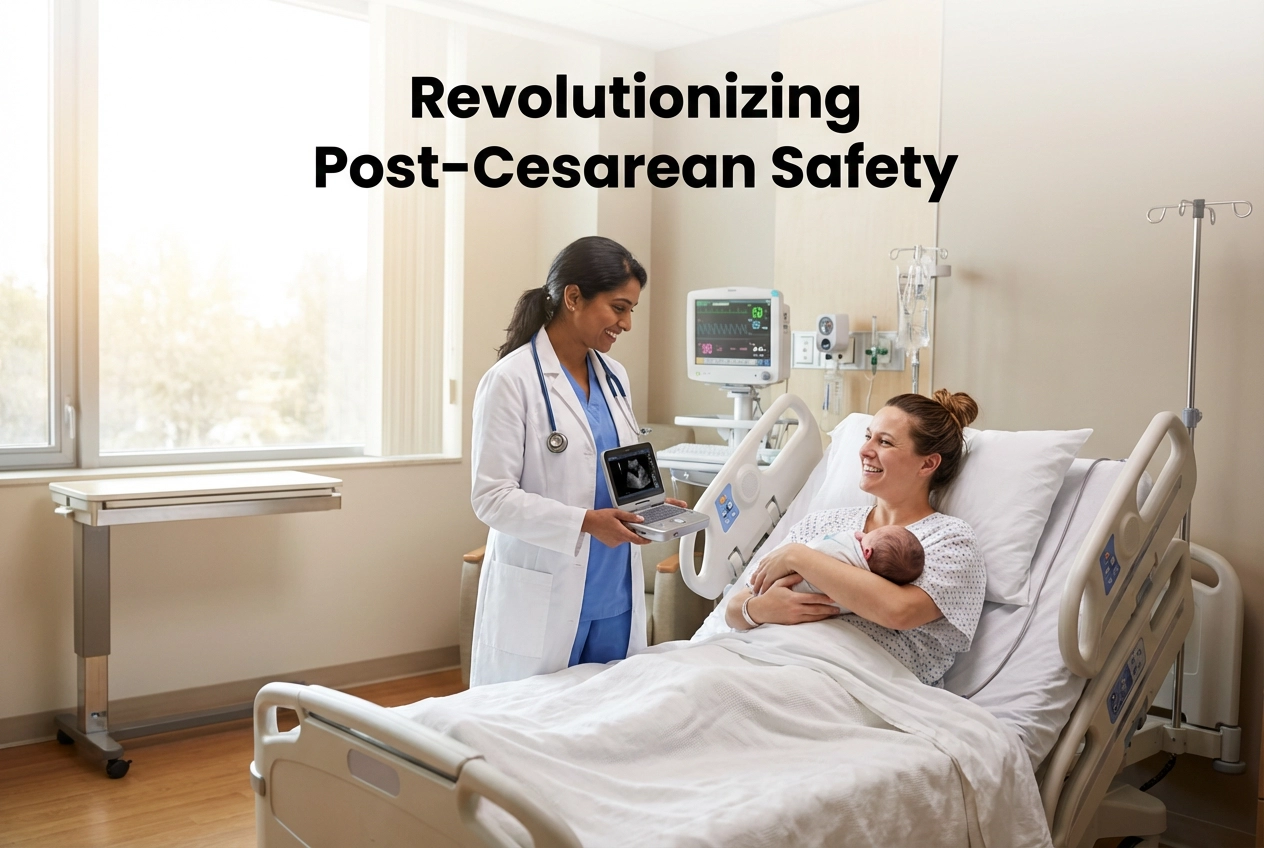
The Modified FAST (Focused Assessment with Sonography for Trauma) examination is a rapid, low-cost ultrasound tool increasingly used in obstetrics. Clinicians use it to assess postoperative patients for potential intra-abdominal bleeding. Since prompt diagnosis improves outcomes, particularly in critical care settings, this tool offers significant advantages. Therefore, a study evaluated whether the Modified FAST examination reliably detects or excludes intra-abdominal free fluid after a cesarean delivery. Consequently, the test results were compared against gold-standard methods, including Computed Tomography (CT), Magnetic Resonance Imaging (MRI), or surgical findings from abdominal re-exploration. The findings strongly support its clinical adoption.
Modified FAST as a Valid Diagnostic Tool
This retrospective cohort study examined patients who had undergone a cesarean delivery over a five-year period. Researchers focused on the presence or absence of abdominal free fluid detected by the Modified FAST, confirmed by formal imaging or re-exploration. Of the patients with true-positive results, over 90% were confirmed by either formal imaging or surgical re-exploration alone, or a combination of both. In fact, a significant portion (45.7%) of true-positive results relied solely on formal imaging confirmation. Also, another 45.7% were confirmed by abdominal re-exploration alone. Thus, the analysis indicates that the Modified FAST is a valid, reliable test for identifying intra-abdominal free fluid following a cesarean section. This result clearly supports its integration into clinical decision-making protocols in obstetrics.
Clinical Utility in Resource-Limited Settings
Point-of-Care Ultrasound (POCUS) protocols, like the Modified FAST, are invaluable, especially in settings with limited resources, such as many hospitals in India. This technology offers a quick, bedside assessment method that minimizes the need for costly and time-consuming gold-standard imaging. Furthermore, the basic skillset for a FAST examination is relatively easy to learn and apply, even for non-radiologists. The standard FAST technique assesses specific areas including the pericardial view, the right and left upper quadrants, and the pouch of Douglas. Moreover, the examination quickly detects free fluid in these areas, which is highly suggestive of internal bleeding in a hemodynamically unstable patient. Consequently, a positive Modified FAST result can expedite the patient’s path to life-saving intervention, thus preventing unnecessary delays. Physicians can quickly determine appropriate patient disposition, obtain necessary additional imaging, and ensure timely specialist consultation.
Frequently Asked Questions
Q1: What is the primary purpose of the Modified FAST examination in post-cesarean patients?
The primary purpose is to rapidly and inexpensively assess postoperative patients for the presence or absence of intra-abdominal free fluid, which suggests potential internal bleeding after a cesarean delivery.
Q2: Is the Modified FAST as reliable as CT or MRI for this purpose?
The study demonstrated that the Modified FAST is a valid and reliable test. It successfully detected or excluded abdominal free fluid compared with the gold-standard imaging (CT or MRI) or findings from surgical abdominal re-exploration.
Q3: Why is Modified FAST especially useful in obstetrics?
Since it is a low-cost, non-invasive, and rapid bedside tool, it is crucial for urgent clinical decision-making. In fact, its use helps expedite care and potentially limits the need for more complex, time-consuming, and expensive imaging like CT scans.
References
- Treacy L et al. Postcesarean Delivery Use of a Modified FAST (Focused Assessment with Sonography for Trauma) Examination. Obstet Gynecol. 2025 Dec 01. doi: 10.1097/AOG.0000000000006108. PMID: 41198106.
- Use of Focused Assessment with Sonography in Trauma Examination Skills in the Evaluation of Non-trauma Patients. PMC – NIH.
- Butterfly Special Offers | Save on Butterfly ultrasound solutions. butterflynetwork.com.