NMC Adds 9,783 PG Medical Seats: Total Reaches 68,305
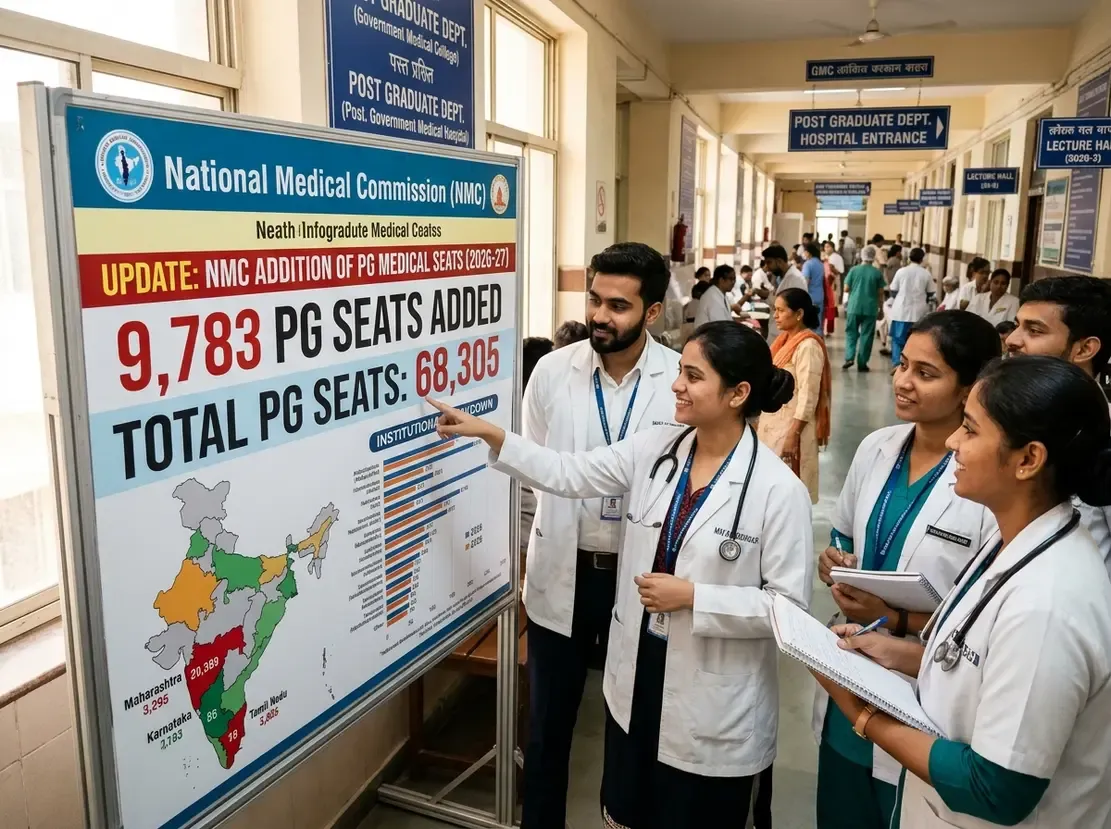
The National Medical Commission has announced an unprecedented expansion of postgraduate healthcare training across the country. Specifically, the regulatory authority has approved 9,783 new PG medical seats for the 2026-27 academic session. Consequently, the total national broad-speciality postgraduate capacity now stands at 68,305 seats, rising from 58,522. Furthermore, this massive development significantly enhances advanced training opportunities for medical graduates nationwide, who often prepare rigorously through resources like a Free NEET PG Mock Test before securing their residencies.
Breakdown of Additional PG Medical Seats
Government medical institutions secured the largest share of this historic expansion. Notably, government colleges received 4,373 new seats. In addition, private medical colleges gained 4,148 seats across various clinical disciplines. Deemed universities also secured 1,262 seats to expand their postgraduate training programs. Therefore, public institutions continue to lead postgraduate medical infrastructure growth in India. Moreover, this balanced allocation supports academic development across diverse clinical specialties.
State-Wise Distribution of Intake
Geographic distribution shows that five major states represent over half of the national postgraduate intake. Notably, these five leading states account for 34,899 seats, which equals roughly 51% of total capacity. Specifically, Karnataka leads the nation with 8,998 approved postgraduate seats for the 2026-27 session. Maharashtra follows closely in second place with 7,682 seats. In addition, Uttar Pradesh accounts for 6,983 approved positions. Similarly, Tamil Nadu secured 6,819 seats, while Telangana reached 4,417 seats. Consequently, these regional hubs provide the vast majority of residency positions for doctors.
Strategic Impact on Specialist Healthcare
The expansion directly addresses the critical shortage of specialist physicians across India. Furthermore, expanding seats in public institutions improves access to affordable specialty care for underserved populations. Resident doctors provide essential clinical manpower during their intensive training years. Therefore, increased intake directly strengthens hospital care delivery in tertiary centers. Additionally, newly accredited departments expand local research capacity and specialized clinical services. As a result, the national health ecosystem gains long-term structural resilience.
Frequently Asked Questions
Q1: How many total PG medical seats are approved for the 2026-27 academic year?
The National Medical Commission approved 9,783 new seats, raising the national postgraduate total to 68,305 seats. Government colleges received the largest portion of this total intake.
Q2: Which state currently holds the highest number of PG medical seats in India?
Karnataka holds the highest number with 8,998 approved seats for 2026-27. Maharashtra follows in second position with 7,682 seats.
Q3: How are the new postgraduate medical seats distributed across institutions?
Government medical colleges gained 4,373 seats, private colleges received 4,148 seats, and deemed universities obtained 1,262 seats.
References
- NMC adds 9,783 PG medical seats, takes total to 68,305 - ETHealthworld
- National Medical Commission. Updated Seat Matrix for Postgraduate Broad Speciality Courses for 2026-27. New Delhi: NMC; 2026.
- Medical Assessment and Rating Board. Guidelines and Seat Matrix for Postgraduate Medical Education. New Delhi: NMC; 2026.