Surging Measles Outbreaks: What Physicians Must Know Now
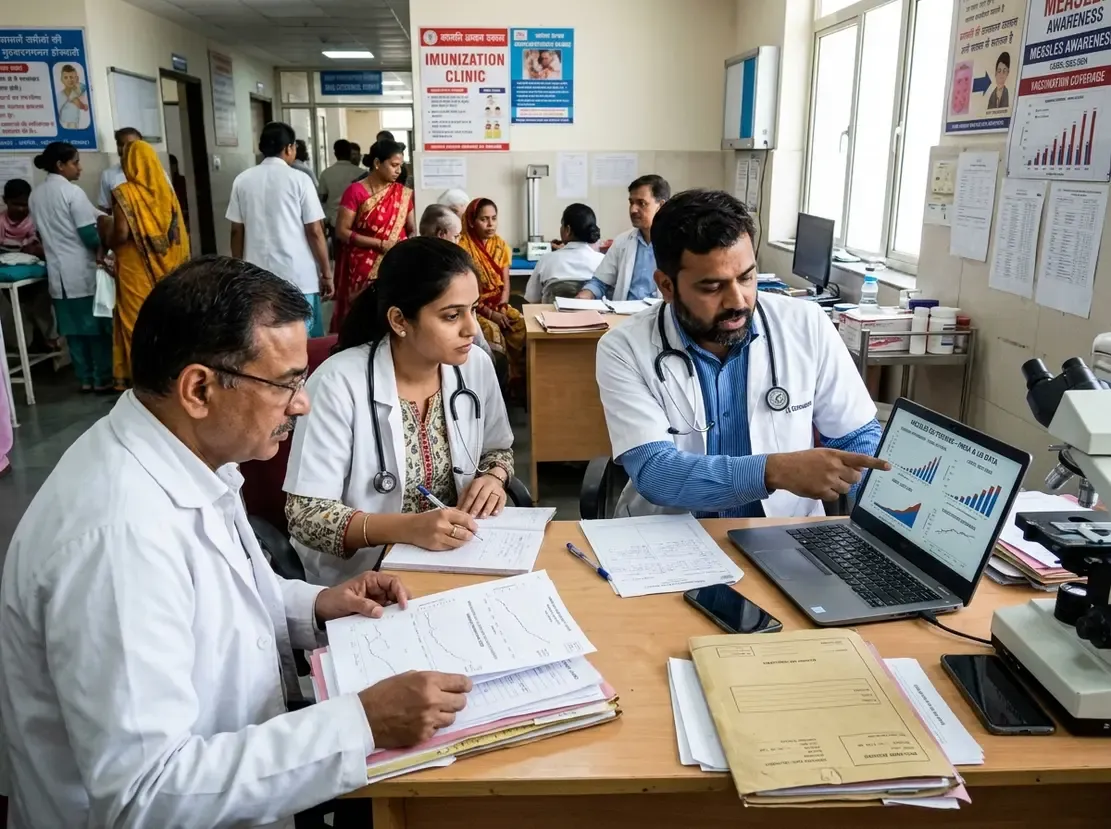
Recent reports show that US measles cases have climbed above 5,000 for the first time since 1991. Consequently, healthcare providers worldwide must review outbreak dynamics and reinforce immunisation protocols. The US CDC documented 5,182 cases, which marks a 35-year high. Furthermore, public health authorities have identified 43 active outbreaks across various regions. Clinicians must therefore remain vigilant against this highly transmissible pathogen.
Surge in US Measles Cases and Epidemiological Trends
Epidemiological data reveal stark patterns among infected cohorts. Notably, adults aged 20 and older accounted for 2,132 infections. Similarly, individuals aged 5 to 19 years represented 2,104 cases. Meanwhile, young children under five accounted for 908 reported cases. In addition, hospitalizations linked to measles reached 562, representing 11% of all cases.
Crucially, 96% of infections occurred among unvaccinated individuals or those with unknown status. Therefore, waning community immunity poses serious threats. In Pennsylvania, health officials reported six measles-associated deaths this year. Additionally, New York and Wisconsin confirmed one death each. Thus, delayed immunization continues to fuel fatal complications.
Clinical Evaluation and Preventive Strategies
Primary care physicians must maintain high clinical suspicion for typical and atypical presentations. Specifically, early manifestations include high fever, cough, coryza, and conjunctivitis. Doctors should also examine buccal surfaces for Koplik spots before the maculopapular rash appears. Because airborne viral particles linger indoors, clinics must promptly isolate suspected patients. Furthermore, medical personnel must implement airborne precautions and utilize N95 respirators.
Consequently, timely two-dose MMR vaccination remains the primary defense. Physicians should actively counsel hesitant families regarding vaccine efficacy. In doing so, clinicians can prevent dangerous community outbreaks. Moreover, vigilant international surveillance protects vulnerable populations everywhere.
Frequently Asked Questions
Q1: Why are measles cases rising significantly?
Suboptimal vaccination coverage directly drives measles resurgence. In fact, approximately 96% of recent infections involve unvaccinated individuals or those with undocumented immunization records.
Q2: What clinical signs suggest measles before the rash appears?
Patients typically exhibit a prominent prodrome with high fever, cough, coryza, and conjunctivitis. Additionally, clinicians should look for Koplik spots on the buccal mucosa.
Q3: What immediate infection control steps should outpatient clinics take?
Clinics must immediately mask symptomatic patients and place them in airborne isolation. Furthermore, staff must wear certified N95 respirators to prevent airborne transmission.
References
- US measles cases climb above 5,000 for first time since 1991 - ETHealthworld
- Centers for Disease Control and Prevention. Measles Cases and Outbreaks Data Update. Atlanta, GA: CDC; 2026.
- World Health Organization. Measles Fact Sheet and Global Surveillance Summary. Geneva: WHO; 2026.