
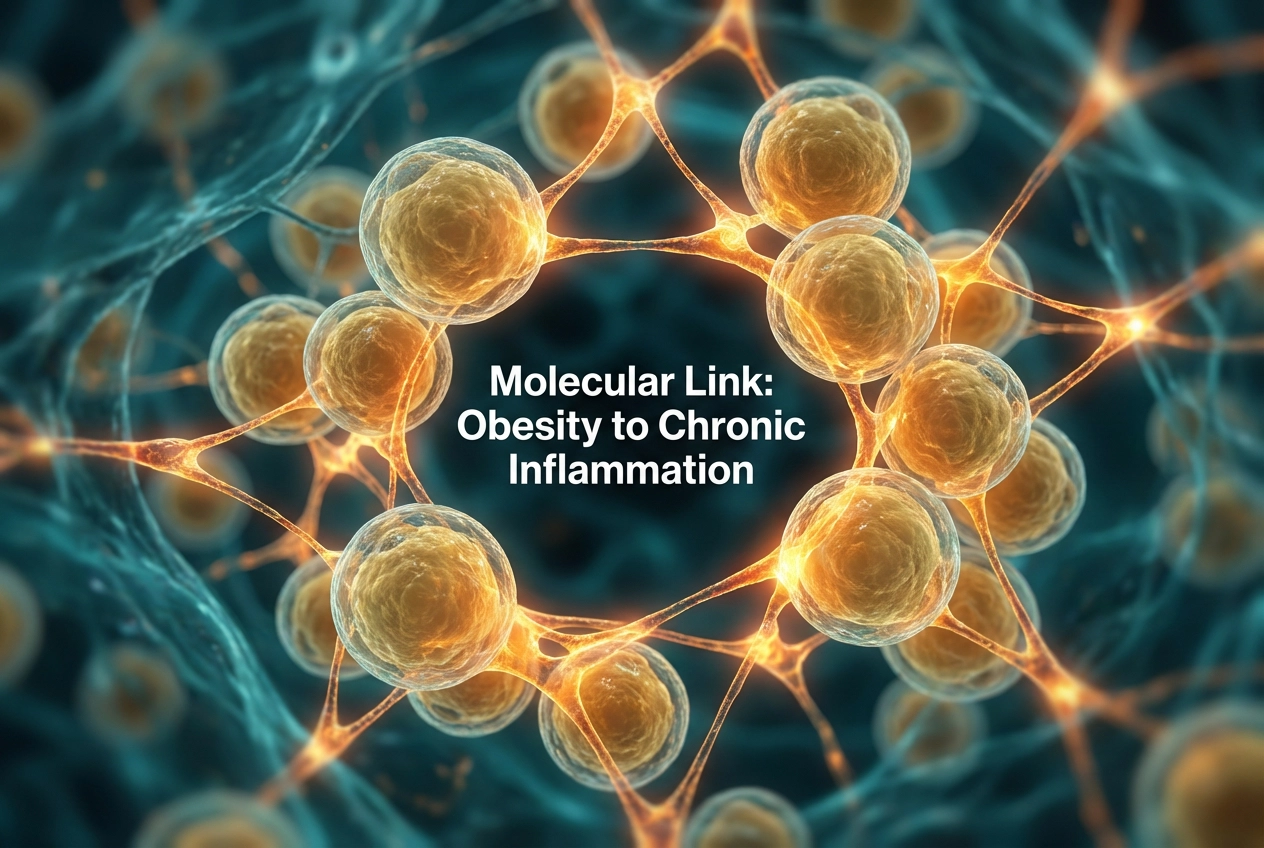
Researchers have finally discovered the molecular cascade that links Obesity Inflammation to a host of health issues, including diabetes and liver disease. This mechanism, previously unknown, explains why obesity causes uncontrolled, runaway inflammation in the body. Study leader Zhenyu Zhong of UT Southwestern noted that the research provides novel insights into why this inflammation occurs and how scientists might be able to halt it. Therefore, this discovery opens up new therapeutic avenues for managing obesity-related chronic conditions. Specialists looking to advance their practice in related areas may benefit from exploring the Diabetes And Endocrinology Speciality Courses.
Unraveling the Molecular Cascade in Obesity Inflammation
It was already known that a sensor protein complex in immune cells, called NLRP3, largely drives inflammation in the absence of an infection. This complex is responsible for converting immature inflammatory molecules into mature ones that stimulate the inflammatory response. Moreover, when researchers compared immune cells from lean and obese human volunteers, they found excessive NLRP3 activity in the obese subjects. Consequently, the high-fat-consuming mice also displayed this excessive NLRP3 activation, according to findings published in *Science*.
The immune cells with hyperactive NLRP3 surprisingly contained large amounts of damaged DNA within their mitochondria. Mitochondria are the cell’s energy factories. Scientists attributed this DNA damage to the excessive accumulation of DNA building blocks, which are called nucleotides. Consequently, the research team sought the root cause for the extra nucleotides. They discovered that an enzyme, SAMHD1, which typically degrades these nucleotides, had been turned off in the obese state. Furthermore, when they inactivated the SAMHD1 enzyme in mice, they successfully replicated the same inflammatory phenomenon. The mice developed excess nucleotides, significant mitochondrial DNA damage, overactive NLRP3 complexes, and eventually, inflammation-related type 2 diabetes and fatty liver disease. Understanding the management of such complex metabolic issues is key, and professionals can enhance their knowledge through the Postgraduate Diploma In Obesity And Weight Management.
Future Directions: Blocking the Pathway
The new findings conclusively suggest that inflammation in obesity is a molecular cascade initiated by the inactivation of SAMHD1. Thus, this discovery offers multiple potential approaches for researchers to explore for preventing such inflammation. For example, one approach could involve finding ways to prevent the inactivation of SAMHD1, thereby stopping the accumulation of the DNA building blocks. Another strategy might be to somehow block the delivery of those extra DNA building blocks to the mitochondria. Consequently, a third promising approach is to block the damaged mitochondrial DNA from attaching to the NLRP3 complex, which would prevent the immune cells from maturing into their inflammatory state.
Novel Approach: mRNA for Infertility Treatment
In a separate area of research, studies in mice suggest that using messenger RNA (mRNA) to deliver instructions to cells lining the uterus could lead to new treatments for certain forms of infertility. Specifically, researchers are aiming to improve conditions, such as endometriosis, which make it less likely for embryos to attach to the endometrium. This attachment is a necessary step for a pregnancy to proceed. Study leader Laura Ensign of Johns Hopkins Medicine stated that patients lacking effective approved options for maintaining or starting a pregnancy might benefit from this work. Those interested in reproductive health advancement can pursue the International Post Graduate Program In Assisted Reproduction Techniques.
Researchers used small capsules made of fatty molecules, known as lipid nanoparticles (LNPs), to deliver the fragile, fast-degrading mRNA molecules to the endometrium. The LNPs carried the genetic code for an immune protein called GM-CSF. This protein is believed to improve embryo attachment by increasing the thickness of the endometrium. After infusion, GM-CSF protein levels in the mouse endometrium remained high for up to 24 hours. Consequently, the tailored mRNA-LNP treatment was tested in mice with an endometrial injury similar to human infertility cases. The researchers found that embryo attachment was restored to levels comparable to healthy mice. In contrast, untreated mice showed an average of 67% fewer embryo implantation sites. Therefore, the researchers will continue testing this mRNA delivery system, as it could eventually address disorders like endometrial cancer and endometriosis, in addition to infertility. Professionals focusing on women’s health specialties can find relevant training in the Obstetrics Gynecology And Womens Health Speciality Courses.
Frequently Asked Questions
Q1: How does the new study link obesity to inflammation?
The study found that in obese states, an enzyme called SAMHD1 is inactivated, leading to the accumulation of DNA building blocks (nucleotides). These excess nucleotides damage mitochondrial DNA, which then attaches to and overactivates the NLRP3 protein complex, kicking off the runaway inflammatory process.
Q2: What is the role of the NLRP3 protein in obesity-related diseases?
NLRP3 is a sensor protein complex in immune cells that converts immature inflammatory molecules into mature ones. In obesity, its overactivation due to damaged mitochondrial DNA is a key step that leads to uncontrolled inflammation, which can cause conditions like type 2 diabetes and fatty liver disease.
Q3: How are researchers attempting to use mRNA for infertility treatment?
Researchers are using lipid nanoparticles (LNPs) to deliver messenger RNA (mRNA) carrying the genetic code for the GM-CSF protein to the uterine lining (endometrium). The GM-CSF protein is believed to improve embryo attachment by increasing endometrial thickness, which restored embryo attachment in mouse models of infertility.
References
- How obesity leads to uncontrolled inflammation discovered – ETHealthworld
- The NLRP3 Inflammasome: A Key Regulator of Metabolic Disease and Inflammation.
- Lipid Nanoparticles-Mediated mRNA Delivery for Endometrial Repair and Infertility Treatment.
Disclaimer: This article was automatically generated from publicly available sources and is provided for informational and educational purposes only. OC Academy does not exercise editorial control or claim authorship over this content. It is not a substitute for professional medical advice, diagnosis, or treatment. Always consult a qualified healthcare provider and refer to current local and national clinical guidelines.