
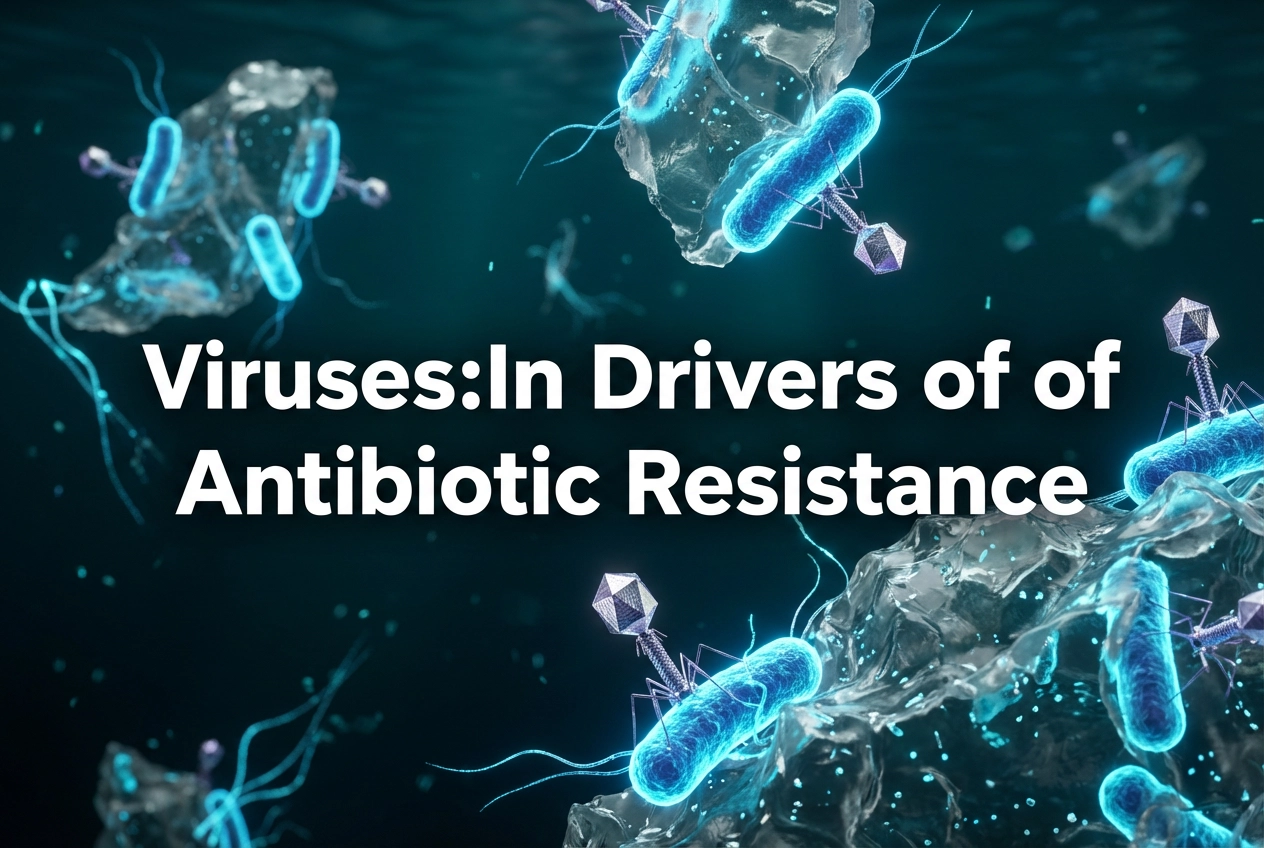
The emergence of the “plastisphere,” a unique microbial environment on plastic debris, presents a concerning new pathway for the global spread of **plastisphere antibiotic resistance**. A new perspective article highlights that viruses, the most abundant biological entities on Earth, may act as previously unrecognised “hidden drivers” of this growing health crisis. Therefore, researchers are calling for an immediate focus on viral behaviour within these plastic-associated biofilms.
Plastics that enter natural environments quickly become coated with dense microbial biofilms. This coating is the ‘plastisphere,’ and it serves as a known hotspot for accumulating antibiotic resistance genes (ARGs). Most prior studies focused on the bacterial component of this community. However, viruses—specifically bacteriophages—are ubiquitous in the plastisphere and maintain close interaction with their bacterial hosts, which suggests a significant role in gene exchange.
The Role of Viruses in Horizontal Gene Transfer
Viruses are key players in the movement of ARGs between microbes through a process known as horizontal gene transfer (HGT). Specifically, viruses can shuttle genetic material between bacteria via transduction. The dense, high-cell-density environment within plastisphere biofilms facilitates this process. Because of this, viruses may more easily transfer resistance genes across various species, even including potential human pathogens.
Moreover, some viruses carry Auxiliary Metabolic Genes (AMGs). Consequently, these genes can boost a bacterium’s survival capabilities under stressful conditions. For example, exposure to pollutants or antibiotics favors the survival and proliferation of resistant microbes. This indirectly helps disseminate the resistance trait. Scientists propose that plastisphere viruses drive ARG dissemination by mediating HGT and encoding these resistance-related AMGs. Understanding the transmission and impact of such resistance mechanisms is crucial for specialists pursuing Postgraduate Diploma In Infectious Disease training.
Ecological Context and Plastisphere Antibiotic Resistance Risk
Crucially, the behavior of these viruses appears to vary depending on the environmental context. In aquatic plastispheres, which are common in oceans and rivers, viruses seem more likely to adopt life strategies that actively promote gene transfer. Therefore, this increases resistance risks. Conversely, in soil environments, viruses may play a different, potentially beneficial role. They could instead limit the overall number of resistant bacteria by killing their hosts, a lytic life cycle.
This contrasting ecological role highlights the crucial need for context-specific research when assessing risks related to plastic pollution. Researchers recommend that future studies directly measure the gene exchange between viruses and bacteria on plastics. Furthermore, they need to refine methods for accurately detecting virus-encoded resistance genes in environmental samples. Addressing emerging resistance is paramount, particularly in fields like Clinical Oncology.
Frequently Asked Questions
Q1: What is the \”plastisphere\”?
The plastisphere is the unique microbial community, or biofilm, that quickly colonizes the surface of plastic debris in natural environments like oceans and soil. This environment is known to be a hotspot for antibiotic resistance genes (ARGs).
Q2: How do viruses on plastics spread antibiotic resistance?
Viruses, specifically bacteriophages, act as “hidden drivers” by mediating horizontal gene transfer (HGT). This process allows them to shuttle ARGs from one microbe to another in the dense plastisphere biofilm. They can also carry auxiliary metabolic genes (AMGs) that help bacteria survive stress, indirectly favoring resistant strains.
Q3: Does the environmental location of the plastic affect the risk?
Yes, the researchers note a difference in viral behavior based on environment. In aquatic plastispheres, viruses tend to promote gene transfer, increasing resistance risks. However, in soil, they may limit resistant bacteria by killing their hosts, indicating the need to consider ecological context during risk assessment.
References
- Researchers raise concerns over antibiotic resistance linked to viruses onplastics – ETHealthworld
- Viruses on plastic waste pose new antibiotic resistance risks – News-Medical.Net
- Bacterium-phage symbiosis facilitates the enrichment of bacterial pathogens and antibiotic-resistant bacteria in the plastisphere – American Chemical Society – ACS Fall 2025
- Marine plastisphere selectively enriches microbial assemblages and antibiotic resistance genes during long-term cultivation periods – PubMed
Disclaimer: This article was automatically generated from publicly available sources and is provided for informational and educational purposes only. OC Academy does not exercise editorial control or claim authorship over this content. It is not a substitute for professional medical advice, diagnosis, or treatment. Always consult a qualified healthcare provider and refer to current local and national clinical guidelines.