
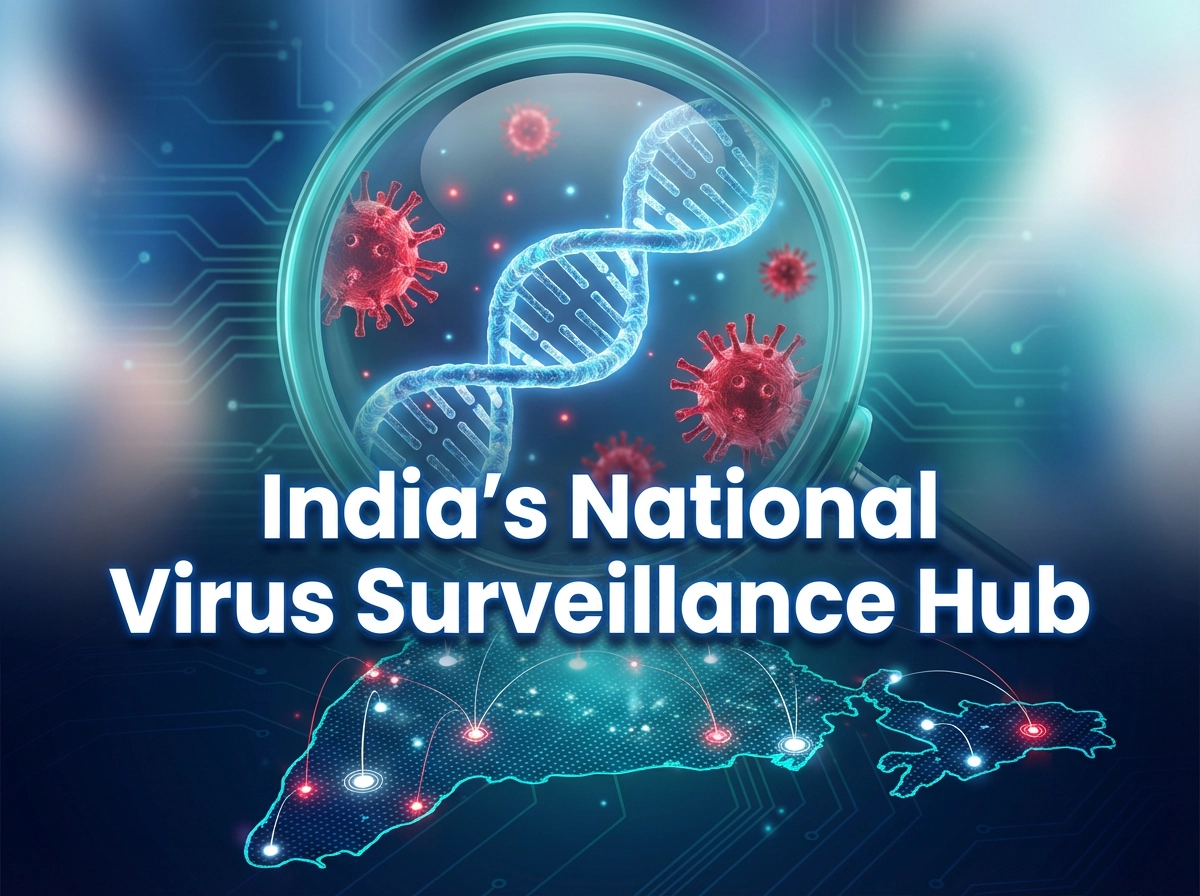
The Rajiv Gandhi Centre for Biotechnology (RGCB) in Thiruvananthapuram now serves as one of four national Next-Generation Sequencing (NGS) hubs for the Metagenomic Surveillance Programme. This critical initiative falls under the National ‘One Health Mission’ in India. Consequently, the programme’s primary goal is to address the long-standing challenge of undiagnosed acute febrile illness (AFI), encephalitis, diarrhoeal diseases, and respiratory infections. Furthermore, this approach integrates clinical screening with unbiased metagenomic sequencing. Therefore, it enables the simultaneous detection of known, rare, and novel pathogens that traditional diagnostic pathways often miss.
Why Metagenomic Surveillance is Crucial
Metagenomic sequencing offers a powerful tool for modern diagnostics. This technique allows scientists to analyse all genetic material present in a sample, providing a complete picture of the microbial community. Specifically, RGCB will utilise this capacity to analyse thousands of samples from national surveillance sites. The aim is to identify the elusive etiological agents behind India’s most common yet unresolved clinical conditions. Moreover, this integrated approach will generate a real-time genomic picture of circulating pathogens and antimicrobial resistance (AMR) patterns. Thus, national bodies can detect emerging threats and respond more effectively, enhancing public health preparedness.
RGCB’s Role as an NGS Hub for Acute Febrile Illness
RGCB is the designated NGS hub focused on acute febrile illness (AFI). RGCB Director (Additional Charge) Dr T R Santhosh Kumar confirms the institute will leverage its advanced sequencing and data-analysis capabilities. These advanced operations are housed within the institute’s Bio Safety Level-3 (BSL-3) facility. The centre’s extensive expertise in viral genomics, host-pathogen interactions, and high-throughput sequencing makes it ideally suited for this task. Additionally, Dr Rajesh Chandramohanadas, senior scientist and faculty-in-charge of the BSL-3 Lab, will lead the ambitious project.
The National Consortium and One Health Framework
The project represents a major nationwide consortium effort. RGCB will execute the project in collaboration with premier institutions, including the Centre for Cellular and Molecular Biology (CCMB), the Tata Institute for Genetics and Society (TIGS), the Gujarat Biotechnology Research Centre (GBRC), ICMR-NIE Chennai, and the ICMR Headquarters. Through this extensive network, the initiative will generate transformative insights into India’s infectious disease landscape. Ultimately, the program strengthens epidemic intelligence. It also supports the development of future indigenous diagnostic panels tailored to Indian pathogen diversity. In conclusion, the work marks a vital step toward building a unified ‘One Health’ surveillance framework that connects human, animal, and environmental health, significantly enhancing India’s preparedness against future outbreaks. Professionals seeking to deepen their knowledge in this area might find resources in Postgraduate Diploma In Infectious Disease studies or explore advancements in genomic medicine and health.
Frequently Asked Questions
Q1: What are the primary diseases targeted by the Metagenomic Syndromic Surveillance Programme?
The programme aims to address undiagnosed acute febrile illness (AFI), encephalitis, diarrhoeal diseases, and respiratory infections by detecting known, rare, and novel pathogens.
Q2: Which institutions are collaborating with RGCB on this national project?
RGCB is collaborating with the Centre for Cellular and Molecular Biology (CCMB), the Tata Institute for Genetics and Society (TIGS), the Gujarat Biotechnology Research Centre (GBRC), ICMR-NIE Chennai, and the ICMR Headquarters.
Q3: How does this programme align with the ‘One Health Mission’?
The initiative generates a real-time genomic picture of circulating pathogens and antimicrobial resistance patterns, building a unified surveillance framework that links human, animal, and environmental health. Understanding the underlying principles of Genomic Medicine And Healthcare is key to this framework.
References
- RGCB selected as national hub for metagenomics project – ETHealthworld
- Rajiv Gandhi Centre Pioneers Next-Gen Health Surveillance | Science-Environment – devdiscourse.com
- RGCB to be national metagenomics project hub – The Hindu
- RGCB named national NGS hub for metagenomic surveillance under One Health Mission – thehansindia.com
- Rajiv Gandhi Centre for Biotechnology selected next-generation sequencing hub for metagenomic syndromic surveillance – The Times of India
Disclaimer: This article was automatically generated from publicly available sources and is provided for informational and educational purposes only. OC Academy does not exercise editorial control or claim authorship over this content. It is not a substitute for professional medical advice, diagnosis, or treatment. Always consult a qualified healthcare provider and refer to current local and national clinical guidelines.