
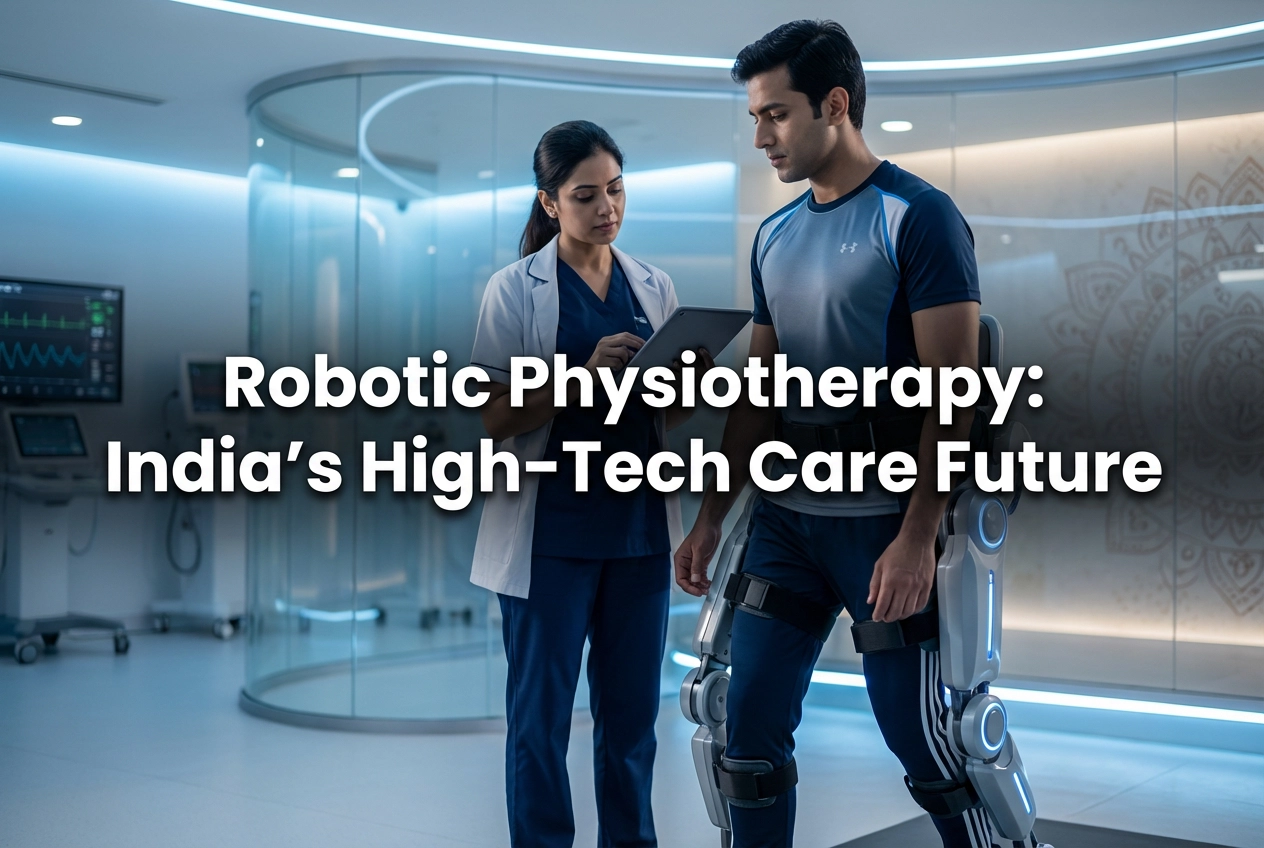
India faces a growing burden of lifestyle-related health issues, including musculoskeletal illnesses and postural abnormalities, at an unprecedented rate. These conditions stem from prolonged sitting, extended work hours, increased obesity, and reduced physical activity. Consequently, the demand for scientifically planned and thorough rehabilitation has never been higher. However, traditional approaches often struggle to meet this massive requirement.
Amid this rising demand, a silent technological shift is happening. Robotic Physiotherapy, once considered a distant, futuristic concept, is now an accessible, useful, and highly successful treatment option across India. Therefore, these cutting-edge technologies are delivering data-driven, repeatable, and precise rehabilitation that perfectly suits contemporary health complexities. Studies show that this therapy is at least as effective as conventional methods, and often more so, particularly when combined with traditional rehabilitation techniques.
The Rise of “Make in India” Rehabilitation Robotics
The global evidence for robotic rehabilitation is strong. Conversely, India’s story is particularly compelling due to the nation’s focus on indigenous innovation. Over the last ten years, Indian engineers and physiotherapists have successfully collaborated to create ‘Make in India’ systems. Specifically, these devices are not only clinically effective but are also significantly less expensive than imported foreign counterparts. For instance, the Pluto device, developed by CMC Vellore and IIT Madras, is a portable and affordable physiotherapy robot for stroke survivors’ hand movement, demonstrating the viability of local solutions. Consequently, hospitals and physiotherapy schools are now utilizing these indigenous gadgets for neuro-rehabilitation, post-operative recovery, and sports-related strengthening.
Intelligent robotic systems assist patients by performing repetitive motions essential for neurological and muscular healing. Because the robots never experience fatigue, they ensure consistent, high-intensity treatment, which is critical for promoting neuroplasticity and motor relearning. Moreover, they provide precise feedback and allow therapists to objectively measure and track a patient’s improvement in real-time.
Robotic Physiotherapy: Enhancing, Not Replacing, the Therapist
Most importantly, robotic physical therapy enhances a physiotherapist’s capabilities; it does not replace the human clinician. While a robot manages the movement and the high-volume, fatigue-free repetitions, only a physiotherapist can provide the crucial elements of human empathy, motivation, and the holistic direction needed for long-term healing. The combination of technology and human connection is where this approach truly excels.
India stands at a pivotal juncture. We have the unique opportunity to lead the world in technologically advanced, easily accessible rehabilitation. Therefore, the critical question is no longer “Will robots be part of physiotherapy?” Instead, we must focus on “How soon can we integrate them into everyday clinical care?”
Frequently Asked Questions
Q1: How effective is Robotic Physiotherapy compared to traditional methods?
Meta-analyses and clinical studies suggest that robotic therapy is at least as effective, and often more effective, than conventional therapy, especially when the two approaches are combined. Its benefits are especially notable in improving motor function for conditions like stroke and spinal cord injury.
Q2: What is the significance of the “Make in India” initiative in rehabilitation?
The “Make in India” initiative has led to the development of indigenous robotic rehabilitation systems that are significantly more cost-effective than foreign imports. Consequently, this innovation is expanding the accessibility of high-tech rehabilitation to a broader population, including hospitals, small clinics, and even for home-based care.
Q3: Does robotic technology replace the need for a physiotherapist?
No, robotic technology does not replace the physiotherapist. Instead, robots act as sophisticated tools that manage repetitive, high-precision movements and objective data collection. This enables the therapist to focus on providing essential human empathy, motivation, and clinical decision-making. Understanding how to manage and treat musculoskeletal injuries and issues is key, and specialized training in this area, such as in Orthopedics, remains crucial for holistic patient care.
References
- Physiotherapy and Robotics: A Leap in Rehabilitation – ETHealthworld
- Clinical Evidence and Success Rates of Robotic Rehabilitation and Physiotherapy – peacemedicaltourism.com
- Robotic Physiotherapy in India: From Exotic to Essential for Contemporary Rehabilitation – scholasticopenaccess.org
- CMC, IIT-Madras make physiotherapy robot for stroke survivors – indiatimes.com
- How Robotic Rehabilitation is Changing the Future of Physiotherapy and Paralysis Recovery – rehabindia.org
Disclaimer: This article was automatically generated from publicly available sources and is provided for informational and educational purposes only. OC Academy does not exercise editorial control or claim authorship over this content. It is not a substitute for professional medical advice, diagnosis, or treatment. Always consult a qualified healthcare provider and refer to current local and national clinical guidelines.