
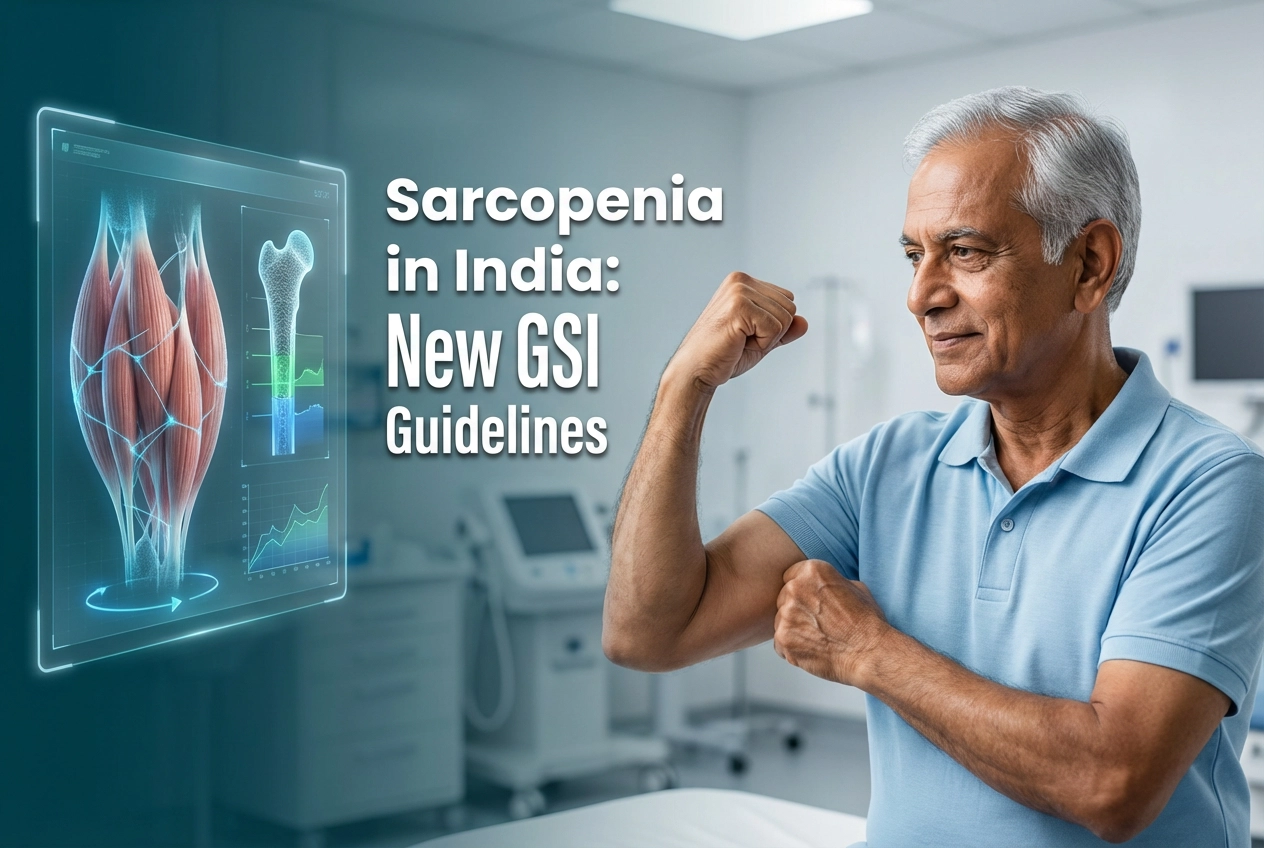
The Geriatric Society of India recently introduced the first clinical guidelines for evaluating and managing sarcopenia in India. This condition involves progressive muscle loss that significantly impacts the mobility and independence of older adults. Because the Indian population is aging rapidly, healthcare professionals must adopt standardized protocols for early detection. These recommendations aim to prevent falls, disability, and hospitalization among seniors.
Understanding the Prevalence of Sarcopenia in India
Current data indicates that sarcopenia affects approximately 8% to 18% of community-dwelling older adults in the country. This prevalence rises dramatically to 40% among hospitalized elderly patients. Furthermore, individuals with chronic conditions like diabetes face a much higher risk of muscle degradation. Therefore, doctors should treat muscle health as a core component of routine geriatric care. Early identification effectively preserves the dignity of patients as they age. For physicians looking to deepen their expertise in managing chronic conditions prevalent in aging populations, advanced study in diabetes care is beneficial, such as the International Post Graduate Program In Diabetes Mellitus Management.
Screening and Diagnostic Protocols
The new guidelines advise clinicians to monitor warning signs like weak grip strength and slow walking speed. To simplify the process, the GSI recommends using the SARC-F questionnaire in primary care settings. This tool evaluates strength, walking assistance, rising from a chair, climbing stairs, and fall history. Additionally, practitioners should measure handgrip strength using a dynamometer. Specifically, values below 27.5 kg for men and 18.0 kg for women indicate low muscle strength in the Indian context. Mastering screening techniques for various age groups is essential for effective primary care, a skill set covered comprehensively in the Certification Course In General Practice.
Management and Lifestyle Interventions
Managing sarcopenia requires a combination of exercise and nutritional support. Firstly, patients should perform resistance training exercises at least two to three times every week. Secondly, doctors must ensure adequate protein intake, especially for those on vegetarian diets. For instance, including paneer, soy, and pulses can help meet daily requirements. Moreover, clinicians should correct vitamin D deficiencies to optimize muscle function. Consequently, these simple steps can significantly slow the progression of muscle loss. Those interested in optimizing muscular function through advanced study may find the MSc In Sports And Exercise Medicine highly relevant.
Frequently Asked Questions
Q1: What is the SARC-F questionnaire used for?
The SARC-F is a rapid screening tool that helps doctors identify patients at risk of sarcopenia by evaluating five functional domains like strength and falls.
Q2: What protein sources are recommended for Indian vegetarian patients?
The guidelines suggest including protein-rich foods such as dal, paneer, soy, and pulses to combat age-related muscle loss effectively.
Q3: How often should older adults engage in strength training?
Experts recommend performing strength-training or resistance exercises two to three times a week to maintain muscle mass and physical independence.
References
- Losing muscle with age? New Indian guidelines warn of a hidden health risk – ETHealthworld
- Indian Guidelines for the Evaluation and Management of Sarcopenia – Geriatric Society of India (GSI)
- An Indian Consensus on Sarcopenia: Epidemiology, Etiology, Clinical Impact, Screening, and Therapeutic Approaches – National Institutes of Health (NIH)
Disclaimer: This article was automatically generated from publicly available sources and is provided for informational and educational purposes only. OC Academy does not exercise editorial control or claim authorship over this content. It is not a substitute for professional medical advice, diagnosis, or treatment. Always consult a qualified healthcare provider and refer to current local and national clinical guidelines.