
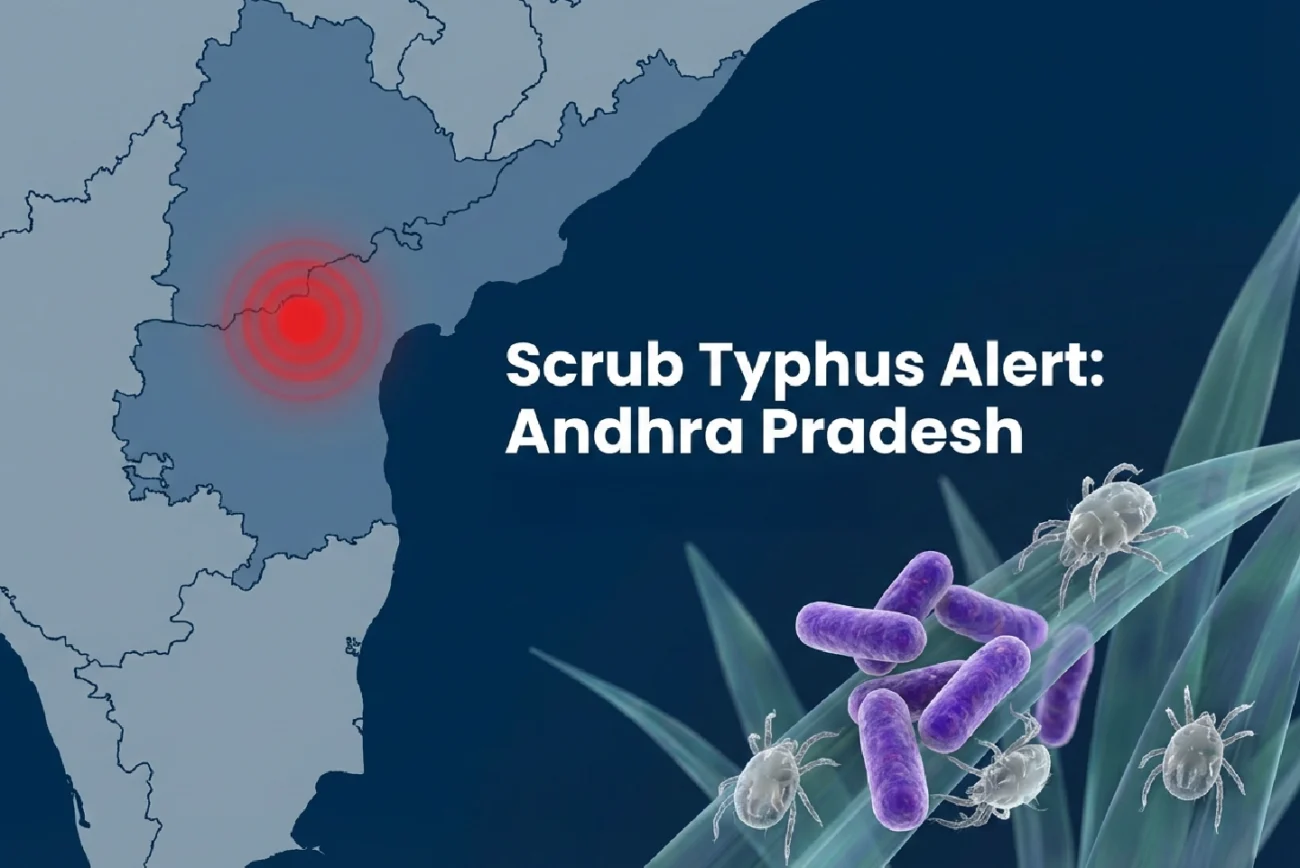
The recent surge in suspected fatalities due to an infectious disease has prompted high-alert measures across Andhra Pradesh. Andhra Pradesh Scrub Typhus has been suspected as the cause of death for nine individuals statewide. Commissioner G Veerapandian confirmed that over 1,500 positive cases have been reported so far, attributing this rise to expanded testing and enhanced surveillance. Although the numbers are comparatively lower than in neighboring states like Tamil Nadu and Karnataka, the authorities are intensifying efforts to contain the disease. Rapid Response Teams (RRTs) are now deployed across all 26 districts to conduct epidemiological investigations and review residential surroundings.
Understanding Scrub Typhus: Etiology and Symptoms
Scrub typhus, also known as bush typhus, is an acute, febrile illness. It is caused by the bacterium Orientia tsutsugamushi. The disease spreads to humans through the bite of an infected chigger, which is the larval stage of a particular type of mite. Importantly, this bacterium belongs to the Rickettsial group, which is a common cause of undifferentiated fever in India. Symptoms typically include high fever, severe headache, and joint pain. Furthermore, the bite site often develops a characteristic black scab, or eschar, on the skin. This is a key diagnostic clue for physicians. However, complications can be serious, potentially leading to multi-organ dysfunction, meningoencephalitis, and Acute Respiratory Distress Syndrome (ARDS) if the infection is left untreated.
Diagnosing Andhra Pradesh Scrub Typhus: Methods and Confirmation
Health authorities are conducting Scrub Typhus diagnostic tests at Primary Health Centres (PHCs) statewide. Samples are also being sent for deeper genome sequencing in Tirupati and Guntur to determine the exact cause of the suspected deaths. The Enzyme-Linked Immunosorbent Assay (ELISA) test can rapidly confirm Scrub Typhus infection by detecting antibodies. In fact, a positive ELISA result, especially an IgM capture assay, is crucial for early intervention. While the Indirect Immunofluorescence Assay (IFA) is considered the gold standard for diagnosis, it is less commonly available. Conversely, genome sequencing is essential for confirming if any death was directly caused by the infection. For clinicians seeking to deepen their diagnostic skills in related infectious processes, exploring options such as the Postgraduate Diploma In Infectious Disease can be beneficial.
Treatment and Public Health Response in AP
The treatment of choice for scrub typhus is antibiotic therapy. Doctors typically prescribe Doxycycline or Azithromycin for a full course of seven days. Early treatment significantly reduces the case fatality rate. Moreover, the Andhra Pradesh health department has stocked large quantities of both Doxycycline and Azithromycin across all healthcare centres. The state is concurrently running extensive awareness campaigns through various departments, including Agriculture and Panchayat Raj. These campaigns focus on educating the public about early detection, preventive measures, and seeking medical care promptly. For healthcare providers managing complex antibiotic regimens, learning about safe prescribing is always paramount.
Frequently Asked Questions
Q1: What is the causative agent and mode of transmission for Scrub Typhus?
Scrub Typhus is caused by the bacterium Orientia tsutsugamushi. It is transmitted to humans through the bite of an infected chigger, which is the larval stage of a specific type of mite.
Q2: What is the current case status in Andhra Pradesh compared to neighbouring states?
Andhra Pradesh has reported over 1,500 positive cases and nine suspected deaths. The number of cases is comparatively lower than those reported in neighbouring states like Tamil Nadu and Karnataka, which reported the highest numbers nationally.
Q3: Which diagnostic tests are used to confirm Scrub Typhus?
The Enzyme-Linked Immunosorbent Assay (ELISA) test is commonly used for rapid confirmation. Genome sequencing is also being utilised for deeper analysis and to confirm the exact cause of death. Furthermore, a characteristic black scab, or eschar, at the bite site serves as an important clinical clue.
References
- Andhra reports nine suspected Scrub Typhus deaths – ETHealthworld
- AP reports 1,566 Scrub Typhus cases – Metro India
- CD alert scrub typhus – National Centre for Disease Control (mohfw.gov.in)
- Scrub Typhus Treatment & Management – Medscape Reference
- Rickettsial infections: prevalence and diagnosis of scrub typhus in India – Frontiers
Disclaimer: This article was automatically generated from publicly available sources and is provided for informational and educational purposes only. OC Academy does not exercise editorial control or claim authorship over this content. It is not a substitute for professional medical advice, diagnosis, or treatment. Always consult a qualified healthcare provider and refer to current local and national clinical guidelines.