
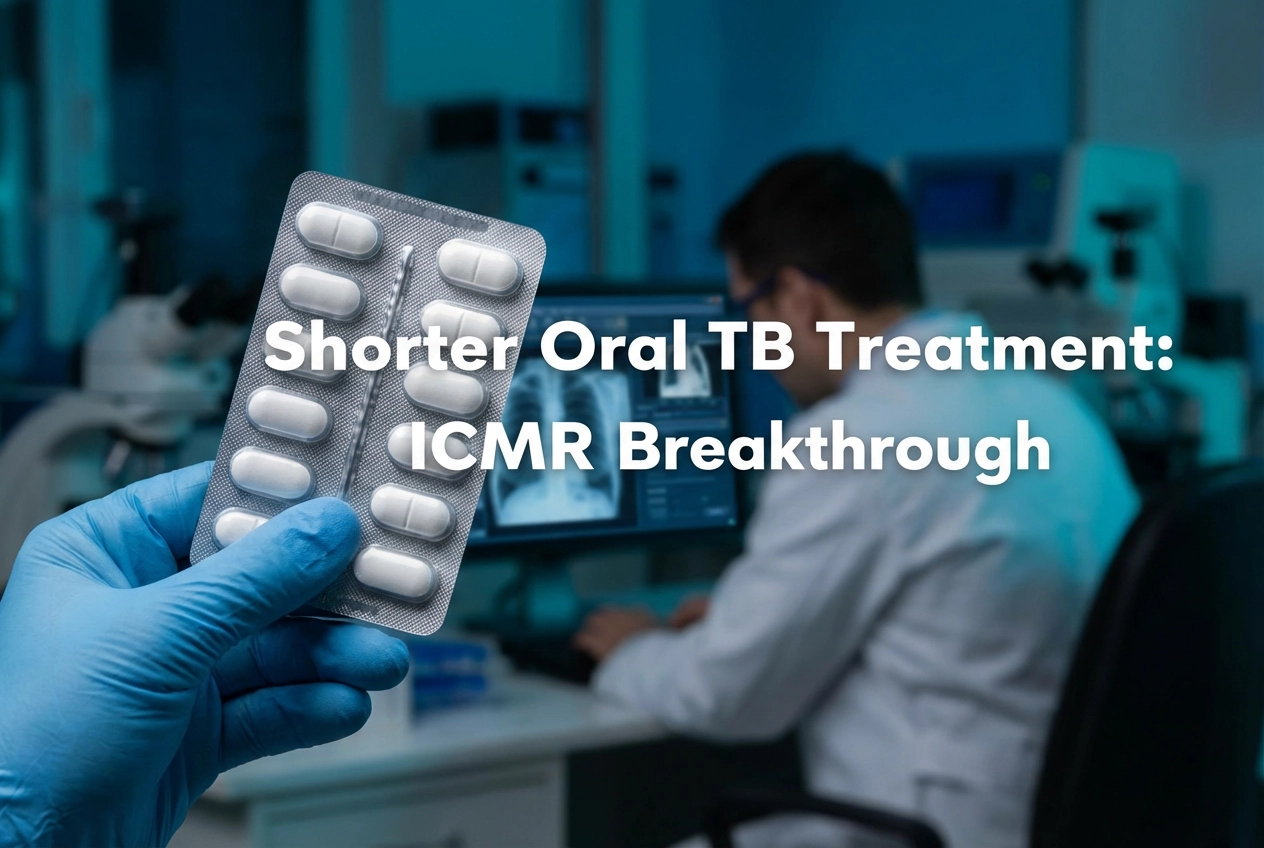
The Indian Council of Medical Research (ICMR) recently validated a major breakthrough in managing drug-resistant tuberculosis. Specifically, the shorter oral TB treatment regimens are significantly more effective than traditional long-term plans. This finding aligns with India’s goal to eliminate TB by providing more patient-centric care.
Impact of Shorter Oral TB Treatment on Health Systems
According to the National Institute for Research in Tuberculosis (NIRT), the BPaL regimen offers superior results. This regimen comprises bedaquiline, pretomanid, and linezolid. Furthermore, this six-month approach is more economical for the health system. For every additional quality-adjusted life year (QALY) gained, the system actually saves Rs 379 per patient. Consequently, healthcare providers can allocate resources more efficiently while improving patient outcomes.
Clinical Benefits and Patient Adherence
Multidrug-resistant TB (MDR-TB) typically requires 18 to 20 months of treatment. However, the BPaLM regimen, which adds moxifloxacin, reduces this duration to just six months. Therefore, patients experience fewer adverse effects and return to their normal lives faster. Additionally, shorter treatment plans naturally improve adherence. This is a critical factor in preventing further drug resistance across India. Professionals looking to advance their knowledge in related areas of infectious disease management might benefit from specialized training, such as a Postgraduate Diploma In Infectious Disease.
Frequently Asked Questions
Q1: What are the primary regimens studied by ICMR?
The study evaluated the BPaL (bedaquiline, pretomanid, and linezolid) and BPaLM (with moxifloxacin) regimens against traditional longer treatments.
Q2: Why is the BPaL regimen considered cost-effective?
It is cost-effective because it reduces the treatment duration and overall healthcare expenditure while providing better quality-adjusted life years for patients.
Q3: How does the BPaLM regimen compare to standard care?
The BPaLM regimen is highly cost-effective, costing only Rs 37 more per patient for each additional QALY gained compared to standard care.
References
- Shorter all-oral treatment plans for drug-resistant TB cheaper, more effective:ICMR study – ETHealthworld
- World Health Organization. WHO consolidated guidelines on tuberculosis. Module 4: Treatment – drug-resistant tuberculosis treatment.
- National TB Elimination Programme (NTEP) India. Guidelines for PMDT in India.
Disclaimer: This article was automatically generated from publicly available sources and is provided for informational and educational purposes only. OC Academy does not exercise editorial control or claim authorship over this content. It is not a substitute for professional medical advice, diagnosis, or treatment. Always consult a qualified healthcare provider and refer to current local and national clinical guidelines.