
Is Sirolimus the Future of Infrainguinal Angioplasty?
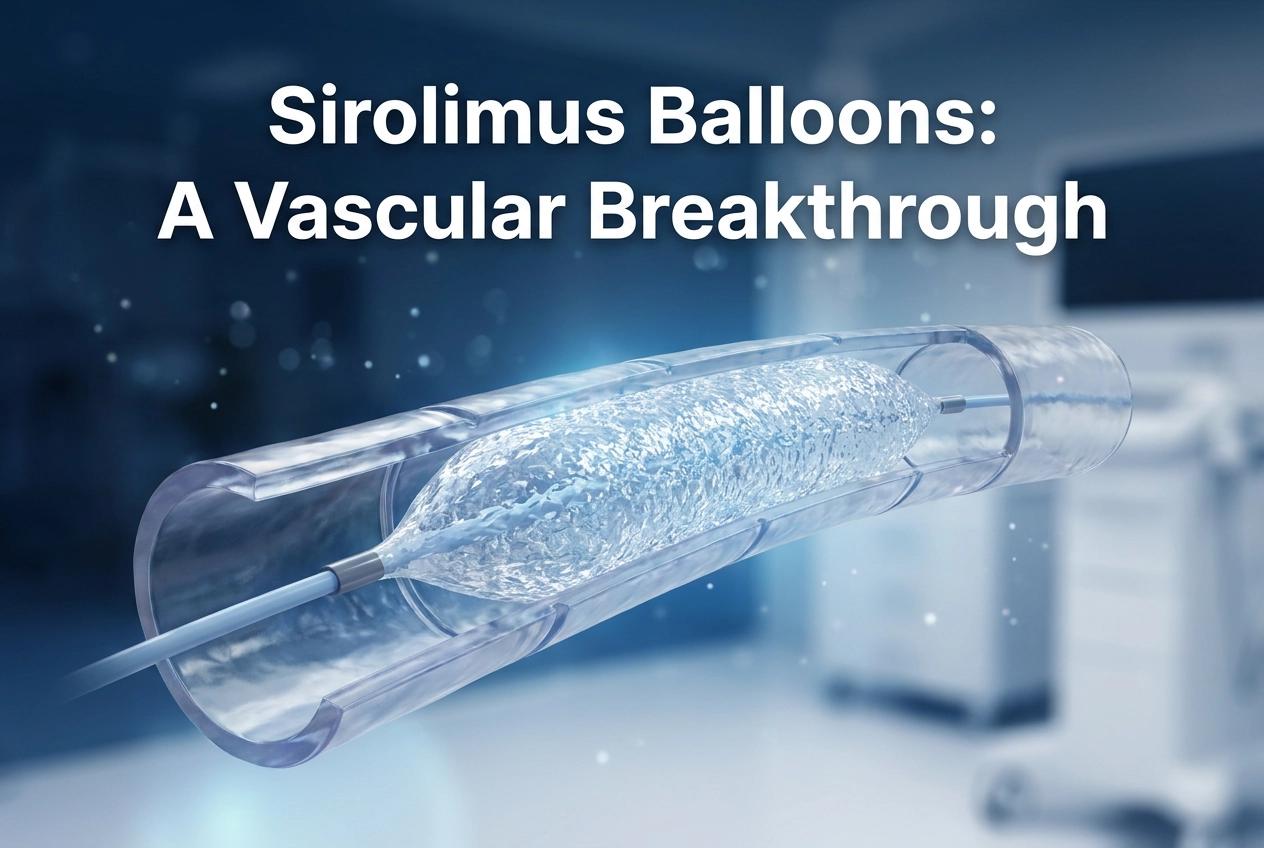
Infrainguinal artery disease significantly impacts the quality of life for millions of people in India. This condition often results in severe morbidity, including limb loss. Consequently, clinicians constantly seek more effective revascularization strategies. Recently, sirolimus-coated balloon angioplasty has emerged as a promising intervention for improving patient outcomes. The SirPAD trial, published in the New England Journal of Medicine, provides high-quality evidence for its use.
Benefits of Sirolimus-Coated Balloon Angioplasty
Researchers conducted a large-scale study involving 1252 patients. They randomized participants to receive either coated or uncoated balloons. Specifically, the trial focused on reducing major adverse limb events over one year. The results demonstrated that sirolimus-coated balloons significantly outperformed their uncoated counterparts. Primary outcome events occurred in only 8.8% of the sirolimus group compared to 15.0% in the control group. Therefore, this technology offers a superior solution for maintaining long-term arterial patency. Moreover, the safety profile remained excellent throughout the follow-up period. There was no significant difference in all-cause mortality between the two study groups. Thus, vascular specialists can confidently integrate this approach into their surgical workflows. Additionally, the study utilized blinded outcome adjudication to ensure the highest data integrity.
Impact on Indian Clinical Practice
Peripheral artery disease is highly prevalent in India due to aging and rising diabetes rates. Furthermore, many patients present late with critical limb ischemia. This delayed presentation unfortunately increases the risk of major amputation. However, using drug-coated balloons could potentially lower these devastating rates. Specifically, the reduction in target lesion revascularization is a major clinical advantage. It minimizes the need for repeat hospital visits and expensive secondary interventions. Additionally, sirolimus acts as a cytostatic agent, which may offer biological advantages over cytotoxic alternatives. Consequently, adopting this technology could lead to better limb salvage outcomes for Indian patients. Notable evidence suggests that drug-coated balloons provide better clinical results than conventional balloon angioplasty alone.
Frequently Asked Questions
Q1: How does the efficacy of sirolimus-coated balloons compare to uncoated balloons?
Trial data shows that sirolimus-coated balloons reduce major adverse limb events by nearly half compared to uncoated balloons within one year.
Q2: Is sirolimus-coated balloon angioplasty safe for PAD patients?
Yes, the safety outcomes, including death from any cause, were similar between the sirolimus-coated and uncoated balloon groups in the SirPAD trial.
Q3: Why is this development important for doctors in India?
Given the high burden of diabetes and late-stage PAD in India, this technology provides a superior tool for preventing amputations and repeat procedures.
References
- Barco S et al. Sirolimus-Coated Balloon Angioplasty for Infrainguinal Artery Disease. N Engl J Med. 2026 Mar 30. doi: 10.1056/NEJMoa2600360. PMID: 41911022.
- Sharma et al. Demographics and Prevalence of Risk Factors in Patients With Peripheral Arterial Disease Presenting to a Tertiary Care Center in Northern India. Cureus. 2022 Dec 11. doi: 10.7759/cureus.32426.
- Teichgräber U et al. Sirolimus-coated versus paclitaxel-coated balloons for femoropopliteal artery disease (SIRONA). Cardiovascular Research Foundation (TCT). 2024.