
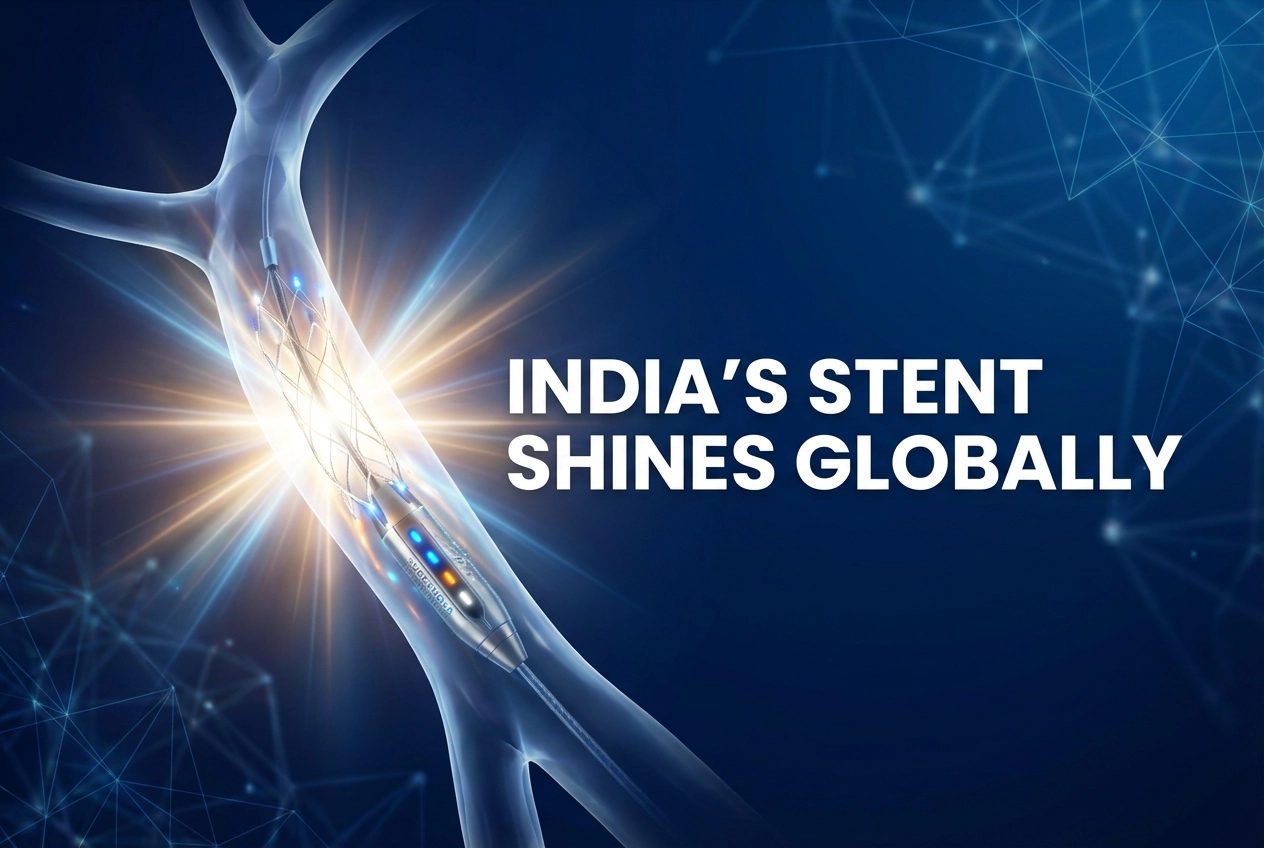
AIIMS New Delhi has successfully led India’s first clinical trial for an advanced, indigenously developed stroke device. This significant development promises to boost access to timely and affordable stroke care nationwide. Specifically, the trial evaluated the Supernova Stent Retriever system (GRASSROOT). Researchers demonstrated that high-quality treatment for severe strokes is deliverable within the country. Importantly, the outcomes are comparable to established global standards.
The GRASSROOT trial was a multicentre study; it enrolled 32 patients across eight Indian stroke centres. The study ran from August 2024 to June 2025. The average patient age was 58 years, and furthermore, nearly one-third were women. Many participants presented with risk factors like hypertension, diabetes, and heart disease. However, most reached the hospital quickly, with a median arrival time just over six hours after stroke onset. Blockages primarily occurred in major brain arteries, particularly the middle cerebral artery.
Supernova Stent Retriever Achieves World-Class Efficacy
Doctors successfully restored blood flow to the brain in nearly 94% of patients. They often achieved this result within one or two attempts. Consequently, additional rescue therapy was unnecessary in most cases. Dr. Shailesh B. Gaikwad, the national principal investigator, called these findings a turning point. Therefore, the study confirms India’s ability to generate world-class clinical evidence for advanced stroke treatment. This reduces the country’s dependence on imported devices. Moreover, by 90 days, approximately half of the patients had regained functional independence. Both mortality and serious brain bleeding rates remained low. The trial also reported no device-related complications.
Boosting ‘Make-in-India’ and Affordability
Speed and reliability are critical factors in positive stroke care outcomes. Devices that quickly reopen blocked vessels—ideally on the first attempt—improve survival and reduce long-term disability. This is especially vital in resource-limited settings like India. Earlier this year, for instance, the CDSCO approved the Supernova stent for routine use based on the trial data. This makes it India’s first stroke device to gain clearance entirely from domestic clinical trial evidence. This regulatory approval strongly supports the Make-in-India initiative. Furthermore, it widens access to affordable advanced stroke treatment across the country. Dr. Dileep Yavagal, the global principal investigator, noted that the device is already manufactured for use in over 300 patients across Southeast Asia. Importantly, the Supernova stent will now be manufactured in India at affordable prices. This domestic production is a critical factor because nearly 1.7 million people suffer a stroke every year in India. Professionals interested in advancing their knowledge in this critical area can explore the Certification Course In Stroke Medicine.
Frequently Asked Questions
Q1: What is the Supernova Stent Retriever?
The Supernova Stent Retriever is an advanced, indigenously developed stroke device used in a procedure called mechanical thrombectomy to physically remove blood clots causing severe strokes (Large Vessel Occlusion).
Q2: What key clinical outcomes did the GRASSROOT trial demonstrate?
The trial demonstrated successful restoration of blood flow in nearly 94% of patients, with half of the patients regaining functional independence at 90 days. Mortality and serious brain bleeding rates were low, matching international standards.
Q3: What is the significance of the CDSCO approval?
The Central Drugs Standard Control Organisation (CDSCO) approved the Supernova stent for routine use based entirely on domestic clinical trial data (the GRASSROOT trial). This is a milestone, as it is India’s first stroke device cleared on this basis, boosting the Make-in-India initiative and promising wider access to affordable stroke care. For those managing long-term neurological events, advanced study options like the Postgraduate Diploma In Stroke Medicine or the MSc In Stroke Medicine are available.
References
- AIIMS-led trial proves indigenous stroke device matches global standards – ETHealthworld
- AIIMS-led trial on most advanced brain stent shows promise for stroke patients – lokmattimes.com
- AIIMS-Delhi conducts India’s first dedicated clinical trial of advanced brain stent – tribuneindia.com
Disclaimer: This article was automatically generated from publicly available sources and is provided for informational and educational purposes only. OC Academy does not exercise editorial control or claim authorship over this content. It is not a substitute for professional medical advice, diagnosis, or treatment. Always consult a qualified healthcare provider and refer to current local and national clinical guidelines.