
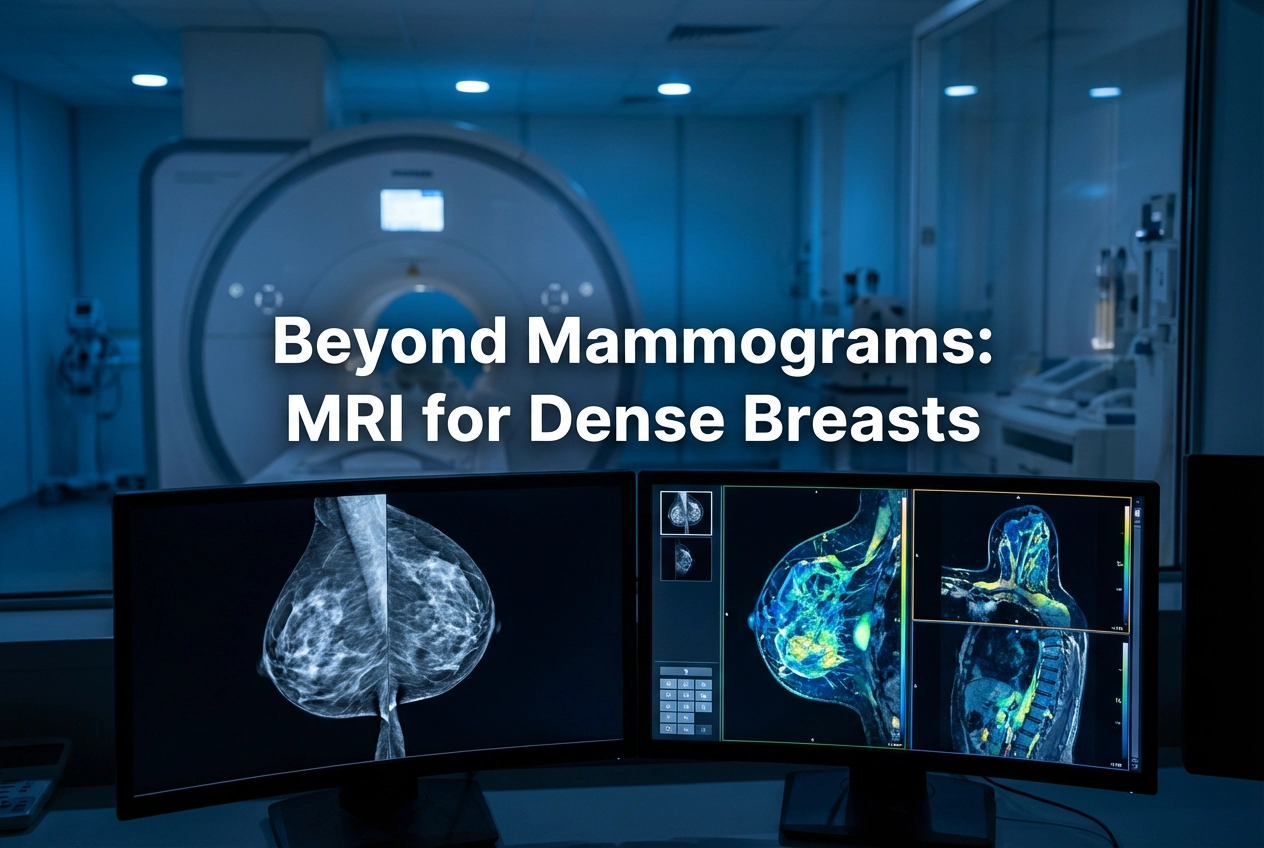
Recent federal mandates regarding breast density notifications have prompted many physicians to consider the role of Supplemental Breast MRI Screening in routine clinical practice. For women with extremely dense breasts, traditional digital breast tomosynthesis (DBT) often faces limitations in sensitivity. Consequently, adding magnetic resonance imaging (MRI) has emerged as a potential strategy to detect occult cancers early. However, clinicians must carefully weigh the additional lives saved against the increased burden of false-positive results. A recent large-scale simulation study provides critical insights into the long-term health and economic trade-offs of this approach.
Benefits of Supplemental Breast MRI Screening
According to the findings, DBT remains the primary driver of mortality reduction across all risk levels. Specifically, it averts between 7.4 and 33.6 deaths per 1000 women depending on their relative risk for breast cancer. Adding Supplemental Breast MRI Screening for those with extremely dense tissue provides a modest incremental benefit. This addition averts approximately 0.1 to 0.8 additional breast cancer deaths. While this number seems small, the cumulative impact at a population level is significant for women with a relative risk of 2.0 or higher. Therefore, clinicians should prioritize identifying patients who belong to these higher-risk subgroups for tailored screening protocols.
Balancing False Positives and Economic Costs
One major drawback of intensive screening is the rise in false-positive biopsy recommendations. In fact, adding MRI can result in 22 to 186 additional false positives per 1000 women. Furthermore, the study noted that starting biennial MRI at age 50 was more effective than starting DBT at 45 but remained less cost-effective. Currently, the high cost of MRI and the frequency of unnecessary biopsies limit the broader application of this technology. Nevertheless, the intervention could become highly cost-effective if healthcare systems manage to reduce MRI pricing and improve biopsy specificity. Indian practitioners must consider these economic factors when advising patients in resource-constrained settings.
Clinical Recommendations for High-Risk Populations
For women with a relative risk of 2.0 or higher, the harm-benefit ratio of supplemental MRI is comparable to that of biennial DBT in average-risk women. This suggests that the strategy is clinically justifiable for this specific cohort. Additionally, most international guidelines now recommend informing women about their individual breast density to facilitate shared decision-making. Moreover, integrating risk assessment tools into routine gynecological exams can help identify those who would benefit most from more frequent imaging. Ultimately, a personalized approach ensures that the benefits of early detection are not overshadowed by the harms of over-diagnosis.
Frequently Asked Questions
Q1: Who should consider supplemental breast MRI?
Supplemental MRI is most beneficial for women aged 40 or older who have extremely dense breasts and a relative breast cancer risk of 2.0 or higher.
Q2: What are the main risks associated with adding MRI to a screening program?
The primary risks include a higher rate of false-positive biopsy recommendations and significantly increased healthcare costs compared to using 3D mammography alone.
Q3: Is supplemental MRI currently cost-effective for all women with dense breasts?
No, it is currently not cost-effective for women at average risk. It may become cost-effective if the costs of MRI scans and false-positive rates are reduced significantly.
References
- Tosteson ANA et al. Outcomes of Density-Targeted Supplemental Breast Magnetic Resonance Imaging Screening by Breast Cancer Risk: Long-Term Health and Economic Considerations. Ann Intern Med. 2026 Mar 03. doi: 10.7326/ANNALS-25-00792. PMID: 41771133.
- Breast Imaging Society, India (BISI). Best Practice Guidelines for Breast Imaging. Indian J Radiol Imaging. 2022.
- American College of Radiology (ACR). ACR Practice Parameter for the Performance of Screening and Diagnostic Breast MRI. 2023.
“