Can We Safely Extend Colonoscopy Intervals to 5 Years?
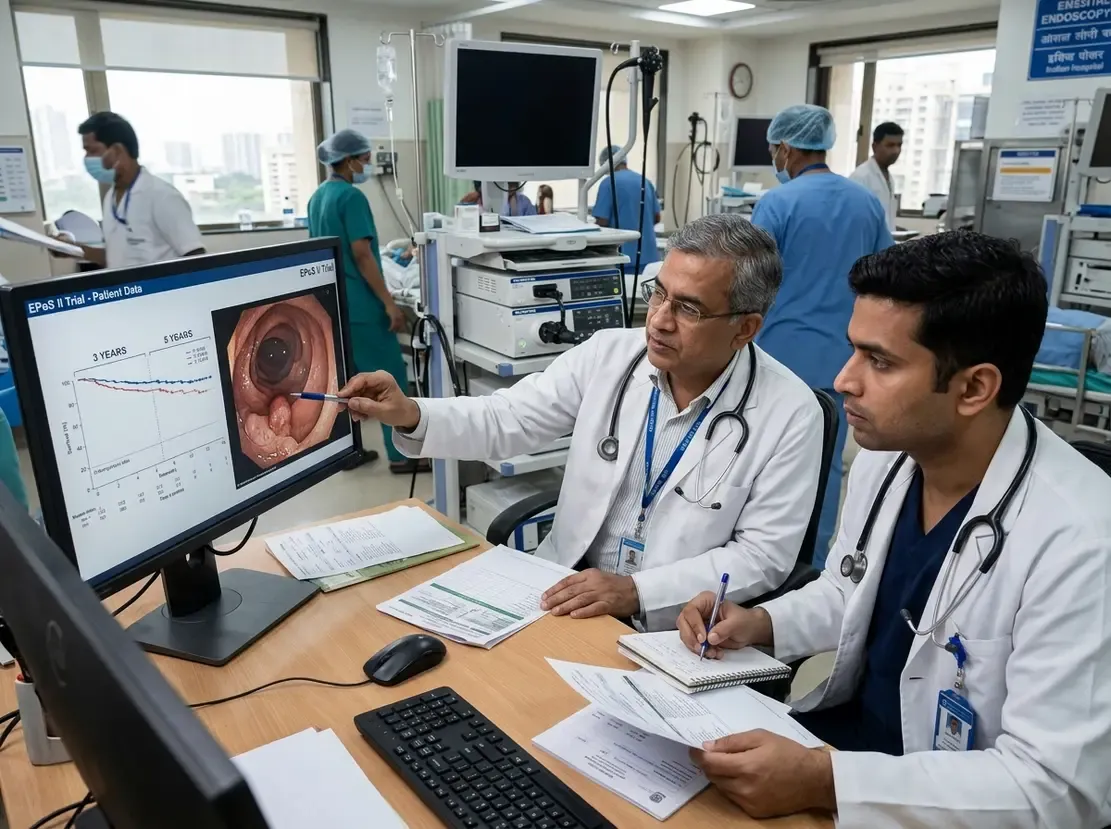
Current international guidelines recommend early follow-up exams for high-risk colorectal polyps. However, determining optimal surveillance colonoscopy intervals remains a persistent challenge for clinicians. Experts often debate whether shorter review cycles genuinely protect patients or merely overwhelm endoscopy units.
Recent clinical data from the multinational EPoS II trial provide timely reassurance. Specifically, investigators evaluated whether waiting longer after complete polyp resection compromises patient safety. The findings suggest clinicians can safely re-evaluate current practice without increasing cancer risk.
Evaluating Surveillance Colonoscopy Intervals in High-Risk Patients
The randomized EPoS II study enrolled 10,799 patients across eight European countries. In this trial, clinicians randomly allocated participants to either a three-year or five-year surveillance regimen. All eligible individuals presented with high-risk adenomas at their initial baseline examination. These lesions measured at least 10 millimeters, exhibited villous features, contained high-grade dysplasia, or totaled three or more adenomas.
Historically, standard protocols required high-risk individuals to return after three years. Therefore, the investigative team sought to prove noninferiority for a less intensive five-year timeline. Furthermore, the trial examined cumulative colorectal cancer incidence at five years as a key interim milestone.
Key Interim Findings from the EPoS II Trial
At the 5.5-year follow-up mark, both surveillance strategies demonstrated remarkably low colorectal cancer rates. Specifically, the cumulative cancer incidence reached 0.77% in the five-year group compared to 0.82% in the three-year group. Thus, the absolute risk difference was minus 0.05 percentage points.
Importantly, the upper boundary of the confidence interval remained well within the prespecified noninferiority threshold. Cancer stage at diagnosis also showed no substantial differences between the cohorts. Additionally, colorectal cancer deaths remained exceedingly rare, with three deaths in the five-year arm and two in the three-year arm. Over 99% of all participants remained completely cancer-free throughout the observation window.
Clinical Implications for Endoscopy Practice
These interim results challenge the conventional assumption that more frequent endoscopy automatically provides superior protection. Consequently, gastroenterologists may soon avoid performing thousands of unnecessary surveillance colonoscopies worldwide. In addition, this adjustment could dramatically relieve waiting lists and reduce complications associated with invasive procedures.
Nevertheless, rigorous baseline examination quality remains essential before clinicians prolong recall intervals. Endoscopists must ensure complete polyp clearance and achieve high adenoma detection standards. Therefore, practitioners should continue to apply meticulous technique while long-term 10-year data mature.
Frequently Asked Questions
Q1: What did the EPoS II study discover regarding surveillance intervals?
The trial demonstrated that extending surveillance to five years after removing high-risk adenomas is noninferior to a three-year interval. Both cohorts experienced a five-year colorectal cancer incidence below 1%.
Q2: How did the study define high-risk adenomas?
Investigators defined high-risk adenomas as polyps measuring 10 millimeters or larger, lesions with high-grade dysplasia or villous histology, or the presence of three to ten adenomas.
Q3: Does extending surveillance intervals compromise patient safety?
No, the interim analysis showed comparable cancer stages and extremely low disease-related mortality in both groups. Consequently, extending the interval appears safe when complete baseline polyp removal occurs.
References
- Jover R et al. Colonoscopy Intervals and Colorectal Cancer Incidence after Adenoma Removal. N Engl J Med. 2026 Sep 17. doi: 10.1056/NEJMoa2603816. PMID: 42748427.
- Hassan C, Antonelli G, Dumonceau JM, et al. Post-polypectomy colonoscopy surveillance: European Society of Gastrointestinal Endoscopy (ESGE) Guideline - Update 2020. Endoscopy. 2020;52(8):687-700.
- Gupta S, Lieberman D, Anderson JC, et al. Recommendations for follow-up after colonoscopy and polypectomy: a consensus update by the US Multi-Society Task Force on Colorectal Cancer. Gastrointest Endosc. 2020;91(3):463-485.e5.