Youth-Led Anti-Tobacco Drive: Key Medical Directives

The Union Ministry of Health and Family Welfare has launched the fourth edition of the tobacco-free youth campaign. Consequently, health authorities are expanding anti-tobacco interventions across Indian universities, colleges, and schools. Medical professionals play a crucial role in championing this nationwide movement. Therefore, clinical teams must actively screen adolescents for tobacco consumption and provide timely cessation support.
Strategic Goals of the Tobacco-Free Youth Campaign
This 60-day initiative deploys a robust six-pronged framework to curb nicotine uptake among adolescents. Furthermore, the campaign targets college environments to establish completely tobacco-free educational zones. Previous iterations successfully established over 5.8 lakh tobacco-free institutions and 73,000 tobacco-free villages. In addition, the current phase prioritizes student-led community engagement and extensive digital outreach. As a result, educational boards and local panchayats will collaborate closely with public health officials. This multi-sectoral approach ensures strict monitoring around educational perimeter boundaries.
Clinical Impact of Early Nicotine Exposure
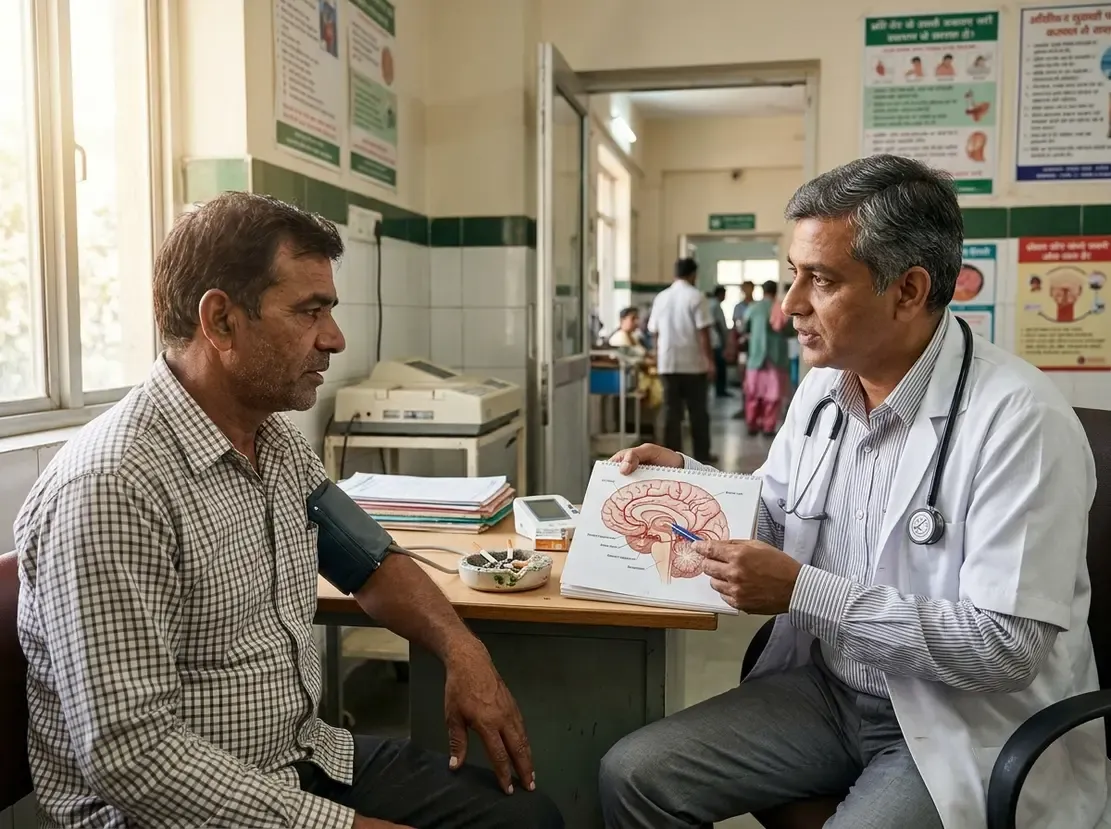
Tobacco smoke carries more than 7,000 toxic chemicals, including dozens of recognized human carcinogens. Moreover, early nicotine exposure severely disrupts critical neurodevelopmental pathways during teenage years. Adolescents exposed to nicotine frequently develop persistent deficits in attention, working memory, and impulse control. Second-hand smoke also imposes severe respiratory and cardiovascular risks on non-smoking household members. Consequently, clinicians must educate parents and adolescents on these preventable health hazards. Routine brief counseling in outpatient clinics significantly increases long-term cessation success rates, which is a vital component taught in specialized adolescent health programs.
Enforcing COTPA and Educational Guidelines
Effective tobacco control demands stringent regulatory enforcement across all administrative jurisdictions. Thus, enforcement agencies actively penalize violations under the Cigarettes and Other Tobacco Products Act (COTPA), 2003. Specifically, Section 4 of COTPA strictly bans smoking in public places and institutional buildings. Additionally, authorities enforce the Prohibition of Electronic Cigarettes Act (PECA), 2019, to suppress vaping devices. The government also mandates full compliance with the Tobacco-Free Educational Institutions (ToFEI) guidelines. Under these rules, shops cannot sell tobacco products within 100 yards of any educational campus. Therefore, healthcare providers and academic administrators must report violations to maintain protected learning spaces.
Frequently Asked Questions
Q1: What are the primary objectives of the Tobacco-Free Youth Campaign 4.0?
The campaign aims to prevent tobacco initiation among youth, encourage cessation, enforce tobacco laws, and create tobacco-free learning environments.
Q2: How does adolescent nicotine exposure affect brain development?
Nicotine exposure during adolescence impairs brain development, harming attention span, working memory, emotional regulation, and cognitive learning capacity.
Q3: Which statutory regulations govern tobacco prohibition near Indian educational institutions?
Authorities enforce the Cigarettes and Other Tobacco Products Act (COTPA) 2003 and Tobacco-Free Educational Institutions (ToFEI) guidelines to prohibit sales within 100 yards.
References
- Youth should lead nationwide campaign against tobacco use: Union MinisterPrataprao Jadhav - ETHealthworld
- Press Information Bureau (PIB), Government of India. Union MoS Shri Prataprao Jadhav Launches Tobacco-Free Youth Campaign 4.0, Calls Upon Youth to Lead Nationwide Movement Against Tobacco and Addiction.
- Ministry of Health and Family Welfare (MoHFW), Government of India. Revised Guidelines for Tobacco-Free Educational Institutions (ToFEI).