
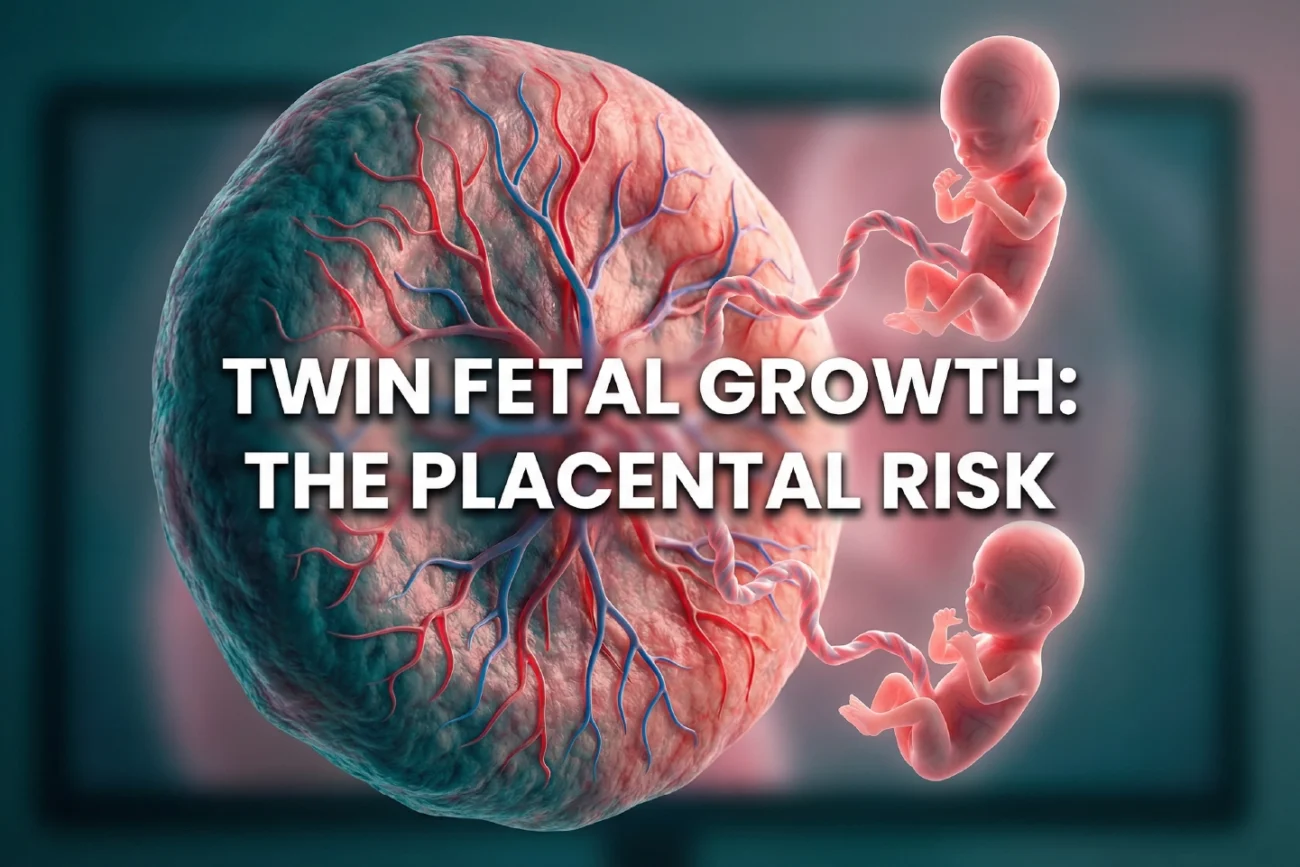
Managing Risk in Twin Fetal Growth Restriction
Twin fetal growth restriction remains a critical concern for obstetricians in India. Specifically, recent research highlights how ultrasound-defined phenotypes correlate with placental pathology. A retrospective cohort study analyzed 753 dichorionic twin pregnancies to evaluate these patterns. It aimed to determine the risk of placental dysfunction based on fetal weight and Doppler results. Consequently, understanding these risks helps clinicians prioritize care for high-risk pregnancies.
Identifying Phenotypes of Twin Fetal Growth Restriction
Clinicians often struggle to differentiate between constitutionally small twins and those with true placental disease. However, this study clarifies the risks associated with different growth patterns. When using singleton-specific charts, isolated mild small-for-gestational-age (SGA) fetuses showed lower risks. In contrast, severe SGA and abnormal Doppler readings significantly increased the likelihood of placental pathology. Therefore, the researchers proposed a new risk framework. Doctors can now categorize patients into possible, moderate, or high-risk groups. This classification aids in tailoring surveillance and delivery timing.
Comparing Growth Charts in Clinical Practice
The choice of growth charts significantly impacts diagnosis. For instance, twin-specific charts identified more cases of isolated discordance as high-risk. Specifically, isolated discordance showed a 32.4% rate of primary outcomes when using twin-specific metrics. Furthermore, mild SGA also appeared more concerning on these specialized charts. This suggests that twin-specific standards may better reflect pathological growth in this population. Thus, practitioners should consider the specific chart type when evaluating twin fetal growth restriction to avoid missing placental dysfunction.
Frequently Asked Questions
Q1: Why is the choice of growth chart important for twin pregnancies?
The choice of chart affects the risk stratification of placental disease. Twin-specific charts may be more sensitive in identifying pathological growth patterns like isolated discordance compared to singleton charts.
Q2: What ultrasound markers indicate the highest risk of placental pathology?
Severe small-for-gestational-age (SGA) combined with weight discordance and abnormal Doppler findings indicates the highest risk. These cases often show a four-fold increase in placental-mediated growth restriction.
Q3: How do these risk categories help clinical management?
These categories provide a framework to inform future clinical trials. Additionally, they help develop specific guidelines for managing twin pregnancies affected by late-onset growth restriction.
References
- Essalah A et al. Risk of Placental Pathology Across Ultrasound-Defined Phenotypes of Impaired Fetal Growth in Dichorionic Twins: A Retrospective Cohort Study. BJOG. 2026 Mar 11. doi: 10.1111/1471-0528.70215. PMID: 41808584.
- Khalil A, et al. ISUOG Practice Guidelines: role of ultrasound in twin pregnancy. Ultrasound Obstet Gynecol. 2016;47(2):247-63.
- Dekalo A, et al. Fetal growth restriction, neonatal morbidity and placental pathology in dichorionic twins-a comparison of twin-specific versus singleton growth charts. Placenta. 2023;141:6-10.