Can a New Urine Biomarker Predict 5-Year Cancer Risk?

Cancer incidence continues to escalate across the globe, creating an urgent demand for non-invasive risk detection tools. Recently, investigators evaluated an innovative urine biomarker for cancer risk prediction prior to symptom onset. This approach profiles metabolic changes to quantify multi-cancer susceptibility across several years. Consequently, primary care clinicians could potentially identify vulnerable individuals long before traditional clinical manifestations appear.
How the Urine Biomarker for Cancer Risk Stratification Works
Researchers from Lund University, the University of Liverpool, Dana-Farber Cancer Institute, and Elypta conducted the collaborative study. Specifically, the team examined 24-hour urine samples from the Dutch Lifelines cohort. They measured three distinct chondroitin sulphate disaccharides using high-precision mass spectrometry.
Furthermore, the team integrated these metabolic measurements into a composite GAGome score. Glycosaminoglycans represent complex sugar chains within extracellular tissue matrices that remodel during oncogenesis. The study examined 827 individuals who developed cancer within five years and 4,609 healthy controls. Subsequently, investigators extrapolated their findings across a broader population of over 124,000 adults.
Importantly, the five-year cancer probability varied substantially across the risk tiers. Individuals in the lowest tier experienced a 0.18% five-year cancer probability. In contrast, participants in the very-high-risk category faced a 32% probability. A single standard deviation rise in the GAGome score correlated with a 66% increased malignancy risk. Therefore, this metabolic signature offers substantial risk stratification capacity beyond traditional baseline variables.
Clinical Implications and Screening Performance
Current cancer screening programs target only a small subset of malignancies. However, this metabolic profiling test demonstrated solid predictive ability across diverse tumor types. The biomarker performed remarkably well for tumors lacking standard screening programs, such as kidney, pancreatic, and brain cancers.
Additionally, assigning individuals to a high-risk group captured 54% of all future malignancies. It identified 54% of in-situ carcinomas as well. Meanwhile, the assay maintained a manageable 17% false-positive rate. As a result, clinicians could focus advanced diagnostic modalities on individuals with elevated biological susceptibility.
Moreover, the biological signal remained consistent across different tumor stages. The GAGome metric operated independently from 13 established risk factors, including age and tobacco use. Thus, dynamic biofluid markers could complement existing lifestyle risk evaluations in outpatient settings.
Translating Biomarker Findings to the Indian Healthcare Landscape
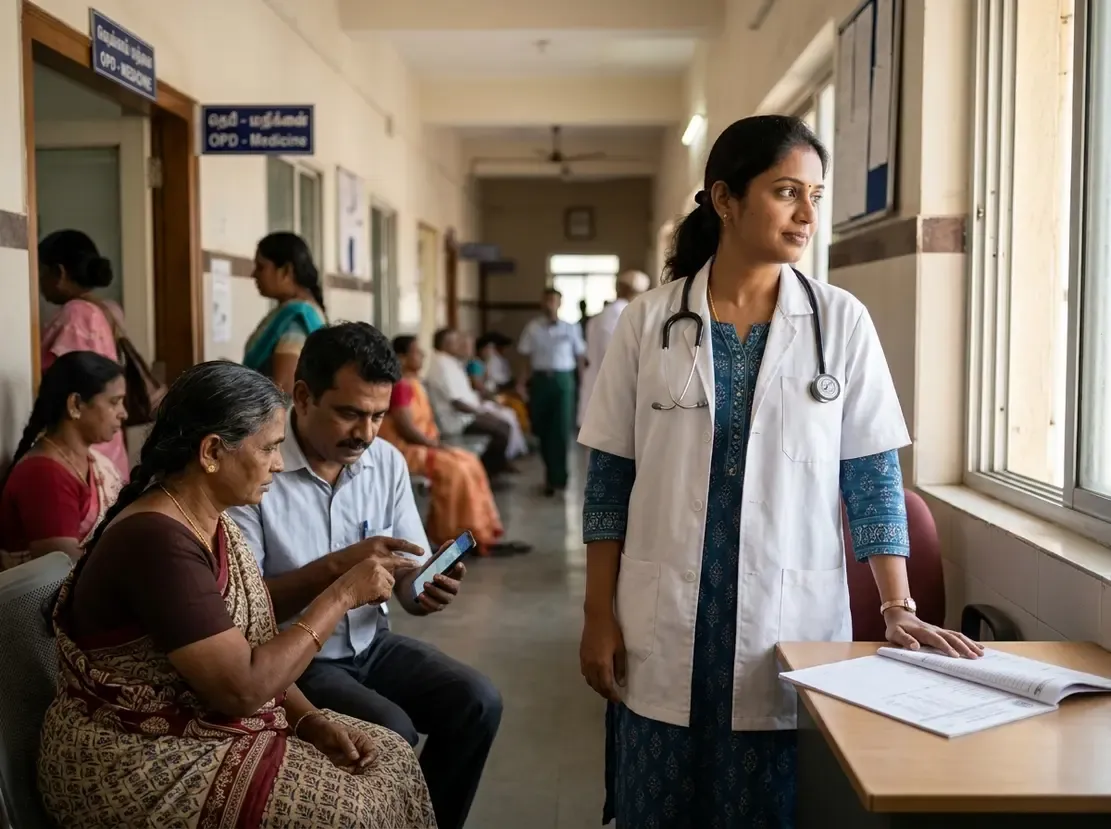
India faces an immense cancer burden, with over 15.6 lakh new diagnoses reported annually. Unfortunately, late-stage presentation remains a primary driver of high mortality across Indian states. Non-invasive screening methodologies could theoretically transform community oncology in India.
However, medical leaders caution against immediate clinical extrapolation. Experts note that Indian populations exhibit distinct genetic backgrounds, environmental exposures, and cancer spectrums compared to European cohorts. In addition, head, neck, and cervical malignancies predominate in India, differing from Northern European incidence patterns.
Consequently, oncology specialists emphasize the need for large-scale, multicentric validation studies across Indian cohorts. Health systems must also establish clinical cost-effectiveness and accessibility before broad deployment. Furthermore, clinicians must remember that this tool stratifies risk rather than diagnosing established disease. Therefore, widespread adoption requires clear evidence demonstrating improved survival outcomes.
Frequently Asked Questions
Q1: Is this urine test a definitive diagnostic test for active cancer?
No, the test serves as a risk stratification tool rather than a diagnostic assay. It estimates five-year cancer susceptibility instead of detecting active tumors.
Q2: Which molecules does the GAGome test measure in urine?
The assay measures three chondroitin sulphate disaccharides using mass spectrometry. These glycosaminoglycans reflect cellular matrix remodeling linked to early malignancy.
Q3: Why can Indian clinicians not directly adopt European study results?
Indian populations have distinct genetic profiles, lifestyle factors, and epidemiological cancer patterns. Therefore, researchers must conduct multicentric trials within India to validate clinical utility.
References
- Urine biomarker may offer new way to flag cancer risk in India, study suggests - ETHealthworld
- Cancer Epidemiology, Biomarkers & Prevention - Urine Glycosaminoglycan Profiling and Five-Year Cancer Risk in the Lifelines Cohort Study
- LabMedica - Study Finds Urine Biomarker Score Improves Five-Year Cancer Risk Prediction