
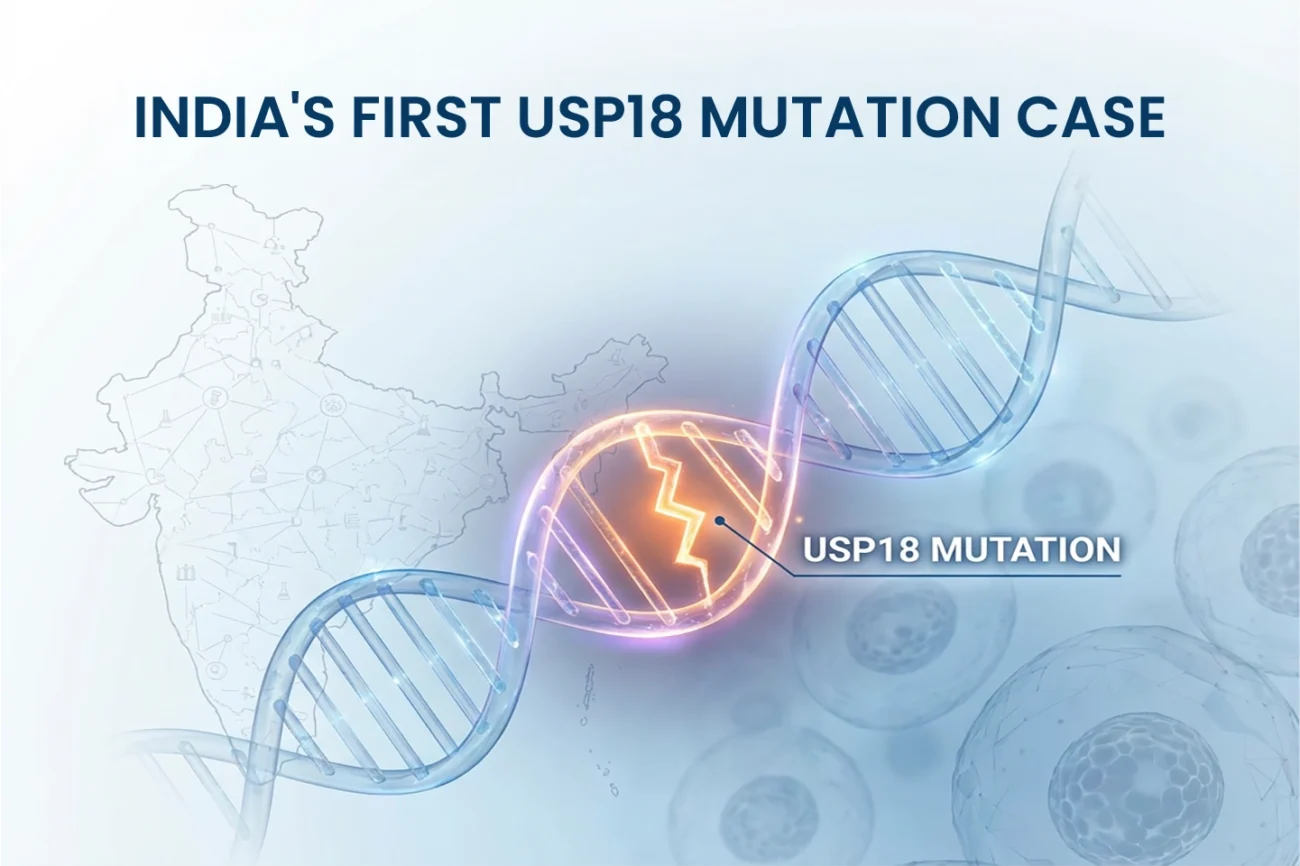
Indian medical research has achieved a significant milestone with the discovery of a novel USP18 gene mutation. Redcliffe Labs and the Indira Gandhi Institute of Child Health identified this previously unknown variant, c.358C>T (p.Pro120Ser), in an 11-year-old girl in India. Furthermore, this finding links the mutation to the extremely rare neurological condition, Pseudo-TORCH syndrome type 2 (PTORCH2). This case is only the twelfth documented globally, offering new insights into a severe pediatric disorder.
The discovery emerged from a long-term evaluation of a pediatric patient. Since infancy, the girl experienced seizures, developmental delays, and recurrent fever-triggered unconsciousness, known as febrile encephalopathy. Progressive calcifications were also visible in her brain. Diagnosing PTORCH2 proves incredibly challenging because its symptoms closely resemble common congenital infections, such as those caused by TORCH pathogens.
The Mechanism Behind the USP18 Gene Mutation
Pseudo-TORCH syndrome type 2 is classified as a rare inherited interferonopathy. Consequently, its root cause lies in immune system dysregulation, not an actual infection. The USP18 gene mutation specifically disrupts the function of the USP18 protein. This protein usually acts as a critical negative regulator of the Type I Interferon (IFN-I) signaling pathway. However, when the USP18 protein is compromised, the immune response becomes overactive. Thus, this uncontrolled inflammation damages the developing brain over time. This mechanism provides a clear explanation for the child’s progressive neurological decline and recurrent febrile encephalopathy. Therefore, genetic testing becomes essential for early and accurate diagnosis.
For the first time, this specific USP18-related disease presented as recurrent febrile encephalopathy. This highlights the expanding clinical spectrum of PTORCH2. Early genetic evaluation offers immense value for affected families. Physicians can avoid unnecessary, prolonged anti-infective treatments and instead focus on targeted management strategies by identifying this underlying immune-related cause.
Precision Diagnostics: The Role of Exome Sequencing
The diagnostic breakthrough relied on advanced genomic technology. Clinicians confirmed the diagnosis using advanced exome sequencing and mitochondrial genome sequencing. This powerful approach identified the rare, novel variant after years of inconclusive evaluations. Dr. Himani Pandey and Dr. Vykuntaraju K. Gowda led the collaborative, multidisciplinary effort. This breakthrough showcases how advanced genomics transforms the trajectory of complex pediatric conditions. Additionally, it strengthens India’s growing leadership in genomic research and precision medicine. Clinicians focused on rare neurological conditions might find advanced training beneficial, such as the Post Graduate Program In Paediatric Neurology.
Frequently Asked Questions
Q1: What is the significance of the novel USP18 gene mutation?
The novel variant, c.358C>T (p.Pro120Ser), is the first USP18 gene mutation of its kind reported in India. It also represents the first documented case globally where USP18-related disease manifested as recurrent febrile encephalopathy, expanding the clinical understanding of Pseudo-TORCH syndrome type 2.
Q2: What is Pseudo-TORCH syndrome type 2 (PTORCH2)?
PTORCH2 is an extremely rare, inherited neurological disorder (an interferonopathy) that mimics congenital TORCH infections but lacks an infectious cause. It results from uncontrolled Type I Interferon signaling due to a dysfunctional USP18 protein, leading to brain damage, seizures, and developmental delays. Understanding the management of complex pediatric cases is critical, aligning with the focus of the Certification Course In Paediatrics.
Q3: How was this rare neurological disorder diagnosed?
The diagnosis required advanced genetic testing. Specifically, the multidisciplinary team used whole-exome sequencing combined with mitochondrial genome sequencing to identify the novel USP18 gene variant after all infectious causes were ruled out.
References
- Redcliffe Labs Reports India’s First Novel USP18 Gene Mutation Linked to RarePediatric Disorder – ETHealthworld
- Pseudo-TORCH Syndrome 2 – DoveMed.
- Redcliffe Labs identifies rare USP18 gene mutation linked to neurological decline in children – Express Healthcare.
- A Case Report and Literature Review of Pseudo-TORCH Syndrome Type 2 (PTORCH2) – NIH.
- USP18 Deficiency Presenting as Severe Neonatal Encephalopathy: A Case Report and Review of Pseudo-TORCH Syndromes – PubMed.
Disclaimer: This article was automatically generated from publicly available sources and is provided for informational and educational purposes only. OC Academy does not exercise editorial control or claim authorship over this content. It is not a substitute for professional medical advice, diagnosis, or treatment. Always consult a qualified healthcare provider and refer to current local and national clinical guidelines.