
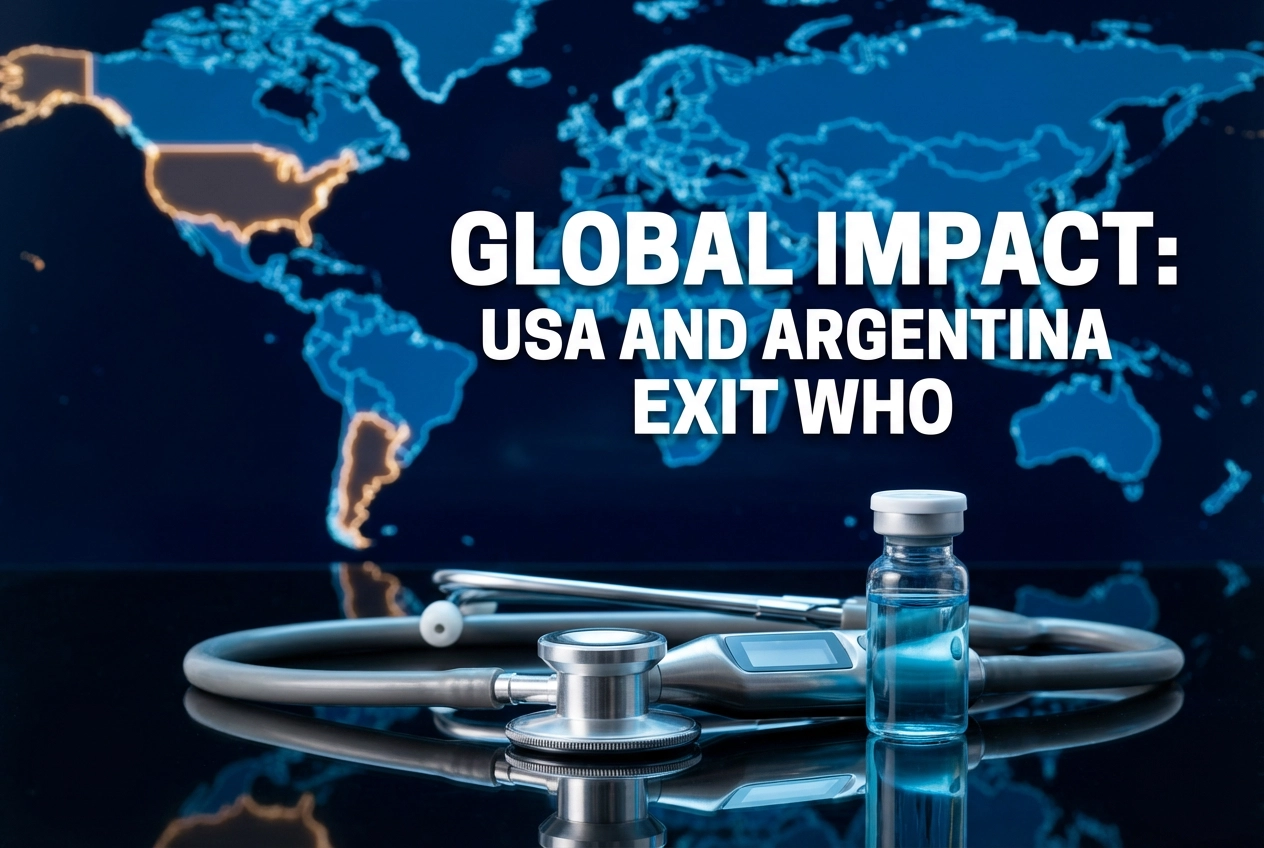
Argentina and US Exit WHO: What It Means for Health
The recent WHO withdrawal impact is shaking the foundations of global health governance. Argentina formally exited the World Health Organization on Tuesday, mirroring the earlier move by the United States. This decision marks a significant shift in how nations approach multilateral health cooperation. Therefore, medical professionals must understand the changing landscape of international policy. Those interested in global health governance and policy can benefit from specialized training in Multispecialty Courses.
Evaluating the WHO withdrawal impact
The exit of significant member states creates a vacuum in international health leadership. Argentina completed its withdrawal process within the timeframe set by international treaties. Furthermore, Foreign Minister Pablo Quirno stated that the nation will now focus on bilateral agreements. This move aims to preserve national sovereignty while maintaining regional health forums. Consequently, the global community faces new challenges in coordinating responses to future pandemics.
Reasons behind the Argentine exit
President Javier Milei had previously signaled this intent a year ago. Specifically, his administration criticized the WHO for its handling of the Covid-19 pandemic. They claimed that recommendations were not based on science but rather on political interests. Moreover, this alignment mirrors the stance of the United States. President Donald Trump formalized the US withdrawal in January. These nations seek to control their health policies without external interference.
The future of global health cooperation
Despite these departures, the WHO remains a critical actor in global safety. For instance, the organization helped eradicate smallpox and continues to fight polio and Ebola. However, losing major funding partners and political allies weakens its reach. Meanwhile, the WHO chief expressed deep regret over these developments. He warned that such exits could make the world less safe from public health threats. In addition, many health experts fear a fragmented approach to infectious disease management. For professionals seeking to enhance their skills in managing widespread infectious challenges, the Postgraduate Diploma In Infectious Disease offers relevant insights.
Frequently Asked Questions
Q1: What are the main reasons Argentina gave for leaving the WHO?
Argentina cited the WHO’s handling of the Covid-19 pandemic and claimed the organization’s recommendations were politically motivated rather than science-based.
Q2: How does Argentina plan to handle international health cooperation now?
The country intends to promote health cooperation through bilateral agreements and regional forums while maintaining full decision-making sovereignty.
Q3: Which other major country recently formalized its withdrawal?
The United States formalized its withdrawal from the WHO in January, following an executive order signed by President Donald Trump.
References
- Argentina withdraws from World Health Organization – ETHealthworld
- UN Health Body Challenges and Funding – Reuters
- Global Health Governance Shifts – Al Jazeera
Disclaimer: This article was automatically generated from publicly available sources and is provided for informational and educational purposes only. OC Academy does not exercise editorial control or claim authorship over this content. It is not a substitute for professional medical advice, diagnosis, or treatment. Always consult a qualified healthcare provider and refer to current local and national clinical guidelines.