
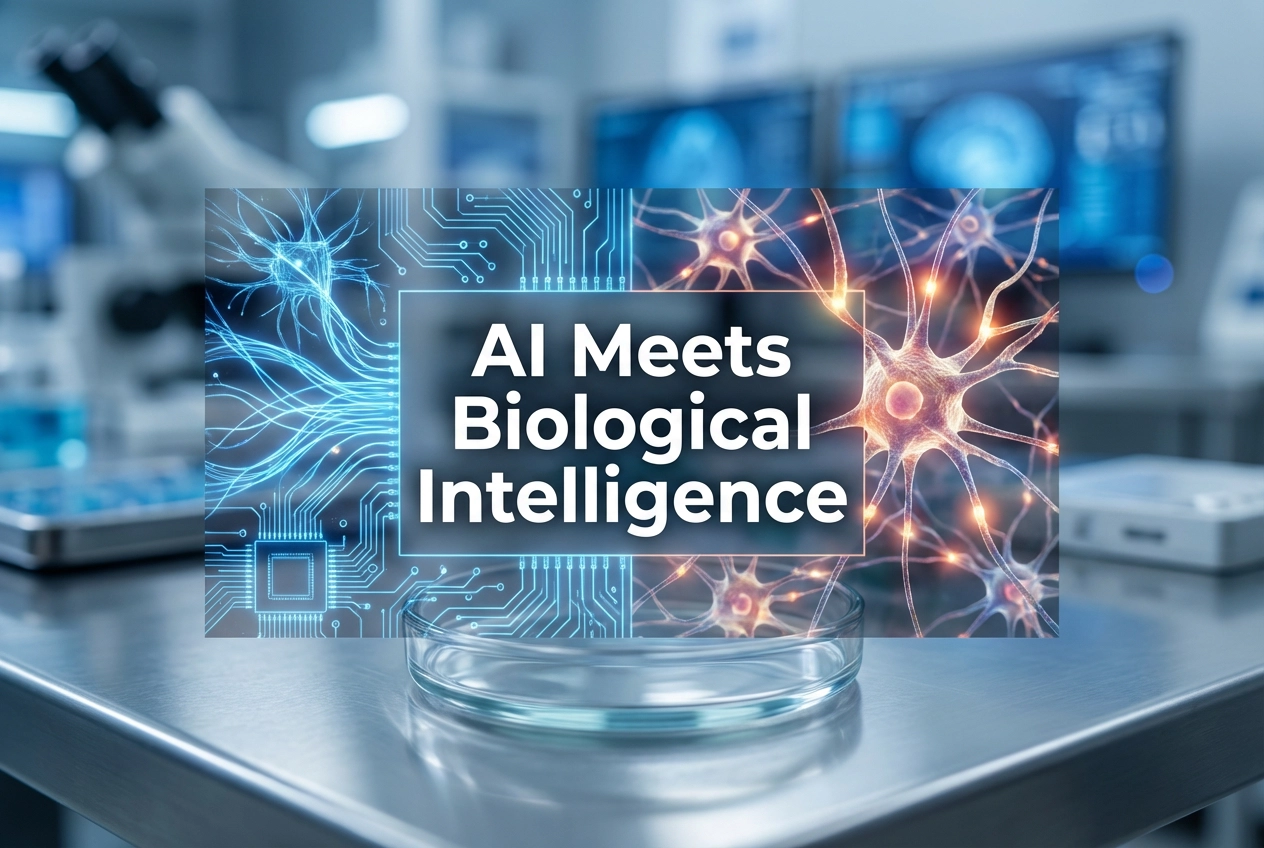
Biocon Chairperson Kiran Mazumdar-Shaw recently highlighted how **AI in biological intelligence** can revolutionize modern medicine. This convergence enables breakthroughs in predictive healthcare and regenerative science. Furthermore, biology alone often lacks the capacity for deep insights. AI tools now provide immense opportunities to decode complex living systems effectively. Consequently, this synergy will redefine the future of medical diagnostics and treatment. For professionals seeking to integrate these cutting-edge computational techniques into their practice, understanding the underlying principles is key, which can be explored further in specialized training like the Multispecialty Courses.
Advancing Medicine with AI in Biological Intelligence
Biological systems act as efficient, distributed data centers. Specifically, they process information with far less energy than current AI hardware. Mazumdar-Shaw emphasized that biology teaches AI about rapid data multiplexing. Additionally, AI accelerates regenerative science by shifting care from hospitals to community-based preventive models. Therefore, healthcare providers can expect a more decentralized approach to patient management soon. This shift towards community-based preventive models aligns strongly with the focus areas in Certificate Program In Family Medicine.
Cellular Reprogramming and Precision Science
Medical experts consider reprogramming cells a significant breakthrough. For example, converting malignant cancer cells into non-malignant ones represents a major goal in oncology. AI can significantly speed up this regenerative process. Moreover, the integration of computational tools allows for deeper insights into generational learning embedded in DNA. Thus, scientists can better understand how intelligence persists across species and lineages. Those interested in advanced treatment modalities for cancer should explore the Certification Course In Clinical Oncology.
Leveraging India’s Digital Public Infrastructure
India possesses a unique advantage due to its open digital public infrastructure. While many nations operate in silos, India’s networks facilitate global data sharing. Furthermore, economies of scale will eventually reduce inference costs across the country. Consequently, India is well-positioned to lead this global transformation in healthcare. These efforts will likely turn AI into a mass-use technology rather than a niche specialist capability.
Frequently Asked Questions
Q1: What is the main benefit of converging AI and biological intelligence?
This convergence enables breakthroughs in predictive healthcare and regenerative science. Specifically, it allows clinicians to shift from hospital-centric models to community-based preventive care. Exploring Postgraduate Diploma In Genomic Medicine And Health can provide deeper insight into personalized care driven by data.
Q2: Why is India uniquely positioned to lead in AI-driven healthcare?
India utilizes an open digital public infrastructure and vast data networks. Consequently, these systems reduce the cost of AI inference and promote scalable innovation across the healthcare sector.
References
- AI-biological intelligence convergence can transform healthcare: KiranMazumdar-Shaw – ETHealthworld
- The Economic Times: AI-biotech sovereignty will define India\’s future
- PIB: Experts Discuss Role of Open Networks and Digital Public Infrastructure in Scaling AI
Disclaimer: This article was automatically generated from publicly available sources and is provided for informational and educational purposes only. OC Academy does not exercise editorial control or claim authorship over this content. It is not a substitute for professional medical advice, diagnosis, or treatment. Always consult a qualified healthcare provider and refer to current local and national clinical guidelines.