
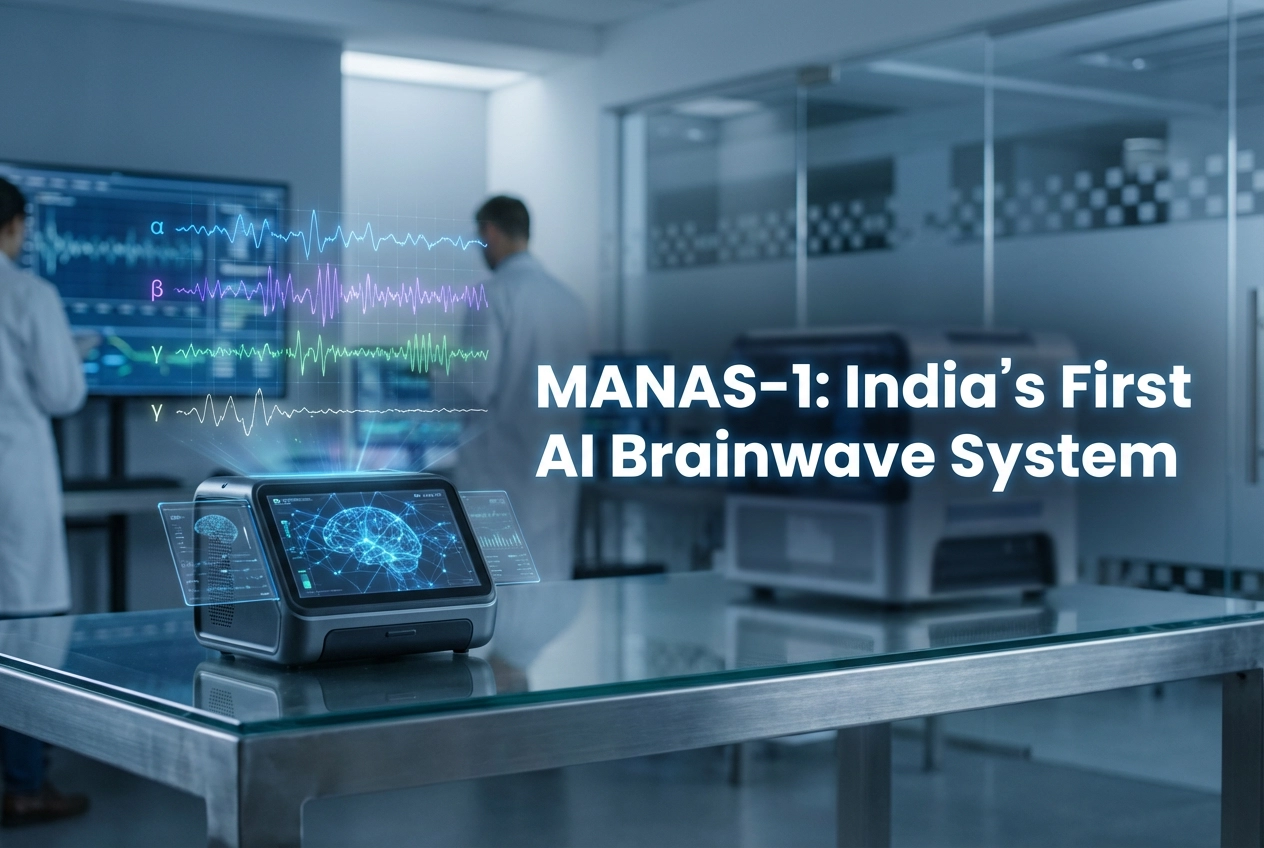
India recently introduced the MANAS 1 AI model to revolutionize early brain disorder detection. Specifically, this innovative tool interprets complex EEG signals using a foundational “brain language” approach. Neurologist Dr. Puneet Agarwal and his team at Intellihealth developed this platform with support from the Indian AI Mission. Consequently, healthcare providers may soon identify neurological conditions long before physical symptoms appear. This project represents a massive leap forward for digital health in India. This topic is highly relevant for professionals interested in advanced diagnostic techniques, particularly those focusing on Neurology Speciality Courses.
How MANAS 1 AI Works
The MANAS 1 AI system utilizes 400 million parameters to decode electrical brain activity. Moreover, the developers trained the model on 60,000 hours of recordings from over 25,000 patients. This large-scale dataset allows the AI to recognize patterns that traditional MRI scans often miss. Instead of just analyzing text or images, the system reads the brain’s fundamental electrical language. Additionally, the team released the code as open-source on Hugging Face. Therefore, researchers worldwide can now build specialized tools for epilepsy and dementia on this framework. Those looking to master diagnostic imaging related to the brain might explore the Certification Course In Neuroradiology.
Improving Access to Specialized Care
India currently faces a significant shortage of neurologists and psychiatrists in rural districts. However, the MANAS 1 AI platform could bridge this critical gap in medical access. Community health centers can potentially use these tools for preliminary screenings and faster referrals. Such early detection significantly reduces long-term treatment costs and disability for patients. Furthermore, the Indian government provided the necessary computational backing through the Ministry of Electronics. Consequently, this initiative aligns perfectly with national goals for sovereign AI development. Professionals aiming to improve community well-being and comprehensive care delivery should consider the Certificate Program In Family Medicine.
Future Outlook and MANAS 2
While the first version is already groundbreaking, the development team plans to release MANAS 2 shortly. This next iteration will likely expand the model to 2 billion parameters for even greater precision. Nevertheless, any clinical tool derived from this foundational model must receive regulatory approval before hospital use. Ultimately, this shift toward interpreting biosignals marks a new era in Indian neuroscience. Patients across the country might soon experience a much narrower gap between symptom onset and diagnosis. Understanding the neurological foundation behind these disorders is key; candidates focused on advanced neurology may benefit from the Postgraduate Diploma In Neurology.
Frequently Asked Questions
Q1: What is the main function of MANAS 1 AI?
The system serves as a foundational platform for decoding EEG signals to detect neurological and psychiatric disorders at an early stage.
Q2: Who developed the MANAS 1 AI model?
Neurologist Dr. Puneet Agarwal and his team at Intellihealth (NeuroDx) developed it under the Indian AI Mission.
Q3: Is the MANAS 1 AI model available for public research?
Yes, the developers have released the model as open-source on the Hugging Face platform for global research and development.
References
- India unveils ‘MANAS 1’: AI trained on 60,000 hours of brainwaves aims to detect disorders early – ETHealthworld
- NeuroDx has introduced Manas-1, a 400-million-parameter AI model aimed at decoding brain electrical activity – Devdiscourse
- India Launches MANAS 1: AI System Trained on 60,000 Hours of Brainwave Data to Enhance Early Disorder Detection – The CSR Journal
Disclaimer: This article was automatically generated from publicly available sources and is provided for informational and educational purposes only. OC Academy does not exercise editorial control or claim authorship over this content. It is not a substitute for professional medical advice, diagnosis, or treatment. Always consult a qualified healthcare provider and refer to current local and national clinical guidelines.