
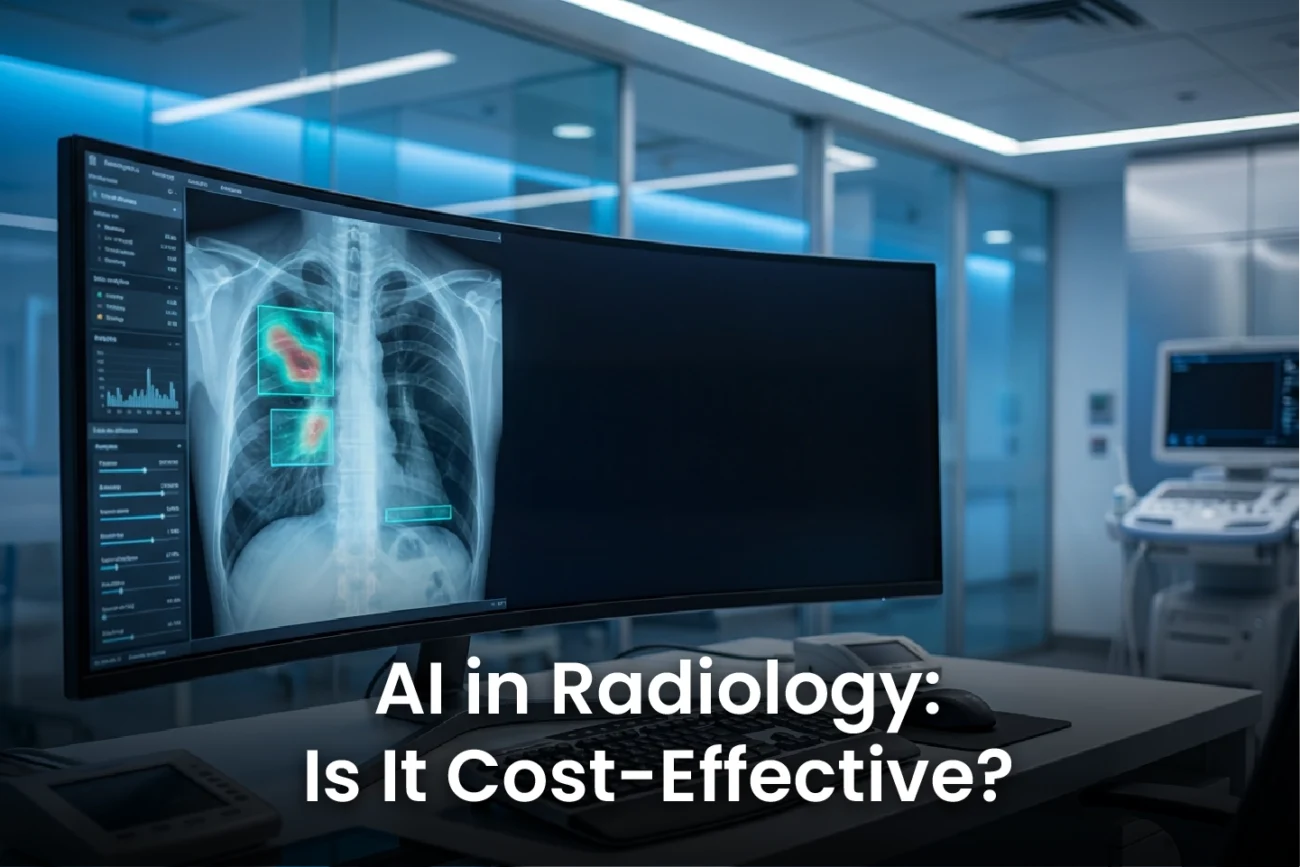
Adopting artificial intelligence (AI) tools in radiology is a major global trend. Evaluating the financial impact is paramount for sustained clinical use, especially in a resource-constrained environment like India. A new systematic review, published in *European Radiology*, assesses the current evidence on AI cost-effectiveness in diagnostic imaging. This review analyzed studies to identify methodological gaps and guide future research.
Modeling AI Cost-Effectiveness: The Current Evidence Gap
The systematic review identified only ten studies with a formal economic analysis of AI-based radiology interventions. Notably, all included studies relied on theoretical modeling, such as Markov and decision-tree simulations. Therefore, the current body of evidence completely lacks prospective, real-world cost-effectiveness data. This is a critical finding. The authors concluded that AI *may* be cost-effective only under the specific assumptions built into these models. For example, most research used publicly available healthcare data from the United States or the United Kingdom. This reliance on non-Indian health economic models limits direct applicability for adoption decisions in India. Furthermore, nine of the ten studies reported cost-utility analyses using quality-adjusted life-years (QALYs). This methodological heterogeneity precluded a useful meta-analysis.
Clinical Applications and India’s Need for Real-World Data
The studies explored AI applications across several key clinical domains. These applications included cancer screening, acute stroke detection, infection control, and the opportunistic detection of incidental findings. In India, AI has the unique potential to address a severe shortage of qualified radiologists. In fact, a significant mismatch exists between the population size and the number of specialists available to read the massive volume of scans. Consequently, AI tools can greatly improve workflow efficiency and diagnostic accuracy, particularly in rural and underserved areas. Moreover, case studies from India have demonstrated a high return on investment (ROI) for AI, with one report suggesting a 451% ROI over five years in stroke management. Despite this clear clinical need and promising ROI projections, the generalizability of existing cost-effectiveness studies is weak. Implementation decisions should be cautious, awaiting more localized and prospective validation.
Frequently Asked Questions
Q1: Why is current evidence on AI cost-effectiveness in radiology considered limited?
Current evidence is limited because all ten studies identified rely on theoretical modeling (e.g., Markov and decision-tree simulations) and lack validation from prospective, real-world data.
Q2: How does the AI cost-effectiveness question specifically relate to Indian healthcare?
India faces a severe shortage of radiologists. AI tools offer a potential solution to bridge this gap by expediting image interpretation and improving accuracy, particularly in rural settings. Consequently, a strong economic case based on real-world Indian data is vital for widespread implementation.
The systematic review emphasises the urgent need for standardised evaluation frameworks. Future research must incorporate empirical clinical data into economic models. Only through these rigorous, validated assessments can healthcare systems make truly informed implementation decisions regarding AI in radiology.
References
- Brin D et al. Cost-effectiveness of artificial intelligence tools in radiology: a systematic review. Eur Radiol. 2025 Dec 24. doi: 10.1007/s00330-025-12242-4. PMID: 41441999.
- Easy Clinic. AI Radiology Equipment in India – Prices, Brands & ROI. Sept 11, 2025.
- Vijayasimha N. India works to offset its radiologists shortfall with AI to analyze medical images with high precision. Pharmabiz.com. Sept 11, 2024.
- Jallapure R. Overcoming diagnostic challenges of artificial intelligence in pathology and radiology: Innovative solutions and strategies. Indian Journal of Medical Sciences. Oct 19, 2023.