
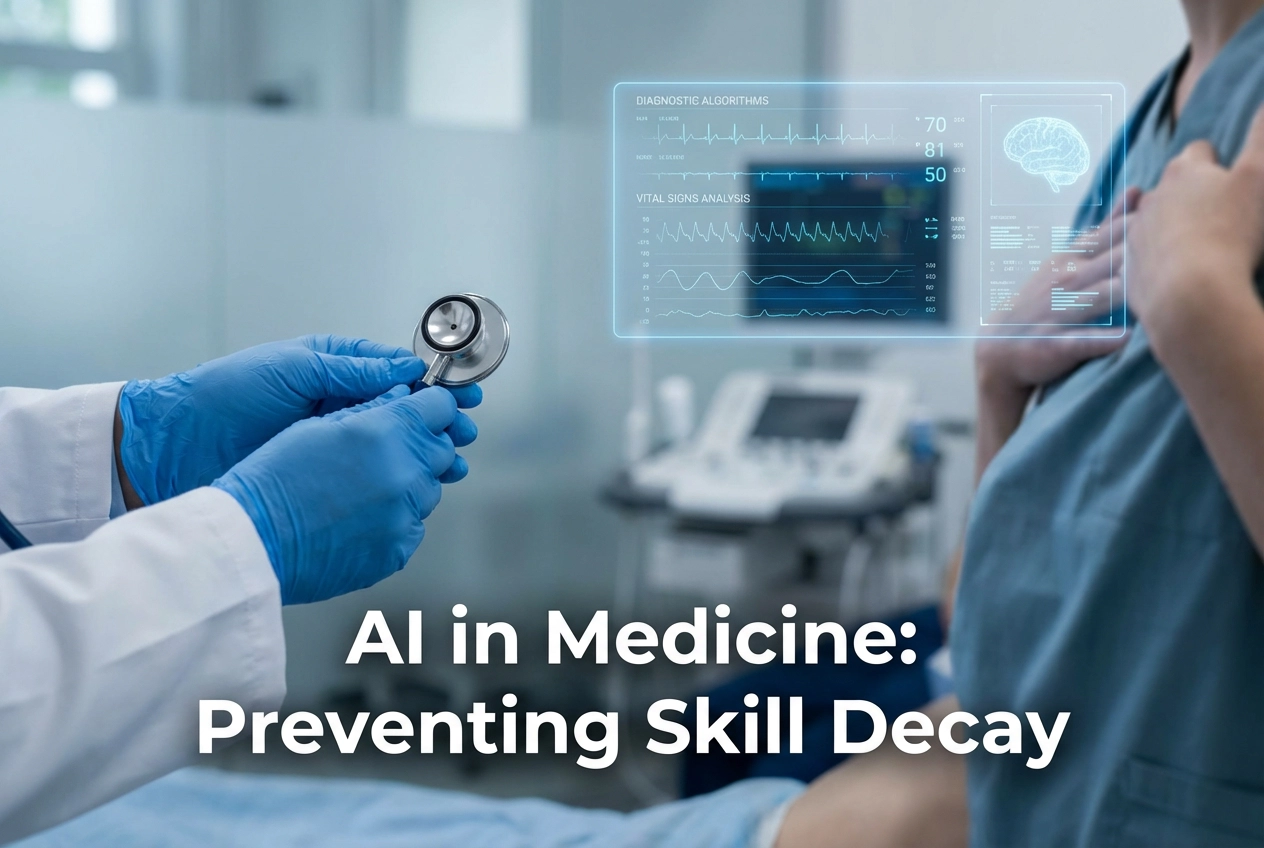
Jan Herzhoff, president of Elsevier, recently highlighted the importance of AI in clinical practice during the India AI Impact Summit 2026. He warned that relying solely on technology without critical thinking leads to significant de-skilling. Consequently, healthcare professionals must integrate their foundational knowledge with automated responses to maintain diagnostic accuracy. Furthermore, active engagement ensures that clinicians do not lose the ability to perform tasks independently.
Optimizing AI in clinical practice through Critical Thinking
A study published in The Lancet Gastroenterology and Hepatology illustrates the risks of over-reliance. Specifically, clinicians who used AI for colonoscopies showed a 20% decrease in detecting benign tumors without the tool after just three months. This evidence suggests that passive reliance inhibits the mind from making necessary clinical connections. Therefore, doctors should use AI as a supportive reference rather than a definitive answer. Moreover, maintaining a strong knowledge base allows for better validation of AI-generated suggestions. For those seeking to deepen their knowledge base in this area, exploring advanced specializations is beneficial. For instance, the International Post Graduate Program In Emergency Medicine emphasizes swift, informed decision-making that AI can support but not replace.
The India AI Impact Summit also focused on democratizing technology. Prime Minister Narendra Modi emphasized making AI a tool for inclusion and empowerment. In addition, the summit attracted over 500 global leaders to discuss the regulatory and social challenges of automation. Digital tools can certainly help society, but they also create new challenges for professional development. Consequently, the industry must find a balance between innovation and skill preservation.
Empowering Frontline Workers with Digital Tools
The “ClinicalPath Primary Care” (CPPC) solution demonstrates how technology bridges healthcare gaps. This tool supports ASHA workers in remote Indian regions by providing expert-level screening capabilities. Early feedback from Uttarakhand shows that CPPC improves adherence to clinical protocols and boosts confidence. However, workers still require further training to maximize the utility of these digital interventions. Additionally, offline functionality remains a priority for rural accessibility.
Another major tool, ClinicalKey AI, serves as a conversational search engine for clinical decision-making. Currently, over 300 hospitals globally have integrated this system into their electronic health records. This integration often doubles the usage rate because it simplifies access for busy clinicians. Nevertheless, the fragmented EHR landscape in India remains a significant hurdle for widespread adoption. Therefore, standardization is necessary to ensure these tools reach every clinician effectively. Professionals looking to enhance their foundational skills alongside technology adoption might benefit from the Foundation Comprehensive Training For New Doctor.
Addressing Medical Misinformation and Trust
Combating misinformation is essential for the safe implementation of medical technology. Herzhoff suggests building “trust markers” into AI solutions to help users evaluate information quality. These markers might include journal impact factors or the reputation of the publisher. Consequently, students and practitioners can differentiate between high-quality evidence and unreliable data. Furthermore, early education in critical thinking prepares medical students for a tech-driven future. A solid grounding in evidence-based practice is crucial; consider exploring a Certification Course In General Practice to reinforce these core competencies.
Frequently Asked Questions
Q1: What is clinical de-skilling in the context of AI?
De-skilling occurs when clinicians stop applying critical thinking and rely entirely on automated AI responses, leading to a decline in their independent diagnostic abilities.
Q2: How does ClinicalKey AI support medical decision-making?
ClinicalKey AI acts as a conversational search tool that provides clinicians with high-quality, peer-reviewed information to assist in real-time screening and assessment.
Q3: How are ASHA workers benefiting from digital health solutions?
Tools like ClinicalPath Primary Care (CPPC) provide ASHA workers with expert-level screening protocols, which improves their confidence and the accuracy of rural healthcare delivery.
References
- Critical thinking, not reliance on AI, will protect against de-skilling: Elsevier’s Jan Herzhoff – ETHealthworld
- The Lancet Gastroenterology & Hepatology: AI-assisted colonoscopy study (2025)
- Elsevier Global Health: Digital Innovations and Interventions for Sustainable HealthTech Action (DIISHA)
Disclaimer: This article was automatically generated from publicly available sources and is provided for informational and educational purposes only. OC Academy does not exercise editorial control or claim authorship over this content. It is not a substitute for professional medical advice, diagnosis, or treatment. Always consult a qualified healthcare provider and refer to current local and national clinical guidelines.