
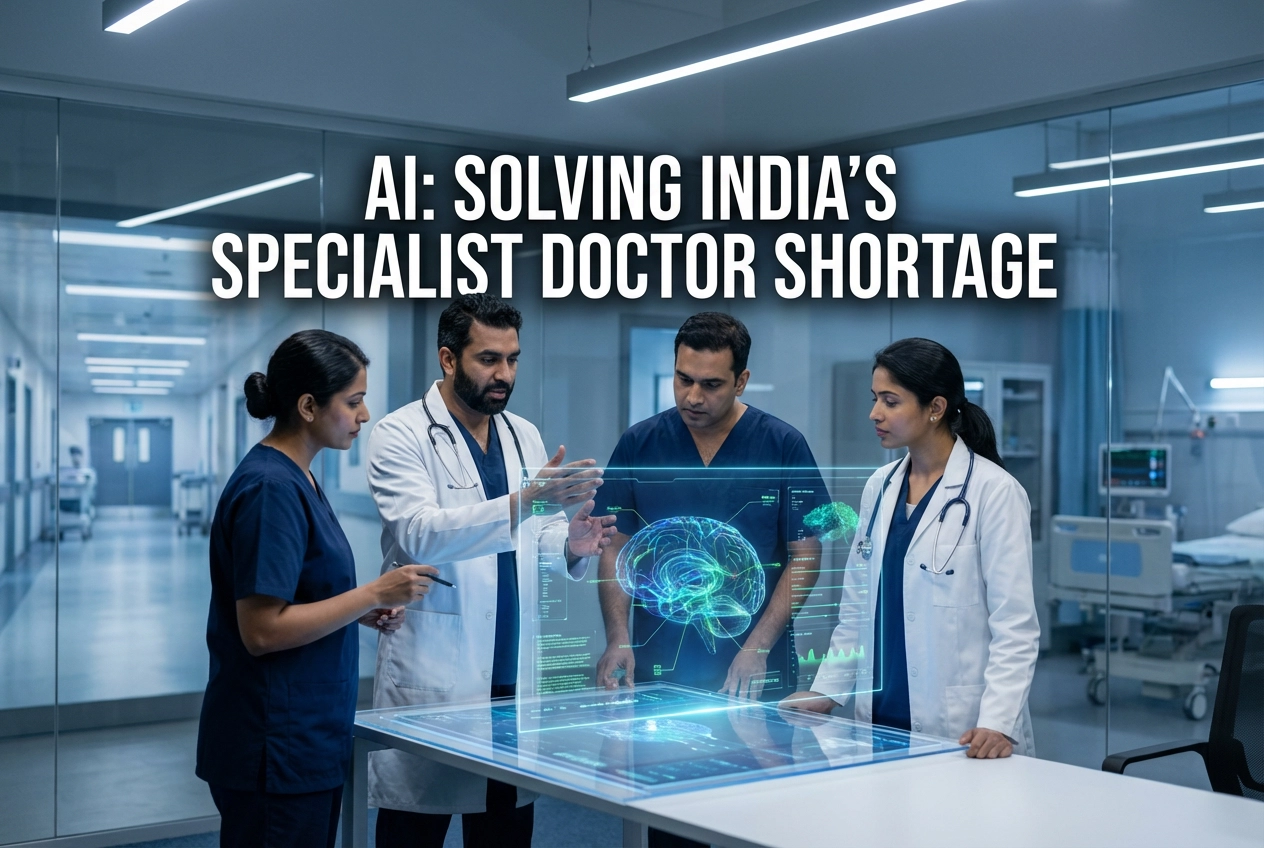
During the India AI Impact Summit 2026, experts discussed how AI in healthcare India can bridge critical specialist gaps. Specifically, Soumya Swaminathan noted that regions like Africa and rural India often lack radiologists and pathologists. Consequently, image recognition tools can now analyze X-rays or pathology slides with high accuracy. However, developers must train these algorithms on high-quality datasets to ensure clinical precision. Furthermore, Swaminathan emphasised that safety assessments are mandatory before any large-scale adoption. Therefore, regulators should bring every new AI product under a clear regulatory pathway.
Expanding AI in Healthcare India through Regulation
Transitioning to scalable solutions requires a framework similar to drug clinical trials. Swaminathan explained that researchers must assess the efficacy and safety of every new AI healthcare product. Meanwhile, she acknowledged that many providers already use these applications widely. Additionally, many new AI-based healthcare solutions are emerging at a rapid pace. However, the expert stressed that proper evaluation remains the most important step before scaling. Thus, the medical community should treat AI algorithms with the same rigor as vaccines or new pharmaceuticals.
The MANAV Vision and Infrastructure Milestones
At the same summit, Prime Minister Narendra Modi unveiled the MANAV Vision to guide technological growth. This framework focuses on moral systems, accountable governance, national sovereignty, accessibility, and validity. Moreover, the summit saw significant infrastructure announcements. For instance, Tata Group and OpenAI announced a partnership to build 100 MW of AI infrastructure. This capacity will eventually scale to 1 GW to power advanced workloads. Similarly, the IIT Bombay-led BharatGen consortium launched Param2, a 17-billion parameter model supporting 22 languages. These developments ensure that AI remains human-centric and inclusive across diverse linguistic landscapes.
Frequently Asked Questions
Q1: How can AI help in regions with few specialist doctors?
AI tools use image and pattern recognition to assist in reading X-rays and pathology slides. This helps provide diagnostic support in areas lacking radiologists or pathologists. Professionals seeking to enhance their skills in diagnostic imaging fields like Radiology might find the dedicated Radiology Speciality Courses beneficial.
Q2: What is the MANAV Vision announced at the summit?
The MANAV framework stands for Moral and Ethical Systems, Accountable Governance, National Sovereignty, Accessible and Inclusive, and Valid and Legitimate AI development.
Q3: Why does Soumya Swaminathan compare AI products to new drugs?
She emphasizes that AI products need clinical trials to prove efficacy and safety. This ensures that the technology provides reliable results before it reaches a large patient population. Understanding rigorous safety and efficacy standards is foundational for any medical advancement, mirroring the necessity for high-quality Foundation Comprehensive Training For New Doctor programs.
References
- AI can transform healthcare in areas lacking specialists: Soumya Swaminathan – ETHealthworld
- PM Modi unveils MANAV Vision for ethical, inclusive AI governance at India AI Impact Summit – DD News
- BharatGen Launches Param 2; Jitendra Singh Calls Ethics Central to AI in Health – Digital Health News
Disclaimer: This article was automatically generated from publicly available sources and is provided for informational and educational purposes only. OC Academy does not exercise editorial control or claim authorship over this content. It is not a substitute for professional medical advice, diagnosis, or treatment. Always consult a qualified healthcare provider and refer to current local and national clinical guidelines.