
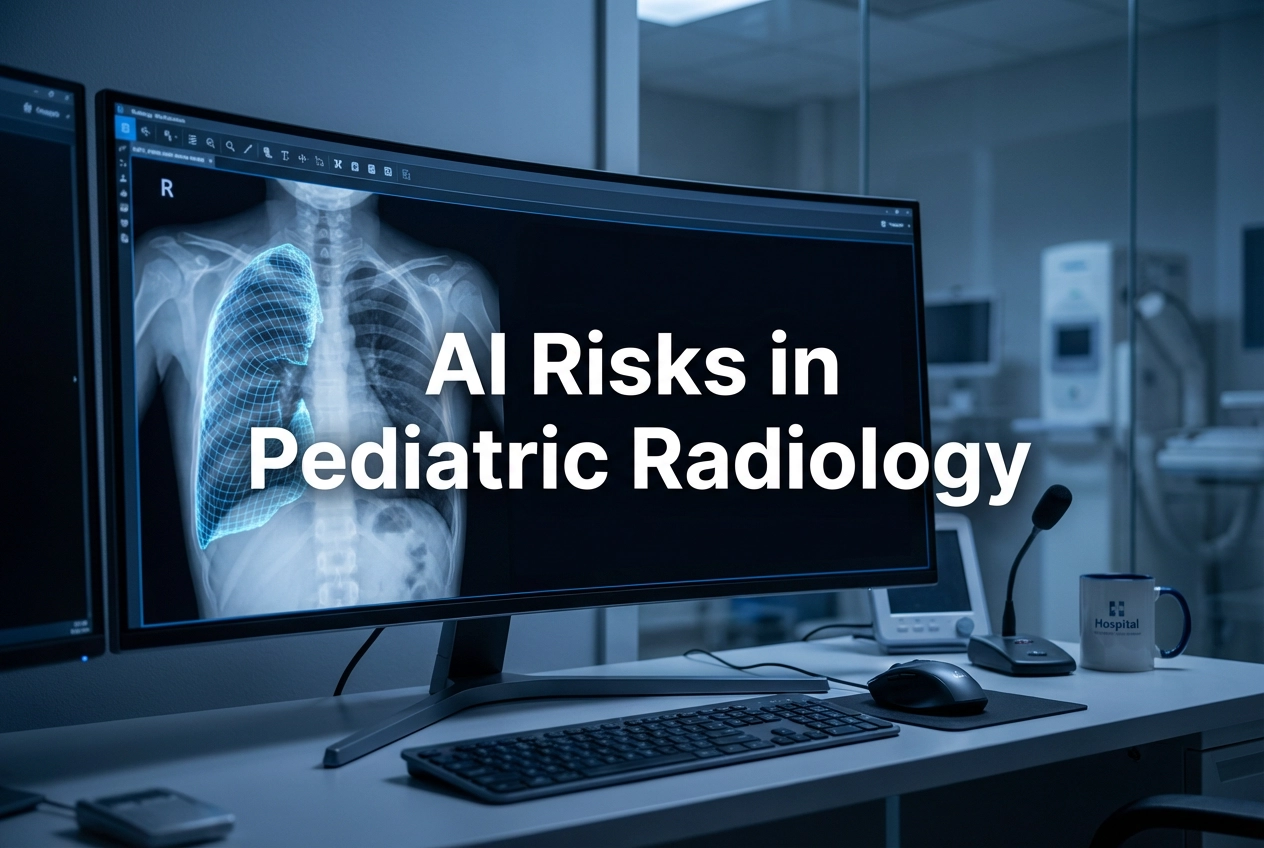
Modern diagnostic centers increasingly integrate AI in pediatric imaging to speed up clinical workflows. However, developers originally designed many of these digital tools using adult datasets. A comprehensive scoping review now confirms that applying these models to children without adaptation leads to significant performance drops. Consequently, healthcare professionals in India must exercise caution when using off-label AI software for younger patients.
The Performance Gap of AI in Pediatric Imaging
Research across multiple imaging modalities shows that adult-trained models do not maintain their accuracy in children. For example, detection tasks like finding lung nodules see the most severe deterioration. Specifically, sensitivity can plummet from 100% in adults to just 26% in pediatric cases. Moreover, segmentation accuracy for organs often falls short across CT and MRI scans. Therefore, clinicians should not assume that an FDA-approved adult tool will work effectively for a child.
Why Infants Face the Highest Diagnostic Risk
Children under two years of age consistently show the greatest deficits in AI performance. This vulnerability occurs because infant anatomy and development differ significantly from adult standards. Furthermore, small anatomical structures and rapid growth patterns often confuse algorithms trained on mature bodies. Thus, validating these tools specifically for pediatric age groups remains an essential step. Healthcare providers must demand age-specific evidence before implementing these technologies in neonatal or pediatric wards.
Frequently Asked Questions
Q1: Why do adult AI models fail when used on children?
Adult models fail because they lack exposure to pediatric anatomical variations and growth plates. Consequently, the AI may misinterpret normal developmental stages as pathological findings.
Q2: Is it safe to use adult-trained AI for infants under two?
No, the performance of adult-trained AI is least reliable for children under two years. Therefore, clinical implementation requires additional fine-tuning or rigorous validation to ensure patient safety.
References
- Laborie LB et al. Performance of adult-trained artificial intelligence models in paediatric imaging-a scoping review. Eur Radiol. 2026 Feb 12. doi: 10.1007/s00330-026-12354-5. PMID: 41673142.
- Lawrence E. AI in Pediatric Imaging: Addressing Unique Challenges and Opportunities. ResearchGate. 2025 Mar 15.
- Agarwal P et al. Deep learning for pediatric chest x-ray diagnosis: Repurposing a commercial tool developed for adults. PLOS ONE. 2025 Jul.