
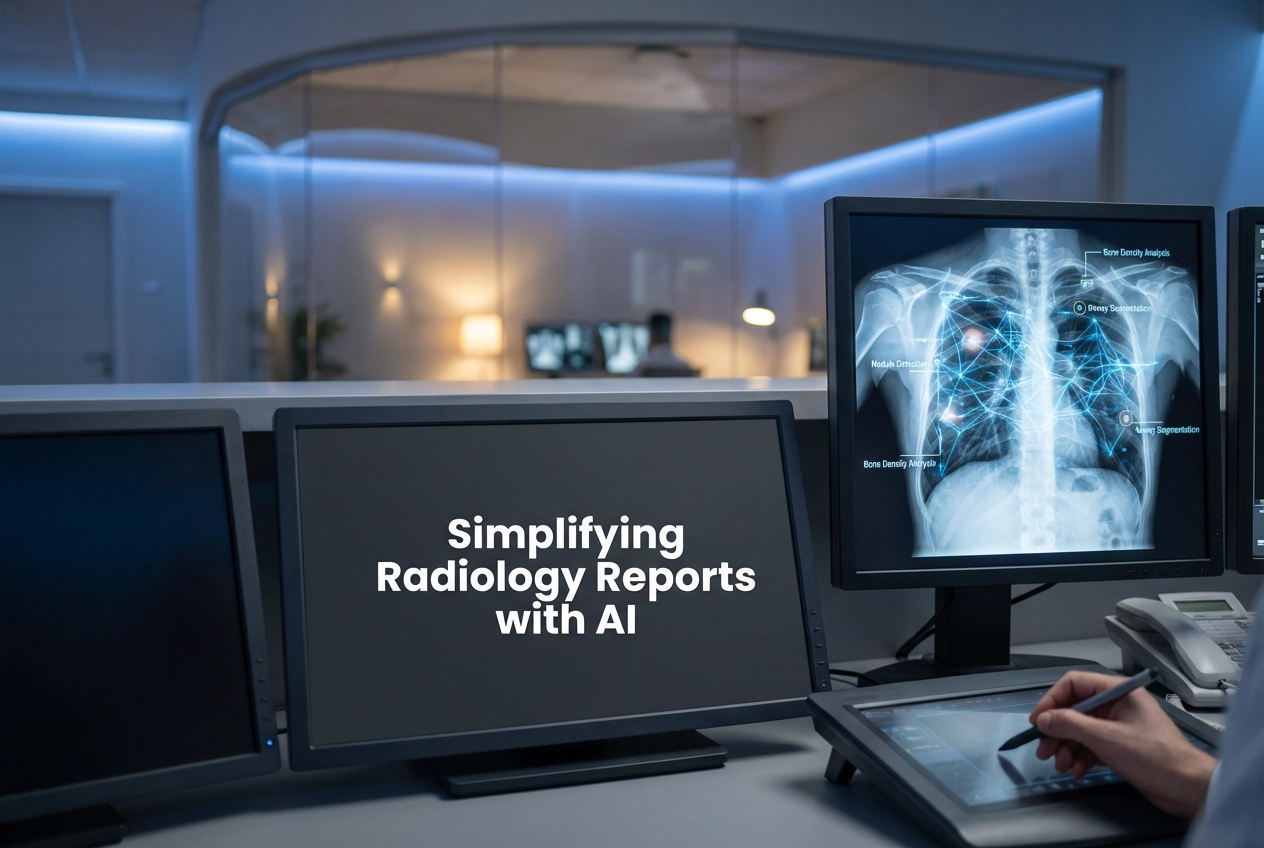
Simplifying Radiology Reports through Large Language Models (LLMs) is transforming the way patients understand their clinical findings. Traditionally, these documents contain dense medical jargon that creates significant barriers to comprehension. Consequently, many patients feel anxious or confused when reading their results alone. However, recent studies demonstrate that generative AI can bridge this communication gap effectively. Moreover, these summaries empower patients to participate more actively in their own care.
Evaluating Open-Weight versus Closed-Weight Models
Researchers recently evaluated how different AI models handle the task of making radiology findings accessible. Specifically, they compared commercial closed-weight models like GPT-4o with in-hospital open-weight models like Llama-3 and Mixtral. This study included 60 reports from X-rays, CT scans, and MRIs. Interestingly, all models significantly improved readability scores, moving from a baseline of 17 to over 44 on the Flesch scale. Moreover, medical laypeople expressed a strong preference for these AI-generated versions. Therefore, both open and closed models offer high-quality simplification for clinical use.
The Benefits of Simplifying Radiology Reports in India
Privacy remains a critical concern for Indian healthcare providers considering AI integration. Nevertheless, in-hospital deployment of open-weight models offers a robust solution to data security risks. Because these models run on local servers, sensitive patient information never leaves the hospital network. Furthermore, studies from institutions like AIIMS New Delhi confirm that simplified reports increase patient satisfaction and knowledge. Patients who receive these summaries show higher confidence in managing their conditions. Consequently, Indian hospitals can adopt these technologies to improve patient-centered care while adhering to strict privacy regulations. Additionally, Llama-3-70b emerged as a particularly efficient model for generating concise and clear summaries.
Frequently Asked Questions
Q1: Are open-weight AI models as good as GPT-4o for medical reports?
Yes, research indicates that open-weight models like Llama-3-70b produce results comparable to GPT-4o. Specifically, these models excel at improving readability while maintaining the core clinical meaning of the original report.
Q2: How does simplifying radiology reports help patients?
Simplification reduces the use of complex medical jargon and improves the overall reading ease of the document. As a result, patients experience less anxiety and gain a better understanding of their health status.
Q3: Is it safe to use AI for radiology reports in India?
Using in-hospital, open-weight models ensures that data remains secure and private. These models allow healthcare facilities to process sensitive information locally, which helps them comply with Indian data protection standards.
References
- Proff AK et al. Simplifying radiology reports with large language models: privacy-compliant open- versus closed-weight models. Eur Radiol. 2026 Feb 12. doi: 10.1007/s00330-026-12329-6. PMID: 41677855.
- Jebastin J et al. Provision of Radiology Reports Simplified With Large Language Models to Patients With Cancer: Impact on Patient Satisfaction. JCO Clin Cancer Inform. 2025 Jan;9:e2400166. doi: 10.1200/CCI-24-00166. PMID: 39879570.
- Mousavi S et al. Privacy-ensuring Open-weights Large Language Models Are Competitive with Closed-weights GPT-4o in Extracting Chest Radiography Findings. RSNA Radiology. 2025.