
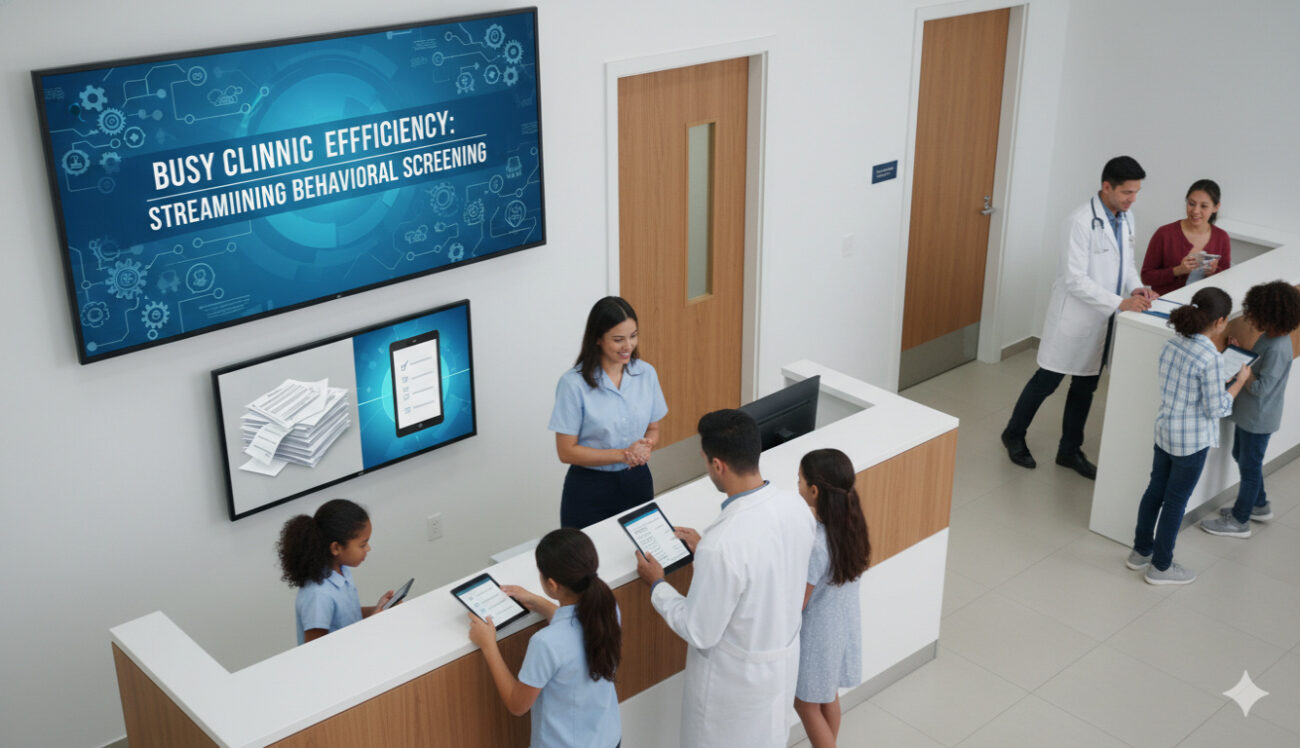
In the high-pressure environment of an Indian pediatric outpatient department (OPD), time is the most expensive commodity. Every resident knows the frustration of a waiting room overflowing with anxious parents and restless children. Specifically, behavioral assessments for ADHD or Autism often grind the clinic flow to a halt due to lengthy paper questionnaires. Therefore, the implementation of automated screening tools is no longer a luxury but a clinical necessity for the modern neurologist. By moving away from manual scoring, you can reclaim nearly twenty minutes per consultation. Consequently, you will provide more focused care while seeing more patients. This guide explores how to transform your workflow from a chaotic paper trail into a streamlined digital engine.
The Paperwork Problem in Indian OPDs
Traditional behavioral screening methods are fundamentally incompatible with high-volume Indian practices. Initially, handing a parent a six-page paper Vanderbilt or M-CHAT-R form seems simple. However, parents often struggle with lost pens or confusing instructions in a noisy waiting area. Furthermore, the physician must then manually calculate scores, which increases the risk of calculation errors during a busy shift. In addition, these physical papers often get lost in the hospital’s manual filing system. Therefore, the reliance on paper creates a significant bottleneck that delays diagnosis and frustrates families. Ultimately, these inefficiencies lead to clinician burnout and suboptimal patient outcomes.
Implementing Automated Screening Tools for Success
Transitioning to automated screening tools requires a strategic shift in how you gather patient data. Instead of physical clipboards, many clinics now utilize secure, cloud-based platforms that parents access via their own smartphones. For instance, sending a digital link to the parents before they even arrive at the hospital ensures the data is ready for review immediately. Consequently, the software automatically calculates the scores and flags “red flags” with visual alerts. Furthermore, these platforms can trend scores over multiple visits, providing a clear longitudinal view of the child’s progress. Thus, the resident spends less time doing math and more time discussing treatment plans with the family.
The Digital Triage: From QR Codes to Tablets
The most successful clinics utilize a “Digital Front Door” strategy to manage high patient volumes. You can place laminated posters with QR codes in the waiting area, allowing parents to complete screenings instantly. Additionally, for families without smartphones, a single “kiosk” tablet at the nursing station can serve dozens of patients daily. Therefore, the nursing staff can ensure that every child has a completed screen before they enter the examination room. Consequently, the physician opens the Electronic Medical Record (EMR) to find a pre-populated diagnostic report. This seamless integration significantly reduces the cognitive load on the junior doctor. As a result, the entire medical team operates with much higher precision.
Clinical Scenario: The Chaos of the ADHD Clinic
Consider Dr. Arjun, a resident in a busy Mumbai government hospital. On “ADHD Tuesdays,” he typically evaluates thirty children in four hours. Initially, he struggled with incomplete Vanderbilt forms that parents forgot to bring back. However, he recently implemented a system where parents scan a QR code at the registration desk. One Tuesday, he sees 8-year-old Kabir for a follow-up. Before Kabir even sits down, Dr. Arjun sees an automated alert showing that his “Inattention” score has dropped by 40% since starting medication. Consequently, the consultation is brief, data-driven, and highly encouraging for the parents. Therefore, Dr. Arjun finishes his clinic on time without sacrificing the quality of his clinical decision-making.
Billing and Compliance: The Hidden ROI
Beyond efficiency, automated systems offer significant financial and legal advantages. In private practice settings, using validated automated screening tools allows you to accurately document and bill for developmental screenings (often using CPT-like codes). Furthermore, digital platforms ensure that all patient data is encrypted and compliant with modern data protection standards. This is particularly important in India, where the Digital Personal Data Protection (DPDP) Act is becoming increasingly relevant. Therefore, you protect both your patients’ privacy and your clinical reputation. In addition, the time saved allows you to focus on complex cases that require higher billing tiers. Ultimately, technology pays for itself through improved clinic throughput and reduced administrative overhead.
Frequently Asked Questions
Q1: What if the parents are not comfortable with digital technology? While most parents in urban and semi-urban India are proficient with smartphones, a small percentage may still prefer paper. Therefore, it is wise to keep a few paper copies as a “safety stock.” However, you will find that over 90% of families prefer the convenience of digital submission over handwriting.
Q2: Are automated tools as accurate as the original paper versions? Yes, these digital platforms use the exact same validated algorithms as the paper versions. In fact, they are often more accurate because they eliminate manual scoring errors and prevent parents from accidentally skipping required questions.
Q3: Does the software integrate with existing hospital EMRs? Many modern screening platforms offer API integrations that push results directly into your EMR. Even if your hospital uses a legacy system, most tools allow you to “Save as PDF” and upload the result in seconds.