BEET: A Breakthrough Therapy for Refractory AVM Lesions
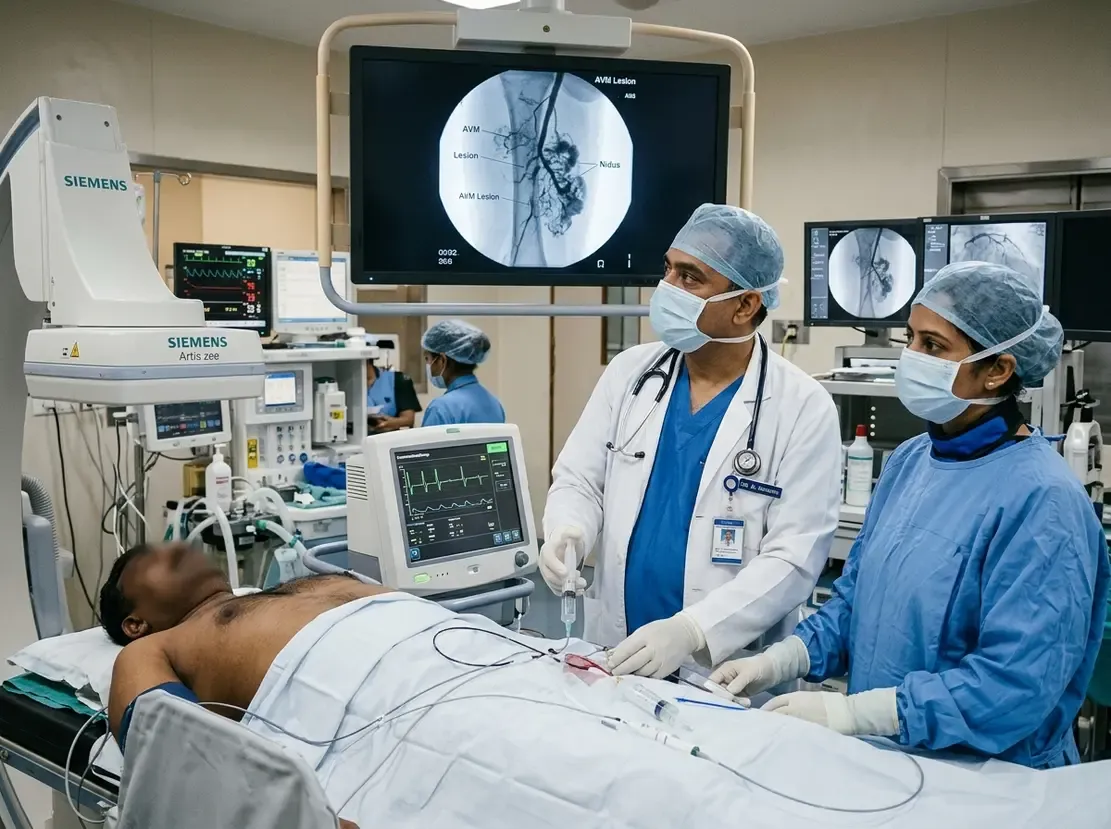
Extracranial arteriovenous malformations pose severe therapeutic challenges for interventional radiologists. Consequently, physicians frequently encounter refractory lesions in delicate anatomical sites. Furthermore, bleomycin electroembolotherapy has emerged as a promising, minimally invasive intervention. Recent clinical evidence demonstrates that this technique achieves high rates of symptom control. Therefore, clinicians now have an effective modality for lesions unsuitable for conventional embolization.
Clinical Efficacy of Bleomycin Electroembolotherapy
A prospective bicentric trial recently evaluated thirty-eight patients across eighty-four treatment sessions. Specifically, the cohort primarily included individuals with complex fine-fistulous lesions located on the face. Overall, the treatment yielded remarkable symptom improvement in over ninety-seven percent of participants. Nearly a quarter of these patients became entirely symptom-free during follow-up. In addition, magnetic resonance imaging demonstrated substantial or complete devascularization in sixty-five percent of cases. These objective findings confirm significant nidus obliteration across vascular beds.
Procedural Safety and Technique in Practice
Clinicians delivered a low mean dose of bleomycin per session. Consequently, systemic toxicity remained minimal throughout the study period. Furthermore, the team documented only one major complication across all procedures. This event involved a localized lip ulceration that surgeons reconstructed. Reversible electroporation transiently opens endothelial cell membranes to maximize intracellular drug concentration. Therefore, the electrical pulses restrict cytotoxic action directly to the targeted vessels. As a result, surrounding healthy tissue suffers minimal collateral damage.
Practice Implications for Vascular Specialists
Managing fine-fistulous malformations near delicate facial nerves or digital arteries carries high risk. However, this targeted technique provides a reliable alternative for pathology. Moreover, the protocol requires modest procedural equipment readily available in modern suites. Multidisciplinary teams can thus preserve vital function and cosmesis. Ultimately, expanding this innovative approach will enhance care for vascular anomalies.
Frequently Asked Questions
Q1: What is bleomycin electroembolotherapy?
It is an interventional procedure combining intra-arterial bleomycin with local electric pulses. Specifically, reversible electroporation drives the sclerosant into endothelial cells to collapse vessels.
Q2: Which patients benefit most from this treatment?
Patients with symptomatic, refractory arteriovenous malformations in cosmetically sensitive locations benefit most. Additionally, it offers exceptional efficacy for fine-fistulous lesions unsuitable for surgery.
Q3: How safe is the procedure?
The approach demonstrates an excellent safety profile with minimal major complications. In fact, investigators reported only a single major complication across eighty-four sessions.
References
- Schmidt VF et al. Bleomycin electroembolotherapy (BEET) for arteriovenous malformations: outcomes in a prospective bicentric study. Eur Radiol. 2026 Nov 27. doi: 10.1007/s00330-026-13046-w. PMID: 43102567.
- Obereisenbuchner F, Schmidt VF, Goldann C, Brill R, Puhr-Westerheide D, Borisch E, et al. Combining Reversible Electroporation and Bleomycin in Treatment of Arteriovenous Malformations. Cardiovasc Intervent Radiol. 2025;48(11):1632-1637. doi: 10.1007/s00270-025-04178-5.