Optimal Hemoglobin Levels: Is Borderline Normal Safe?
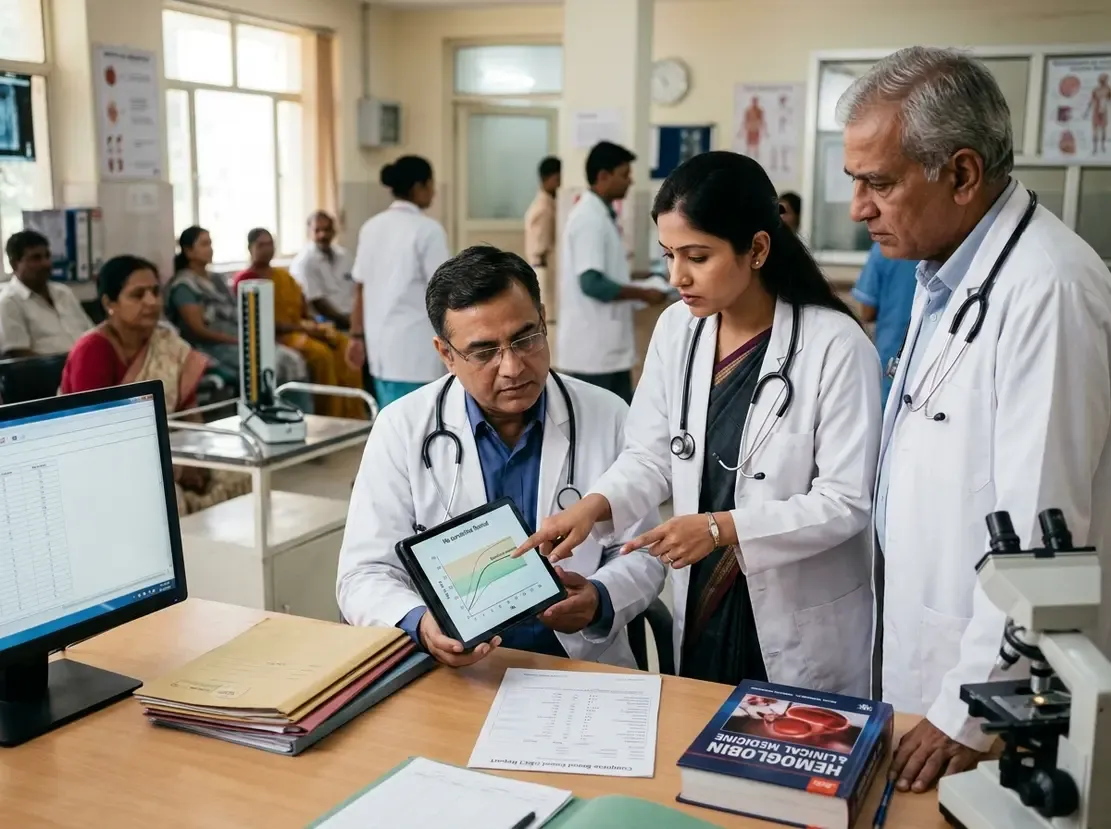
Clinicians routinely measure blood hemoglobin concentration to diagnose anemia and guide therapy. However, the classical World Health Organization thresholds date back to 1959. Consequently, many physicians wonder whether these older definitions accurately predict patient survival. A landmark prospective cohort study has evaluated this vital question across hundreds of thousands of adults.
Investigating Blood Hemoglobin Concentration and Mortality Risks
Researchers analyzed data from 502,188 participants enrolled in the UK Biobank cohort. Furthermore, the team assessed baseline hemoglobin levels in 477,876 individuals. The median age of participants was 58 years, and 54.4% were women. Investigators tracked participants over a median follow-up period of 13.6 years. In addition, they evaluated all-cause mortality, cardiovascular death, and cancer mortality. The researchers stratified all analyses by age and sex to ensure rigorous outcomes. Therefore, this expansive dataset provides unprecedented statistical power for clinical medicine.
Key Findings and the U-Shaped Association
The investigation revealed a distinct U-shaped relationship between red cell levels and long-term mortality. Specifically, mortality reached its lowest levels at 1 to 3 g/dL above standard WHO anemia cutoffs. In contrast, participants with concentrations below the anemia threshold experienced substantially higher mortality. Individuals with values more than 2 g/dL below the cutoff showed nearly a threefold increase in adjusted risk. Furthermore, individuals with borderline normal levels exhibited elevated mortality. Those sitting just 0 to 1 g/dL above the threshold had an 18% higher hazard of dying. Meanwhile, excessively high values also demonstrated increased risk for cardiovascular and overall mortality.
Clinical Relevance for Physicians in India
These findings carry profound implications for medical practice in India. Anemia remains exceptionally prevalent across Indian adult and geriatric populations. However, many general practitioners ignore borderline low values that technically fall within the normal laboratory reference range. For example, a male patient with a hemoglobin level of 13.2 g/dL receives reassurance despite lingering risks. Therefore, Indian doctors must view borderline hemoglobin values with heightened vigilance. In addition, practitioners should screen proactively for underlying conditions, including nutritional deficits and occult blood loss. Clinicians must not view anemia thresholds as rigid safety boundaries.
Frequently Asked Questions
Q1: What is the optimal blood hemoglobin concentration for lowest mortality?
The lowest mortality risk occurs at 1 to 3 g/dL above the conventional WHO anemia thresholds. For men, this corresponds to approximately 14 to 16 g/dL. For women, the optimal range spans roughly 13 to 15 g/dL.
Q2: Should doctors change clinical anemia thresholds based on these findings?
Currently, guidelines do not recommend changing formal diagnostic definitions. However, clinicians should investigate borderline values rather than assuming they reflect optimal long-term health.
Q3: Did the mortality risk differ between men and women?
The overall U-shaped mortality curve occurred across both sexes. However, associations remained less consistent among women younger than 60 years of age.
References
- Ahmad M et al. Association Between Blood Hemoglobin Concentration and Mortality by Age and Sex : A Prospective Cohort Study. Ann Intern Med. 2026 Sep 08. doi: 10.7326/ANNALS-26-00057. PMID: 42704899.
- Braat S et al. Haemoglobin thresholds to define anaemia from age 6 months to 65 years: estimates from international data sources. Lancet Haematol. 2024;11(6):e420-e431.
- Wouters HJCM et al. A cohort study investigating the age- and sex-related association of anemia with survival and health-related quality of life. Haematologica. 2019;104(9):e387-e390.