
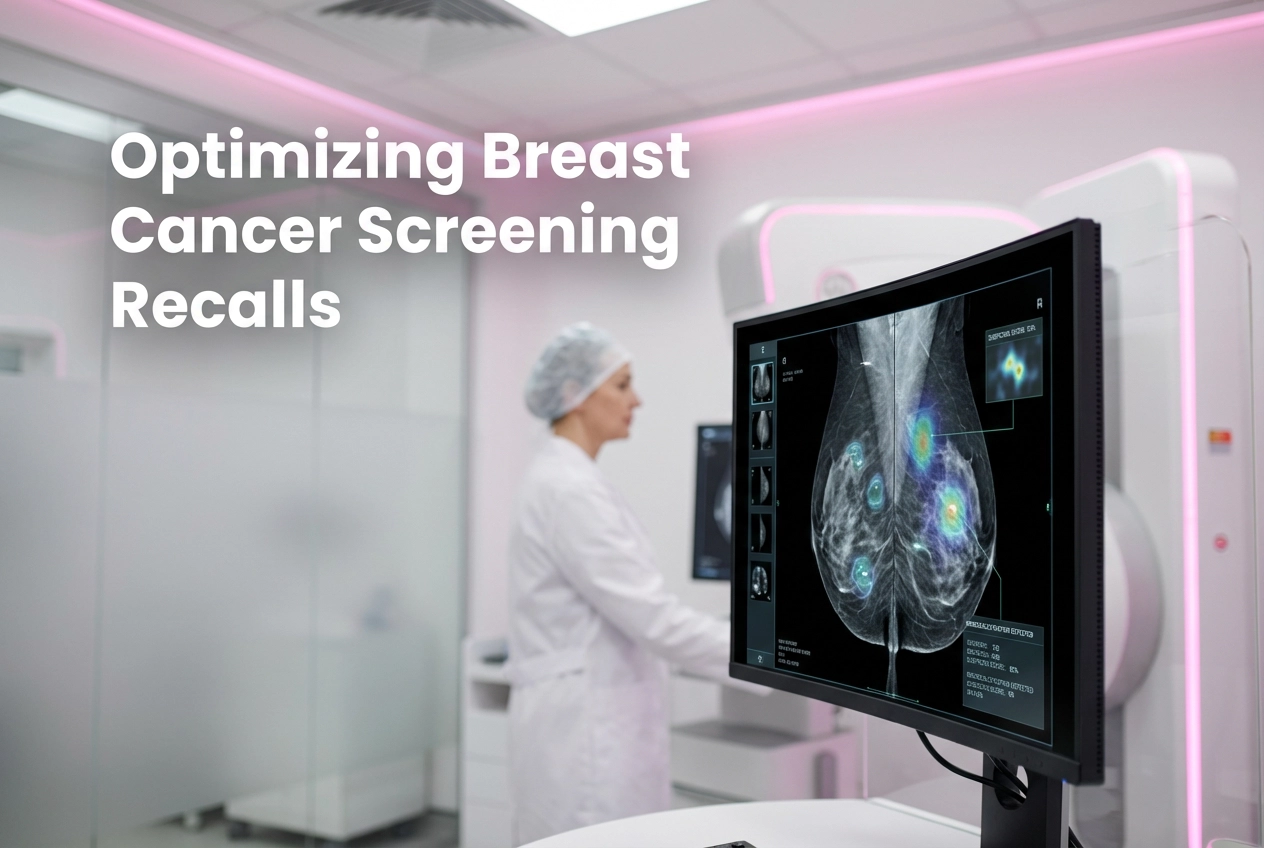
Breast cancer screening recall rates are essential for program success. Consequently, clinicians must balance early detection with the risk of false positives. This study investigated how radiologists evaluate mammography results. Researchers analyzed data from the Dutch Digital Mammography Screening Program. They found that radiologists perform with high accuracy. This high performance ensures that patients receive reliable results from their screening sessions.
Optimizing Breast Cancer Screening Recall Rates
The study reported an overall recall rate of 2.33 percent. Furthermore, the cancer detection rate reached 6.4 per 1000 screens. The area under the curve measured an impressive 0.91. This metric signifies excellent diagnostic performance. In addition, the current operating point optimizes the trade-off between detection and false positives. Radiologists provided probability scores that ranged from no suspicion to high suspicion. These scores helped researchers construct accurate performance curves for each reader.
Clinical Significance for Screening Programs
Lowering the recall rate would substantially reduce cancer detection. Conversely, increasing it would offer very little benefit. Therefore, the researchers concluded that current practices are highly effective. Indian clinicians can learn from these standardized evaluation methods. Moreover, this method applies to various international screening frameworks. This helps maintain high standards in patient care and diagnostics. However, achieving this balance requires consistent performance monitoring. Because screening evaluation is essential, this study offers a clear roadmap for healthcare administrators.
Frequently Asked Questions
Q1: What is the optimal recall rate found in the ROCS study?
The study identified that an overall recall rate of 2.33 percent effectively optimizes the balance between detecting cancer and minimizing false-positive recalls.
Q2: Why is the Area Under the Curve (AUC) important in screening?
The AUC quantifies the overall diagnostic accuracy of the screening program. A score of 0.91 indicates that the radiologists performed at a very high level of precision.
Q3: How does this research impact breast cancer screening in India?
The ROCS study provides an efficient method for Indian screening programs to evaluate performance. It helps clinicians set data-driven target values to maintain a positive benefit-to-harm ratio for participants.
References
- van der Waal D et al. Finding the optimal recall rate in breast cancer screening: results from the ROCS study. Eur Radiol. 2026 Mar 05. doi: 10.1007/s00330-026-12370-5. PMID: 41781728.
- Mehrotra R, et al. Status of breast cancer screening in India: A review of epidemiological trends and diagnostic strategies. PMC. 2024.
- National Health Mission. National Programme for Prevention and Control of Cancer, Diabetes, Cardiovascular Diseases and Stroke (NPCDCS) Guidelines. Ministry of Health and Family Welfare, Government of India.