
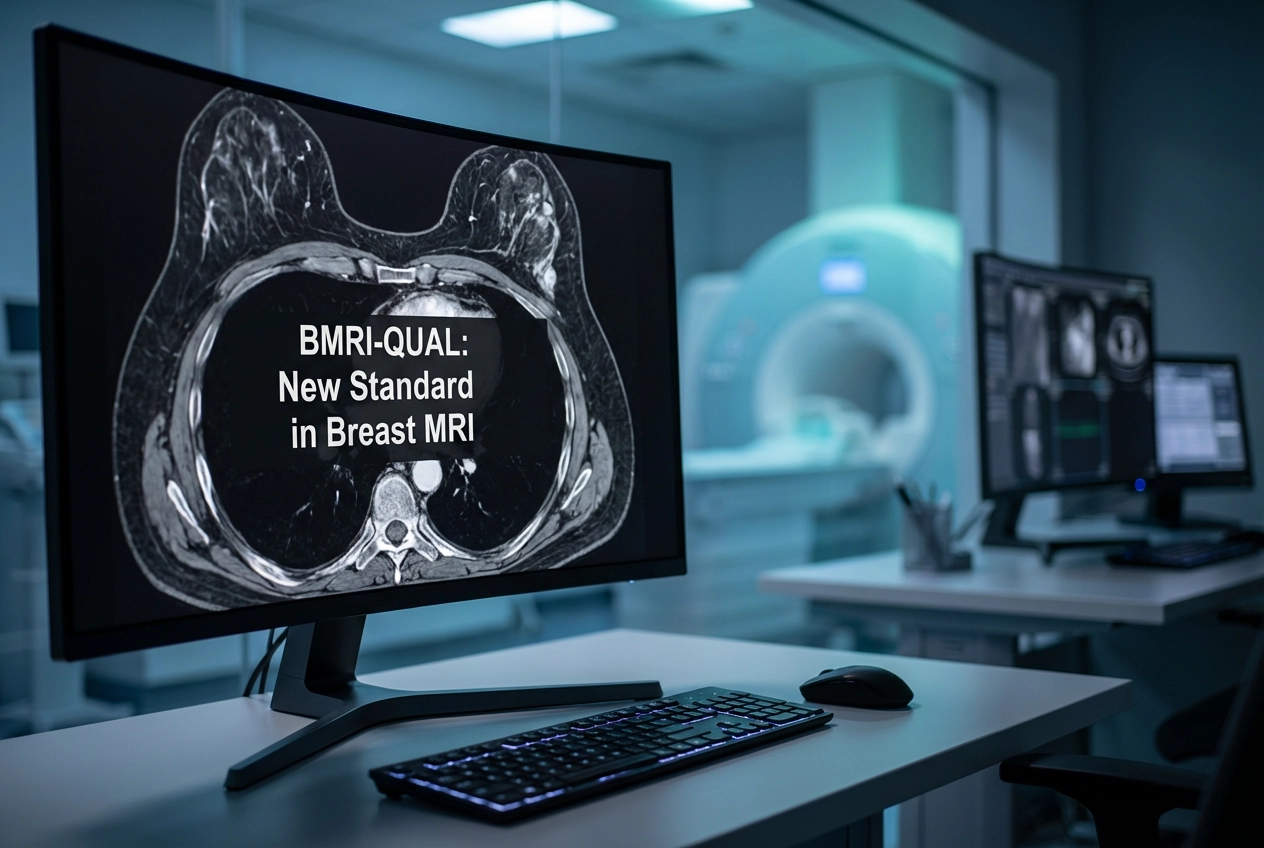
Standardizing Results Through Breast MRI Quality Scoring
Breast MRI quality scoring helps radiologists standardize diagnostic examinations effectively. Traditionally, variations in patient-related factors or technical protocols often created artifacts in imaging. These artifacts reduced both the sensitivity and specificity of the final breast MRI findings. Consequently, the development of the bMRI-QUAL system marks a significant advancement in radiology quality assurance. This structured framework allows clinicians to evaluate images objectively using a reproducible 0-to-10 scale. By adopting this system, medical facilities can ensure that every scan meets high diagnostic standards before interpretation.
Benefits of the Breast MRI Quality Scoring System
Standardizing image quality ensures that every examination remains diagnostic and reliable. For instance, the bMRI-QUAL system weights specific sequences to reflect their clinical importance. Specifically, it assigns higher numerical values to T1-weighted post-contrast and subtracted images. Furthermore, this approach reduces the risk of overlooking small lesions due to technical flaws. Therefore, implementing such a system improves the overall reliability of breast cancer screening in clinical practice. Radiologists in India can use these metrics to maintain consistency across different imaging centers.
Components of the bMRI-QUAL Protocol
The scoring system evaluates six primary sequences to determine overall quality. First, it rates the T2-weighted sequence and the pre-contrast T1-weighted sequence with a weight of one. Second, it includes diffusion-weighted imaging and ADC maps with a lower weighting of 0.5. Most importantly, the T1-weighted post-contrast and subtracted sequences carry weights of two and three, respectively. Readers then calculate a global score by dividing the weighted sum by 2.4. This provides a clear metric for determining if an image is excellent or non-diagnostic. Such precision allows for better communication between technologists and reporting physicians.
Frequently Asked Questions
Q1: Why does the bMRI-QUAL system weight T1-weighted subtracted images more heavily?
Subtracted images are critical for identifying enhancing lesions, so they carry a weight of 3 to reflect their high diagnostic value in detecting malignancy.
Q2: What global score indicates excellent image quality in this system?
The system produces a global score from 0 to 10, where a higher score represents better quality and a score of 10 signifies excellent image quality.
Q3: How does poor image quality affect breast MRI outcomes?
Relevant artifacts can heavily reduce the sensitivity and specificity of the exam, potentially leading to missed diagnoses or unnecessary biopsies.
References
- Marziali S et al. Assessing breast MRI image quality: the bMRI-QUAL scoring system. Eur Radiol. 2026 Mar 13. doi: 10.1007/s00330-026-12439-1. PMID: 41824041.
- Breast Imaging Society, India. Quality Assurance Guidelines for Breast Imaging – Breast MRI. Indian Journal of Breast Imaging. 2023.
- European Society of Breast Imaging (EUSOBI). Breast MRI: guidelines from the European Society of Breast Imaging. Eur Radiol. 2005.