
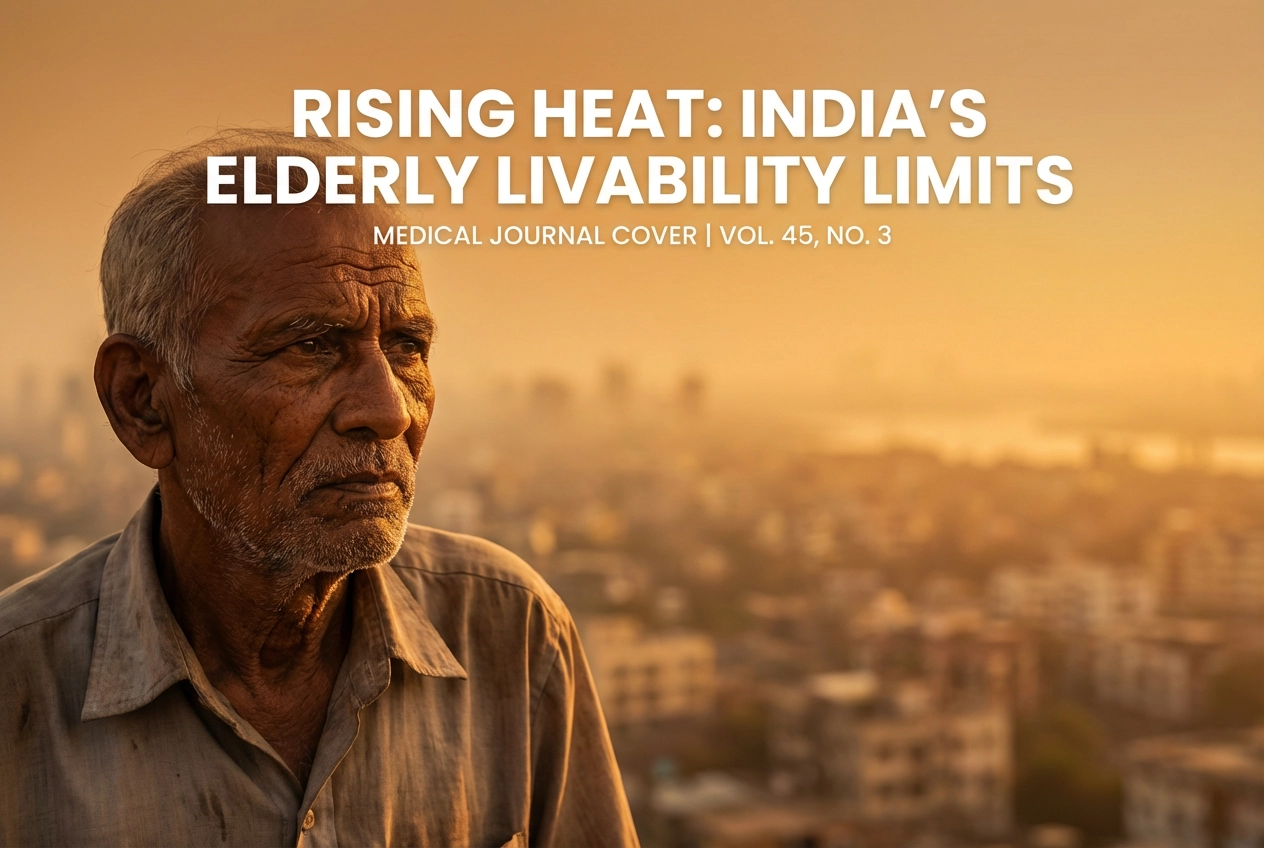
Recent data from the Copernicus Climate Change Service reveals a worrying trend regarding heat-related livability limits. Scientists define livability as the capacity to engage in physical tasks without suffering adverse health effects. Alarmingly, the average older adult now faces nearly 900 hours of these limitations annually. This shift poses significant risks to public health, especially in vulnerable regions like India. Consequently, clinicians must understand these environmental constraints to better advise their aging patients. For those focused on managing public health in changing climates, understanding environmental impacts is crucial, perhaps explored further in a Certification Course In General Practice.
Rising Heat-Related Livability Limits in India
The study published in the journal Environmental Research Health shows that 78% of the global population lives in areas where heat severely restricts activity for seniors. In contrast, 35% of the population resides in areas impacting younger adults. India and Southwest Asia are particularly affected. For younger adults in these regions, lost livable hours can exceed 1,000 hours per year. Furthermore, the analysis highlights that temperature and humidity levels already limit basic activities to sitting or lying down in tropical zones. Therefore, the physiological burden on the Indian population is reaching critical thresholds.
Physiological Risks for the Elderly
Older adults are more susceptible to extreme temperatures. Consequently, the geographical distribution of severe limitations for this group is broader. Tropical and sub-tropical locations experience between 1,500 and 2,000 hours of restricted livability. This accounts for nearly half of all daytime hours in a calendar year. Because of this, heat stress becomes a chronic rather than an acute concern. Researchers found that these limits apply more equally across countries regardless of their economic vulnerability. Therefore, medical professionals in South Asia should prioritize heat-stroke prevention and hydration strategies for patients aged 65 and above. Managing chronic conditions like cardiovascular strain under extreme heat is a specialized area, potentially covered in a International Post Graduate Program In Cardiology.
Future Outlook and Clinical Implications
As global temperatures continue to rise, these hot areas will likely become less habitable. Furthermore, regions like Southern Asia expect rapid population growth in the coming decades. This combination suggests a looming health crisis for urban and rural populations alike. Consequently, authors hope these findings will motivate immediate emissions reductions to protect vulnerable communities. In the meantime, the medical community must adapt to an environment where outdoor activity is increasingly dangerous. Public health strategies must now account for the thousands of hours lost to extreme heat every year. Addressing widespread health challenges requires robust training, such as the Foundation Comprehensive Training For New Doctor.
Frequently Asked Questions
Q1: What exactly defines \”livability\” in the context of this study?
Livability refers to an individual’s ability to perform everyday physical activities that raise body heat without experiencing ill health effects.
Q2: Which regions are most affected by heat-related activity limitations?
South and Southwest Asia, including India, Pakistan, and Qatar, face the highest number of hours where heat limits daily activities.
Q3: How many hours of activity do older adults lose annually?
The average older adult now experiences nearly 900 hours of severe heat-related limitations per year globally.
References
- Average older adult seeing 900 hours yearly of heat-related livability limits:Copernicus data – ETHealthworld
- Vanos, J. K., et al. (2024). Future heat-related livability limits. Environmental Research Health.
- Copernicus Climate Change Service (C3S) Data Records 1950-2024 Analysis.
Disclaimer: This article was automatically generated from publicly available sources and is provided for informational and educational purposes only. OC Academy does not exercise editorial control or claim authorship over this content. It is not a substitute for professional medical advice, diagnosis, or treatment. Always consult a qualified healthcare provider and refer to current local and national clinical guidelines.