
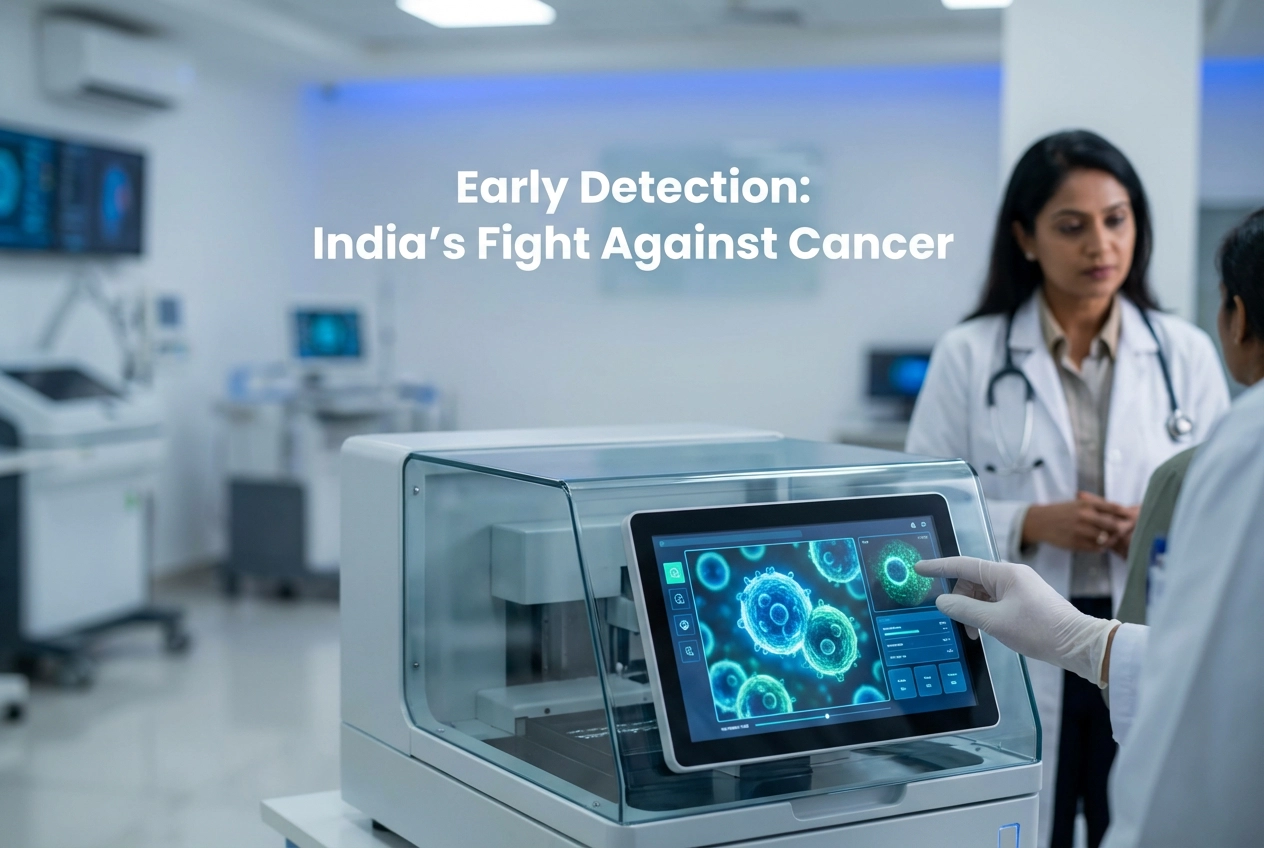
\India’s escalating cancer burden necessitates a radical shift toward proactive **Cancer prevention India**. Expert opinion confirms a vigilant preventive strategy offers the country’s strongest opportunity to “bend the curve” of rising cases. While World Health Organization (WHO) studies estimate that four out of every ten cancer cases are preventable, certain clinicians suggest the impact could be significantly higher. Specifically, for prevalent malignancies like oral and breast cancer, prevention and early detection could potentially avert up to 70 per cent of cases. Therefore, focusing on prevention moves patients away from the critical, late-stage spiral of treatment alone. For medical professionals looking to deepen their expertise in this critical area, consider pursuing a Certification Course In Clinical Oncology.
The Urgency of Cancer Prevention India
Dr. Pankaj Chaturvedi, Director of the Advanced Centre for Treatment, Research and Education in Cancer (ACTREC), Tata Memorial Centre, emphasizes that treatment infrastructure alone cannot manage the mounting patient burden. The true call to action rests with advancing prevention. The most common cancers in India, specifically oral and breast cancers, are particularly responsive to early detection strategies. Furthermore, the National Programme for Prevention and Control of Non-Communicable Diseases (NPCDCS) already targets screening for oral, breast, and cervical cancers for individuals aged 30 and above. However, current cancer screening uptake remains low, often reported around 3 per cent for government-run programs, making fear of diagnosis a major operational barrier.
Oral cancer, for example, typically develops over a wide window of 10 to 15 years, offering ample time for prediction or early detection. Conversely, mass breast cancer screening has demonstrated clear efficacy, with one study showing a 30 percent reduction in mortality among women. To improve this low uptake, the strategic integration of technology becomes crucial. Consequently, technology, including mobile-based tools, can detect cancer at a reversible stage, especially within low-resource community settings. Furthermore, initiatives at the Tata Memorial Centre have demonstrated a 93 per cent concurrence rate with conventional diagnosis across 40,000 patients using such advanced tools, and the institute is now developing AI-based solutions to reduce physician workload. Those interested in specialized detection methods for this area can benefit from the Certification Course In Breast Radiology.
Modifiable Risk Factors: Addressing the Lifestyle Lurch
The core of sustainable impact lies in promoting essential lifestyle modifications. **Cancer prevention India** must hinge on aggressively addressing major risk factors for non-communicable diseases. These include tobacco, alcohol, and areca nut consumption. Tobacco and smokeless tobacco, alongside areca nut consumption, are significant contributors to the overall cancer burden in India. Oral hygiene is equally critical, playing a significant role in preventing oral cancers. While tobacco use is showing a generational decline, the sharp rise in alcohol consumption presents a new challenge. Notably, alcohol metabolizes into acetaldehyde, a banned substance in India that damages DNA and subsequently increases cancer risk. Overall, estimates indicate that 37.1% of all new cancer cases in India in 2022 were linked to modifiable risk factors. Understanding the broader impact of lifestyle choices is vital, perhaps explored further in the Certificate Program In Family Medicine.
Despite India’s overall cancer incidence being lower than in many Western nations, its impact is often more immediate. It strikes individuals during their most productive years. Therefore, shifting decisively toward prevention and early detection is not merely an option; it is an inevitable necessity to reverse the country’s rising cancer trajectory. The Indian Council of Medical Research (ICMR) advises clinical breast examinations every 1-3 years for women aged 30-40. It also encourages annual mammography for opportunistic screening from age 40 to 70 years.
Frequently Asked Questions
Q1: What percentage of cancer cases are preventable in India?
WHO studies estimate that approximately four out of every ten cancer cases (around 37.1%) in India are preventable. However, clinicians suggest that for highly responsive cancers like oral and breast cancer, prevention and early detection could avert up to 70% of cases.
Q2: Why is the cancer burden in India rising despite expanded hospital infrastructure?
The cancer burden continues to grow because infrastructure expansion alone cannot curb the number of new cases. The true bottleneck is the failure to scale up prevention and early detection, which are far more cost-effective than late-stage treatment.
Q3: What are the main modifiable risk factors for cancer in India?
The primary modifiable risk factors in India include tobacco use (smoking and smokeless tobacco), areca nut consumption, and alcohol intake. Poor oral hygiene and certain infections are also major contributors to the overall cancer burden.
References
- Prevention Can Bend India’s Rising Cancer Curve: Dr Chaturvedi – ETHealthworld
- indiatoday.in: Which cancers in India are preventable? WHO has the answers.
- indianexpress.com: Four in 10 cancer cases among Indian men and women are preventable, says study.
- economictimes.com: 50-60 pc cancer cases detected in India annually are preventable, say oncologists.
- cancerindia.org.in: Cancer Statistics – ICMR – National Institute of Cancer Prevention and Research.
- indiatimes.com: Prevention Can Bend India’s Rising Cancer Curve: Dr Chaturvedi.
- apollo247.com: Indian Breast Cancer Screening Guidelines.
- nih.gov: Challenges and Innovations in Breast Cancer Screening in India: A Review of Epidemiological Trends and Diagnostic Strategies – PMC.
- bisi.co.in: BREAST IMAGING SOCIETY, INDIA BEST PRACTICE GUIDELINES – MAMMOGRAPHY.
- nih.gov: Oral cancer screening in India: Insights from the National Family Health Survey-5 – PMC.
- mohfw.gov.in: NATIONAL PROGRAMME FOR PREVENTION AND CONTROL OF NON-COMMUNICABLE DISEASES.
Disclaimer: This article was automatically generated from publicly available sources and is provided for informational and educational purposes only. OC Academy does not exercise editorial control or claim authorship over this content. It is not a substitute for professional medical advice, diagnosis, or treatment. Always consult a qualified healthcare provider and refer to current local and national clinical guidelines.