
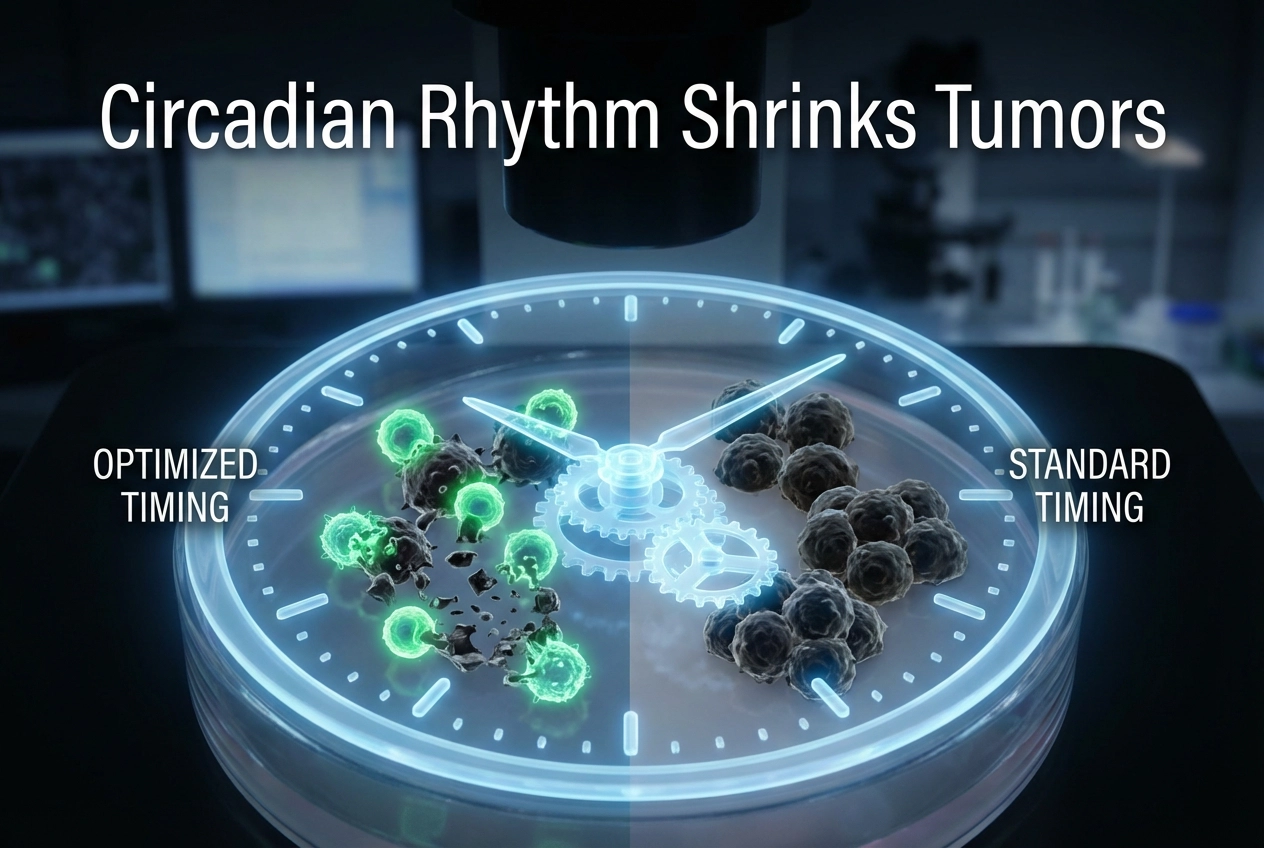
A groundbreaking study in mice suggests that restoring the body’s natural Circadian Rhythm in cancer patients could become a core component of treatment. This novel approach demonstrated that fixing a disrupted body clock led to a significant shrinking of breast tumours. In addition, these findings underscore the potential to boost the effectiveness of current anti-cancer therapies and potentially lower their toxicity. The research team, notably, achieved these results without administering any traditional anti-cancer drugs.
Cancer’s Disruption of the HPA Axis
The human body relies on the hypothalamic-pituitary-adrenal (HPA) axis, a critical feedback loop, to maintain regular day-night or “diurnal” rhythms. Scientists observed that in mice with induced breast cancer, the tumours quickly disrupted the normal rhythm of corticosterone, a key stress hormone. Corticosterone levels typically rise and fall naturally throughout the day; conversely, the cancer flattened this essential hormonal cycle. Furthermore, researchers noted a profound blunting of the corticosterone rhythm, sometimes by 40 to 50 percent, which occurred even before the tumours were physically palpable. This remarkable observation happened within three days of cancer induction. Therefore, the cancer itself appears to initiate a distal regulation of brain neurons controlling the HPA axis.
Targeting the Hypothalamus to Restore the Circadian Rhythm in Cancer
Researchers investigated the hypothalamus in the mice’s brains and identified key neurons locked in a hyperactive, low-output state. When scientists stimulated these specific neurons—which express corticotropin-releasing hormone (PVNCRH)—they successfully mimicked the normal day-night cycle. Significantly, enforcing this regular rhythm immediately restarted the stress hormone’s natural cycles. Consequently, this adjustment pushed anti-cancer immune cells, specifically effector T cells, directly into the breast tumours. This action caused the tumours to shrink dramatically. The scientists emphasized that this rhythm enforcement only worked when applied at the correct time of day, right before the light-to-dark transition. The anti-cancer effect was entirely absent if the stimulation occurred at the wrong time. Therefore, the timing of the intervention is absolutely critical for this anti-cancer immunity boost.
The Growing Field of Chronotherapy
This work strongly supports the concept of chronotherapy, which involves timing medication and treatment according to the body’s natural circadian clock. Clinical trials have shown that chronotherapy can significantly decrease the severity and duration of side effects from treatments like chemotherapy and radiation. For instance, administering chemotherapy at an optimal time can reduce adverse effects such as neutropenia and gastrointestinal issues. Overall, the goal of chronotherapy is to maximize therapeutic efficacy while minimizing potential toxicity. These new findings suggest that directly repairing the body’s internal clock rhythm could be a powerful, non-pharmacological strategy. This prepares a patient’s immune system for existing treatments. Researchers continue investigating the precise processes by which tumours disrupt the body’s healthy rhythms. Personalized medicine, which tailors treatments based on a patient’s individual circadian function, represents the future of this field. Those interested in advancing treatment modalities for cancer should explore the Certification Course In Clinical Oncology or consider the Postgraduate Diploma In Cancer And Clinical Oncology.
Frequently Asked Questions
Q1: How does cancer disrupt the body’s rhythm?
Cancer, specifically breast cancer in the mouse model, disrupts the HPA axis by affecting key neurons in the hypothalamus, leading to a blunted, or flattened, day-night cycle of stress hormones like corticosterone (or cortisol in humans).
Q2: What is the primary anti-cancer mechanism observed when the rhythm is fixed?
Restoring the normal diurnal rhythm of the stress hormone, particularly at the correct time of day, was shown to mobilize anti-cancer immune cells (effector T cells) into the tumour microenvironment, which subsequently led to significant tumour shrinkage.
References
- Study in mice shows fixing body rhythm in cancer may shrink tumours – ETHealthworld
- A brain-body feedback loop driving HPA-axis dysfunction in breast cancer – PubMed
- Cancer Disrupts the Brain’s Internal Clock – Neuroscience News
- Chronotherapy: Circadian Rhythms and Their Influence in Cancer Therapy – PMC
Disclaimer: This article was automatically generated from publicly available sources and is provided for informational and educational purposes only. OC Academy does not exercise editorial control or claim authorship over this content. It is not a substitute for professional medical advice, diagnosis, or treatment. Always consult a qualified healthcare provider and refer to current local and national clinical guidelines.