
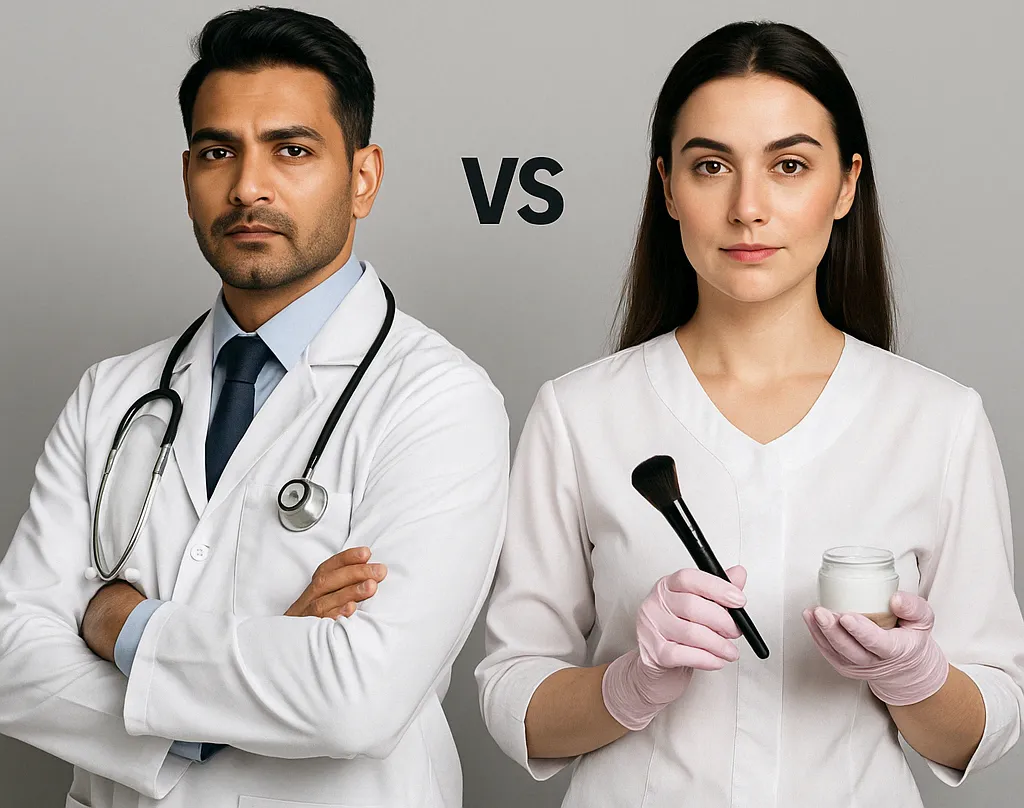
For doctors in India exploring a future in skin-focused specialisations, the question often arises: Should I choose dermatology or cosmetology? Both fields offer opportunities for private practice, clinical impact, and aesthetic enhancement. Yet, they differ significantly in terms of scope, training, medical depth, and long-term career potential. Understanding the difference between dermatology and cosmetology is crucial, especially for MBBS or MD doctors who wish to make informed, sustainable decisions about their professional journey.
In this blog, we delve into the definitions, educational pathways, practice models, and practical differences between dermatology and cosmetology while exploring how doctors can navigate this decision based on their individual goals.
Defining the Disciplines
To begin with, dermatology is a medical speciality concerned with the diagnosis, treatment, and management of diseases affecting the skin, hair, nails, and mucous membranes. It is rooted in clinical science and often includes subfields like dermatopathology, trichology, paediatric dermatology, and procedural dermatology.
Cosmetology, on the other hand, is a non-medical field that focuses on enhancing physical appearance through beauty treatments related to hair, skin, and nails. While it plays a significant role in the wellness and beauty industry, cosmetology is not considered a branch of medicine and does not require a medical degree.
This brings us to the key comparison: cosmetologist vs dermatologist. While both professionals may work in settings aimed at improving skin and hair aesthetics, only dermatologists are trained and licensed to diagnose skin disorders, prescribe medication, and perform medical or minor surgical procedures. Cosmetologists typically perform salon-based treatments such as facials, hair styling, make-up application, or surface-level skin care procedures.
Dermatology: A Medical and Academic Pathway
For MBBS doctors, the route into dermatology is structured, clinical, and academically rigorous. The standard pathway involves qualifying for an MD or diploma in dermatology after NEET PG. For those unable to pursue full-time postgraduate training, alternatives like online MSc in Dermatology, PG diplomas, or fellowships in aesthetic dermatology also exist, particularly through international institutions.
These programmes focus on:
- Clinical dermatology (psoriasis, eczema, infections, autoimmune diseases)
- Dermatopathology and diagnostic skills
- Procedural dermatology (biopsies, minor surgeries)
- Cosmetic dermatology (lasers, peels, injectables)
The curriculum is rooted in scientific principles and evidence-based practice. This allows dermatologists to treat a wide range of skin conditions while also offering aesthetic procedures. As the line between medicine and aesthetics continues to blur, dermatologists are often considered the gold standard for comprehensive skin care.
Cosmetology: A Beauty-Focused Career
Cosmetology in India is largely industry-driven and aimed at appearance enhancement. Cosmetologists may complete short-term diplomas or certifications in beauty therapy, salon management, or skin care. These are usually non-clinical courses and do not require an MBBS degree.
However, a growing number of MBBS doctors are now pursuing a cosmetology course after MBBS, believing it to be a fast-track entry into the aesthetic world. While cosmetology courses can offer hands-on training in facials, spa treatments, and basic skin care, they do not equip doctors with the medical framework needed for diagnosing or managing skin conditions.
Instead of pursuing general cosmetology certifications, doctors today prefer structured, medical-focused training that builds long-term credibility. Those seeking foundational knowledge often start with a short-term dermatology online certificate course, ideal for gaining clinical insights without disrupting practice. Others may choose more advanced pathways like postgraduate diplomas in dermatology or even a full-fledged MSc in dermatology, especially if they aim to expand into leadership, teaching, or aesthetic specialisation. These programmes offer the flexibility to learn at your own pace, making them well-suited for working professionals.
This raises the debate: Is a cosmetology course after MBBS worth it for a practising doctor? The short answer is – not necessarily. Doctors already hold the credentials to practise advanced skin treatments, provided they receive proper medical training in aesthetic dermatology. Hence, a medically grounded aesthetic dermatology fellowship is a more appropriate route than a standard cosmetology certification.
Aesthetic Medicine vs Dermatology: The Overlap
The field of aesthetic medicine vs dermatology often causes confusion. Aesthetic medicine is a sub-speciality that includes non-surgical procedures such as Botox, fillers, laser hair removal, and skin rejuvenation. It is practised by both dermatologists and other licensed physicians who undergo additional training.
Dermatologists, by virtue of their medical and diagnostic expertise, are especially well-positioned to practise aesthetic medicine safely. Their ability to distinguish between cosmetic issues and underlying skin pathologies adds a layer of medical precision that non-specialists cannot offer.
So, while aesthetic medicine and dermatology often intersect, it is dermatology that offers a more complete and medically credible foundation for long-term practice.
Career Scope: Dermatologist vs Cosmetologist
The career outlook for both professions differs significantly. Dermatologists can:
- Work in government or private hospitals
- Establish private dermatology or aesthetic clinics
- Participate in research or medical teaching
- Join pharmaceutical or cosmeceutical firms as medical advisors
- Serve patients with both clinical and cosmetic needs
In contrast, cosmetologists are generally limited to beauty and wellness centres. Their services are elective and non-medical. While a successful cosmetologist can build a profitable practice, the ceiling for medical responsibility, credibility, and service diversity remains low.
Furthermore, dermatologists are eligible for medico-legal coverage, professional licensure, and peer recognition, which lends long-term security to their profession. A cosmetologist vs dermatologist comparison clearly highlights the larger clinical and entrepreneurial scope available to the latter.
Legal and Ethical Considerations
In India, only licensed doctors are legally permitted to perform medical aesthetic procedures such as dermal fillers, laser resurfacing, microneedling, and PRP. Cosmetologists without a medical background are restricted to superficial treatments.
Doctors who attempt to practise cosmetology without adequate training in aesthetic dermatology may also face ethical dilemmas and clinical risks. For this reason, MBBS and MD doctors are encouraged to avoid general cosmetology programmes and instead pursue accredited aesthetic dermatology training.
As regulations tighten, especially in the cosmetic medicine domain, it will be increasingly important for practitioners to demonstrate appropriate training, certification, and clinical knowledge.
Which Path is Right for Doctors: Dermatology or Cosmetology?
For an MBBS or MD doctor, the better choice between dermatology and cosmetology depends on long-term vision. If the goal is to offer patient-focused care, build a high-credibility practice, and enjoy clinical flexibility, dermatology is the clear winner.
It provides:
- A solid clinical foundation
- Diagnostic and therapeutic capacity
- Access to both aesthetic and medical treatments
- Eligibility for academic, research, and hospital-based roles
Cosmetology, in contrast, is suitable for non-medical professionals entering the beauty industry. While it may seem appealing as a shortcut into aesthetics, it lacks the academic depth, medical scope, and professional recognition that a dermatology-based pathway provides.
OC Academy: Supporting Your Dermatology Journey
OC Academy enables doctors to explore structured, credible dermatology education through certified courses offered by global academic institutions. Whether you are interested in expanding into aesthetic dermatology or looking to solidify your clinical expertise, our platform features a variety of online diplomas, fellowships, and certification programmes.
Conclusion
The difference between dermatology and cosmetology is more than semantic — it shapes the trajectory of your medical career. For practising MBBS or MD doctors, dermatology offers a robust, clinically sound, and professionally rewarding path that allows you to treat disease, perform aesthetic procedures, and establish an independent practice with long-term credibility.
Cosmetology, while valuable in the beauty industry, does not offer the same depth, recognition, or legal scope. Doctors are better served by choosing structured dermatology-based training to enter the field of aesthetic medicine ethically and confidently.
Ready to take the next step? Explore dermatology courses that align with your goals and clinical experience.
Frequently Asked Questions (FAQs)
1. What’s the key difference between dermatology vs cosmetology?
Dermatology is a medical speciality requiring an MBBS or MD focused on the diagnosis and treatment of skin conditions. Cosmetology is a non-medical field that concentrates on beauty and grooming services.
2. Can an MBBS doctor do a cosmetology course?
While technically possible, it is more beneficial for doctors to pursue medical aesthetic training rather than general cosmetology. A cosmetology course after MBBS may not offer the clinical or legal scope doctors need.
3. Who earns more – cosmetologist vs dermatologist?
Dermatologists typically have higher earning potential due to their ability to offer clinical and aesthetic services, run independent clinics, and participate in hospital or academic roles.
4. What is the difference between aesthetic medicine vs dermatology?
Aesthetic medicine focuses on non-surgical cosmetic procedures. Dermatology includes both medical and aesthetic aspects of skin health, offering broader career flexibility.
5. Is cosmetology in India regulated?
Cosmetology is loosely regulated. However, medical aesthetic procedures must be performed by licensed doctors, and non-doctors are restricted to superficial beauty treatments.
6. What is the difference between dermatologist and cosmetologist?
The difference between cosmetologist and dermatologist lies in their qualifications and scope of practice. A dermatologist is a medical doctor who specialises in diagnosing and treating skin, hair, and nail conditions, including medical issues like eczema, acne, and skin infections. A cosmetologist, on the other hand, is a trained professional focused on beauty treatments such as skincare, hair styling, and makeup. While dermatologists offer clinical solutions, cosmetologists provide aesthetic and non-medical services.