
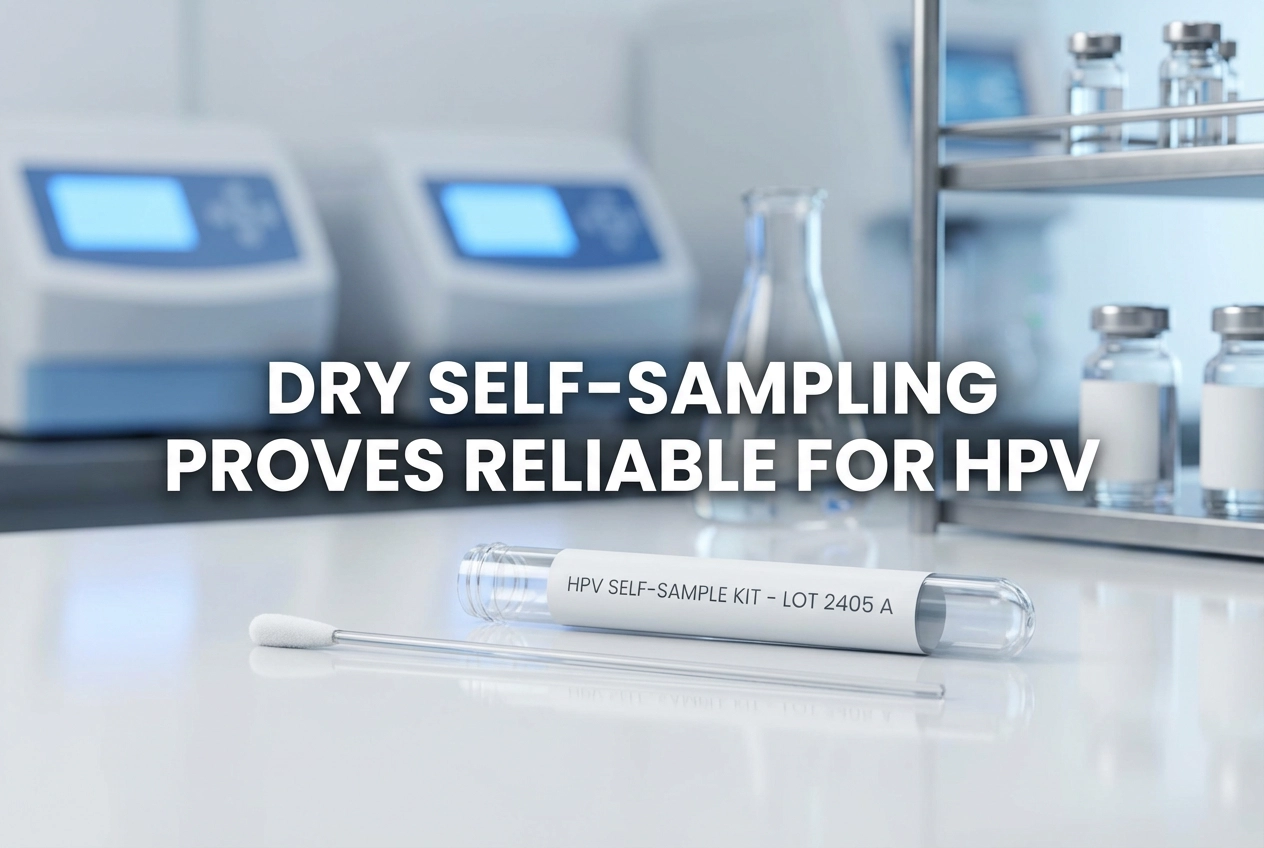
HPV self-sampling presents a valuable option to increase cervical cancer screening rates globally, especially in low-resource settings like India. A new prospective matched study evaluated the analytical suitability of various self-collected samples for Human Papillomavirus (HPV) testing using the BD Onclarity assay. This research compared self-collected vaginal swabs (both dry and wet), first-void urine, and clinician-collected cervical samples. Researchers specifically focused on the impact of room-temperature storage duration on DNA quality and HPV detection rates.
Dry Versus Wet Vaginal Self-Sampling Swabs
The study found that dry self-samples from a Copan FLOQSwab are likely to have sufficient DNA quality for HPV testing. Furthermore, this quality and accuracy remain comparable to wet self-samples and clinician-collected samples. Notably, the DNA quality of dry samples was not significantly lower than wet samples when resuspension occurred within two weeks. These self-collected samples can be transported dry and maintain stability for 30 days at temperatures between 2°C to 30°C, which simplifies logistics. In fact, the dry workflow facilitates automation and reduces the complexity of laboratory processing. The BD Onclarity HPV assay, validated for dry transport, ensures seamless, automated lab processing through onboard rehydration, making it a reliable solution for high-throughput screening.
Challenges with Urine-Based HPV Self-Sampling
Conversely, the findings suggested a lower performance for urine-based self-sampling. Urine samples collected using the Collipee device showed lower HPV positivity when compared to the other sample types, including vaginal swabs and clinician-collected samples. Additionally, these urine samples yielded higher HPV cycle threshold (Ct) values. Therefore, urine samples are likely less sensitive for detecting HPV than clinician-collected cervical samples.
Clinical Implications of Reliable HPV Self-Sampling
The validation of a stable, dry self-collection method has significant clinical implications. For example, the relative clinical sensitivity of the Onclarity assay on vaginal self-samples for detecting ≥CIN2 lesions is similar to paired liquid-based cytology samples. This reliability supports self-collection as an effective alternative screening method. By removing the need for an immediate wet transport medium and offering a two-week room-temperature stability window, laboratories gain considerable logistical flexibility. Such methods have the potential to boost cervical cancer screening participation among women who might otherwise avoid a pelvic examination. Consequently, adopting this reliable approach is critical to reaching global elimination goals for cervical cancer.
Frequently Asked Questions
Q1: What is the recommended time frame for processing a dry vaginal self-sample?
Dry self-samples should be resuspended for HPV testing within two weeks when stored at room temperature to maintain sufficient genomic DNA quality.
Q2: Are urine samples suitable for HPV testing based on this study?
No. The study indicated that first-void urine samples are likely less sensitive for HPV detection compared to vaginal self-samples and clinician-collected samples, exhibiting lower positivity and higher Ct values.
References
- Chu K et al. Evaluation of the Quality and Suitability of Self-Collected Vaginal and Urine Samples for Human Papillomavirus Testing: A Prospective Matched Study. BJOG. 2026 Feb 04. doi: 10.1111/1471-0528.70170. PMID: 41639581.
- HPV Self-collection with BD Onclarity™ HPV Assay | BD Cervical cancer. bd.com.
- Iacobone et al. Performance of BD Onclarity HPV assay on FLOQSwabs vaginal self-samples. Microbiology Spectrum. 2024 Feb 7. doi: 10.1128/spectrum.02872-23.
- Ray et al. Self-Sampling for Cervical Cancer Screening and Common STIs Testing in India During and After COVID-19 Pandemic. capedindia.org. 2025 Feb 28.