Familial Hypercholesterolemia: What Clinicians Must Know
Familial hypercholesterolemia represents one of the most common inherited metabolic disorders globally. However, clinicians frequently fail to identify it before the onset of premature cardiovascular disease. In addition, this genetic condition causes severely elevated low-density lipoprotein cholesterol from birth. Consequently, affected individuals face an exponentially higher lifetime risk of early myocardial infarction.
Understanding Familial Hypercholesterolemia and Genetics
Most patients inherit the disease in an autosomal dominant fashion. Specifically, mutations in the LDLR gene account for the vast majority of cases. Furthermore, alterations in APOB or PCSK9 genes can also cause this phenotypic presentation. Heterozygous cases occur in approximately one in every 250 individuals. In contrast, homozygous cases remain exceptionally rare yet present with severe childhood atherosclerosis. Therefore, recognizing the genetic basis helps clinicians anticipate aggressive disease progression early.
Clinical Presentation and Diagnostic Evaluation
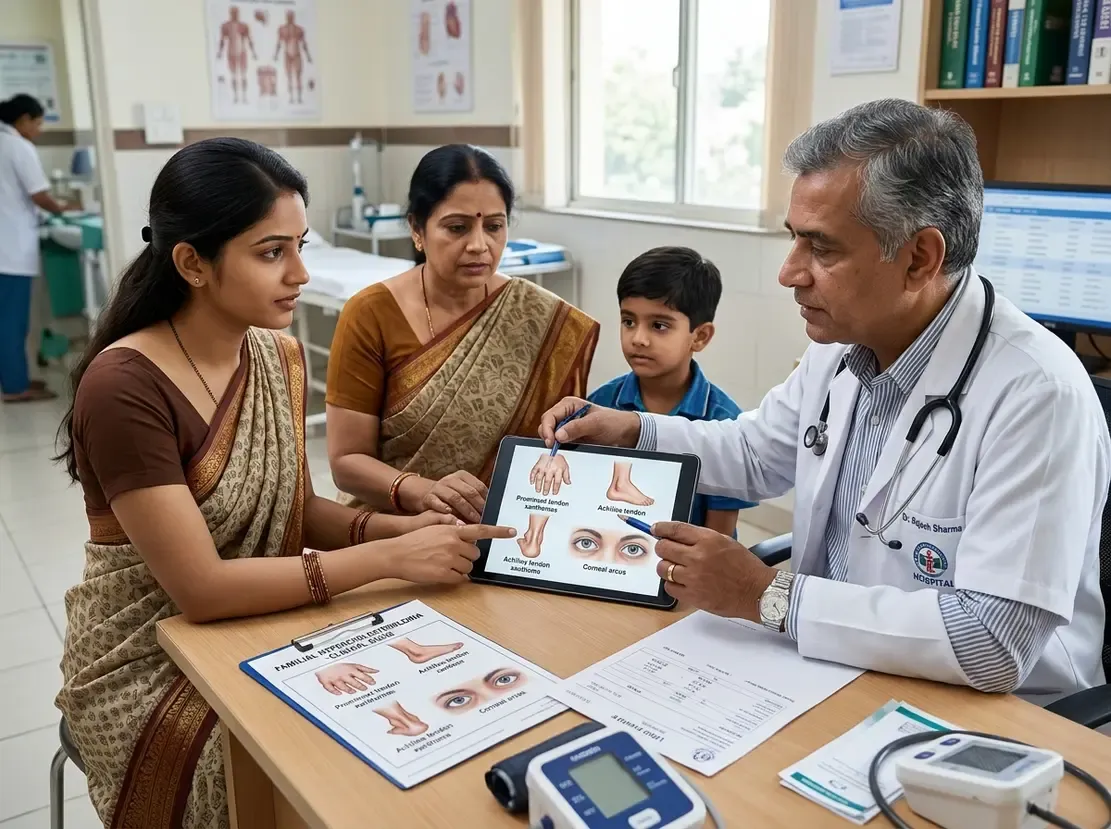
Often, patients remain entirely asymptomatic until an acute coronary syndrome suddenly occurs. Nevertheless, thorough physical examination may reveal distinct clinical clues. For example, tendon xanthomas and corneal arcus strongly suggest genetic dyslipidemia. Moreover, clinicians should suspect the diagnosis when untreated LDL levels exceed 190 milligrams per deciliter. Validated scoring systems like the Dutch Lipid Clinic Network criteria provide reliable diagnostic confirmation. Consequently, routine lipid panel screening in young adults enables prompt identification.
Therapeutic Strategies and Cascade Screening
Early initiation of intensive lipid-lowering pharmacotherapy remains the cornerstone of clinical management. First, high-intensity statin therapy provides substantial reduction in circulating atherogenic particles. Additionally, adding ezetimibe significantly enhances LDL cholesterol clearance. If target levels remain unmet, clinicians should consider PCSK9 inhibitors promptly. Furthermore, cascade screening of first-degree biological relatives serves as an indispensable intervention. Thus, proactive family screening protects high-risk family members across successive generations through comprehensive care covered in cardiac management strategies.
Frequently Asked Questions
Q1: How does familial hypercholesterolemia differ from lifestyle-induced high cholesterol?
Familial hypercholesterolemia results directly from inherited genetic mutations that impair LDL clearance. Therefore, it causes markedly high cholesterol from infancy regardless of diet or exercise habits.
Q2: Why is cascade screening essential in this condition?
First-degree relatives share a fifty percent probability of inheriting the causative genetic variant. Consequently, cascade screening detects affected family members before irreversible vascular damage occurs.
Q3: What is the primary initial medical treatment?
High-intensity statin therapy represents the primary frontline intervention for all diagnosed individuals. In addition, physicians often combine statins with ezetimibe to reach strict therapeutic targets, principles that are vital for practitioners managing metabolic disorders in clinical practice.
References
- Berkley S et al. What Is Familial Hypercholesterolemia? JAMA. 2026 Nov 05. doi: 10.1001/jama.2026.19907. PMID: 42986657.
- Watts GF, Gidding SS, Mata P, et al. Familial hypercholesterolaemia: evolving knowledge for designing adaptive pathways of care. Nat Rev Cardiol. 2020;17(6):360-377.
- Grundy SM, Stone NJ, Bailey AL, et al. 2018 AHA/ACC/AACVPR/AAPA/ABC/ACPM/ADA/AGS/APhA/ASPC/NLA/PCNA Guideline on the Management of Blood Cholesterol. Circulation. 2019;139(25):e1082-e1143.