
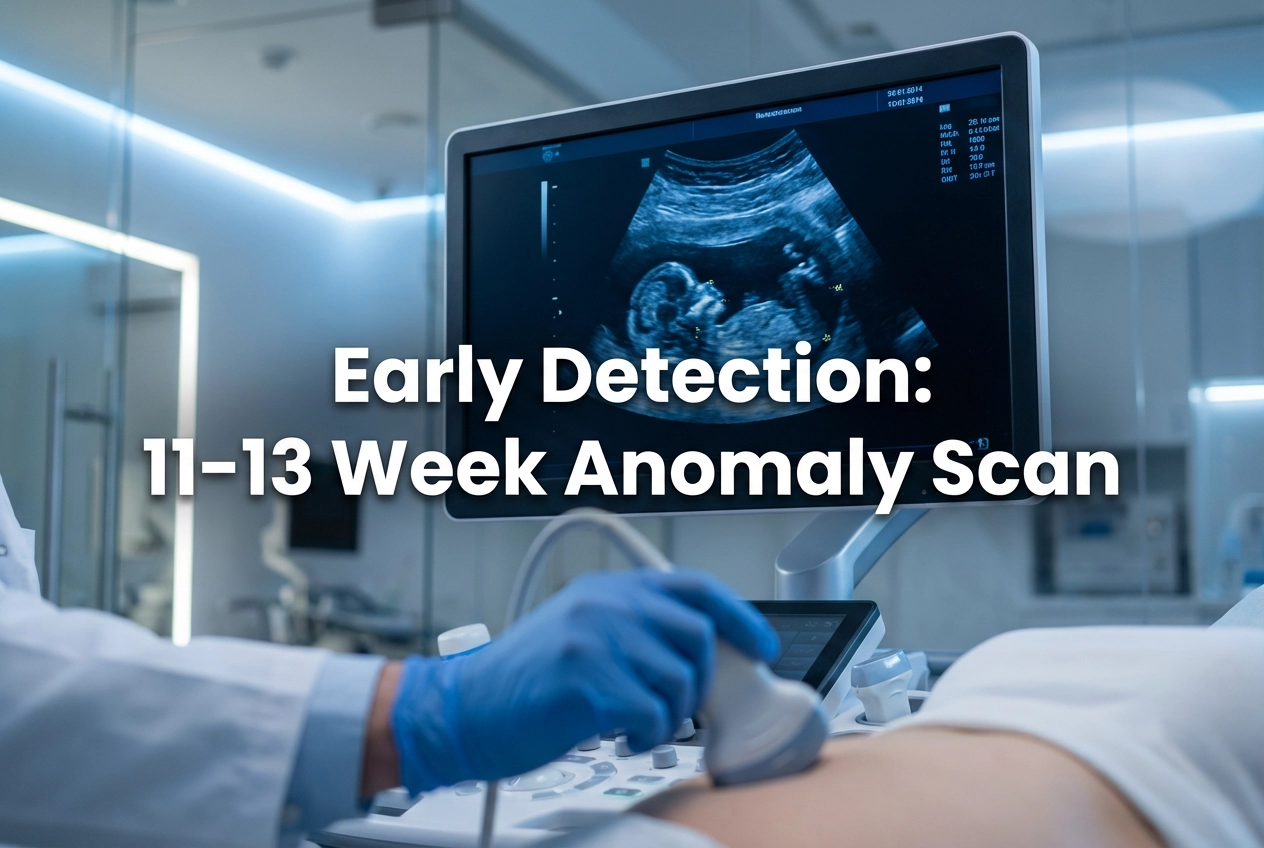
Prenatal care continues to evolve with technological advancements in fetal imaging. One such advancement is the First-Trimester Anomaly Scan, which allows doctors to identify structural issues much earlier than the traditional 20-week milestone. Recently, the IMITAS cohort study examined the national implementation of this early screening tool. Consequently, the results offer vital insights for clinicians regarding the timing and accuracy of prenatal diagnoses. The researchers analyzed data from a large nationwide program involving over 173,000 pregnancies. Interestingly, the first-trimester scan achieved a high uptake of nearly 75 percent. This high participation rate suggests that parents and providers find early screening highly acceptable. Specifically, the scan successfully detected 84.6 percent of major congenital anomalies. This early detection is crucial because it provides families with more time for counseling and medical planning. Furthermore, the median time to reach a definitive diagnosis for major anomalies was just nine days after referral.
Clinical Impact of the First-Trimester Anomaly Scan
However, medical professionals must remain aware of the scan’s limitations. While the procedure excels at finding major defects, its sensitivity for all types of anomalies is about 31.6 percent. This means that many conditions, especially those involving the heart or kidneys, may only become visible later in the second trimester. Additionally, the study noted a false-positive rate of 0.8 percent, which requires careful communication with expectant parents. Therefore, the early scan complements rather than replaces the standard second-trimester anatomy assessment. Similarly, clinicians should use these findings to optimize screening schedules and improve maternal care pathways. Moreover, the study demonstrates that early screening facilitates faster decision-making for severe conditions. By incorporating this tool, healthcare systems can enhance the diagnostic yield of their screening programs significantly.
Frequently Asked Questions
Q1: What is the sensitivity of the First-Trimester Anomaly Scan for major defects?
According to the IMITAS study, the scan successfully detects approximately 84.6 to 85 percent of major congenital anomalies, such as anencephaly or holoprosencephaly.
Q2: How does the scan affect the timing of fetal diagnosis?
The study found that the median time to reach a definitive diagnosis for major structural anomalies was only nine days after the initial referral from the first-trimester scan.
Q3: Is the first-trimester scan a replacement for the 20-week anatomy scan?
No, it is not a replacement. While it detects major defects early, it has a lower sensitivity for minor or late-appearing anomalies, meaning the second-trimester scan remains essential.
References
- Bronsgeest K et al. Dedicated First-Trimester Anomaly Scan in a National Prenatal Screening Program and Timing of Diagnosis: The Prospective IMITAS Cohort Study. BJOG. 2026 Mar 10. doi: 10.1111/1471-0528.70192. PMID: 41804866.
- Lust EER, Bronsgeest K, Henneman L, et al. National implementation of a first-trimester anomaly scan in a low-risk population: uptake and test performance. American Journal of Obstetrics & Gynecology. 2024.
- Bilal S, et al. Accuracy of a first- and second-trimester ultrasound scan for identifying fetal anomalies in low-risk and unselected pregnancies. Cochrane Database of Systematic Reviews. 2024.