
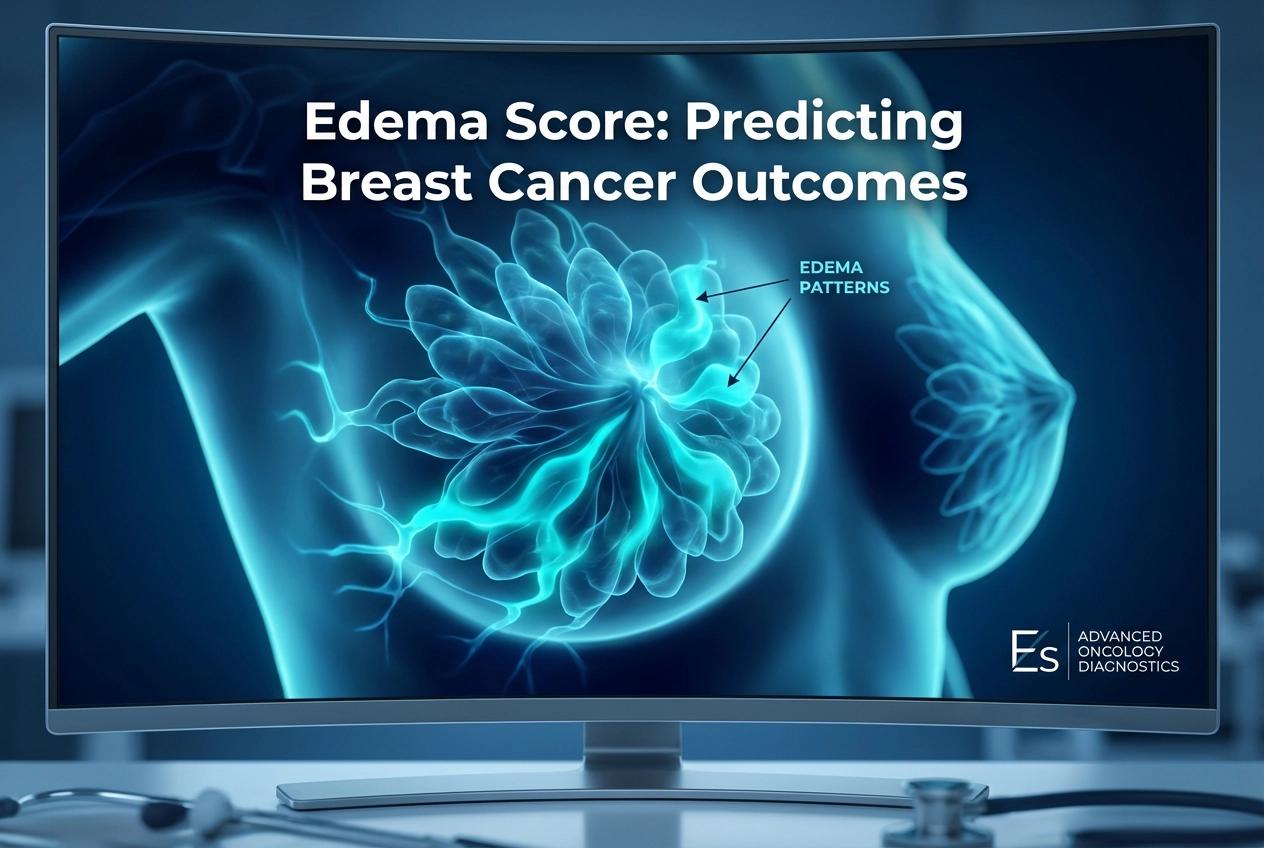
The Breast Edema Score (BES) serves as an essential MRI-based tool for radiologists to evaluate tumor severity. By analyzing fluid accumulation patterns, doctors can gain critical insights into the biological behavior of invasive breast cancer. Consequently, this noninvasive marker assists in risk stratification before initiating complex treatment protocols. Moreover, identifying high-risk features early allows for more personalized oncology care.
Understanding the Breast Edema Score in Imaging
Radiologists classify breast edema based on its anatomical distribution, ranging from no edema to subcutaneous involvement. Higher scores typically correlate with aggressive markers such as larger tumor size and higher histological grade. Furthermore, researchers found a significant association between edema and axillary lymph node metastasis. Because of these links, the presence of edema often indicates a more challenging clinical course. However, recent evidence suggests that the score does not reliably predict responses to neoadjuvant chemotherapy.
Clinical Implications for Breast Cancer Management
Although the score highlights tumor aggressiveness, its inability to predict chemotherapy response remains a point of clinical debate. Clinicians should use BES primarily for phenotyping tumors and assessing the likelihood of lymphovascular invasion. Additionally, non-luminal subtypes like triple-negative breast cancer frequently exhibit higher edema levels. Therefore, integrating this scoring system into routine MRI reports provides a clearer picture of the disease state. This data-driven approach empowers medical teams to make informed decisions regarding surgical margins and overall prognosis.
Frequently Asked Questions
Q1: What are the different grades of the Breast Edema Score?
The score typically ranges from Grade 1, which represents no edema, to Grade 4, indicating extensive subcutaneous edema.
Q2: Does a high score mean chemotherapy will be less effective?
While a high score indicates more aggressive tumor biology, current studies suggest it does not accurately predict the pathological response to chemotherapy.
References
- Onar MA et al. Breast edema score as a biomarker of tumor aggressiveness and its predictive value for neoadjuvant chemotherapy response. Eur Radiol. 2026 Mar 10. doi: 10.1007/s00330-026-12406-w. PMID: 41803553.
- Uematsu T, et al. Focal breast edema and breast edema score on T2-weighted images provides valuable biological information for invasive breast cancer. PMC. 2023;14:73.
- Gupta S, et al. Pre-treatment MRI features and NAC response in Indian cohorts. Indian J Med Paediatr Oncol. 2025;46(1):45-52.