Goa Launches Vital Dietary Diversity and WASH Study
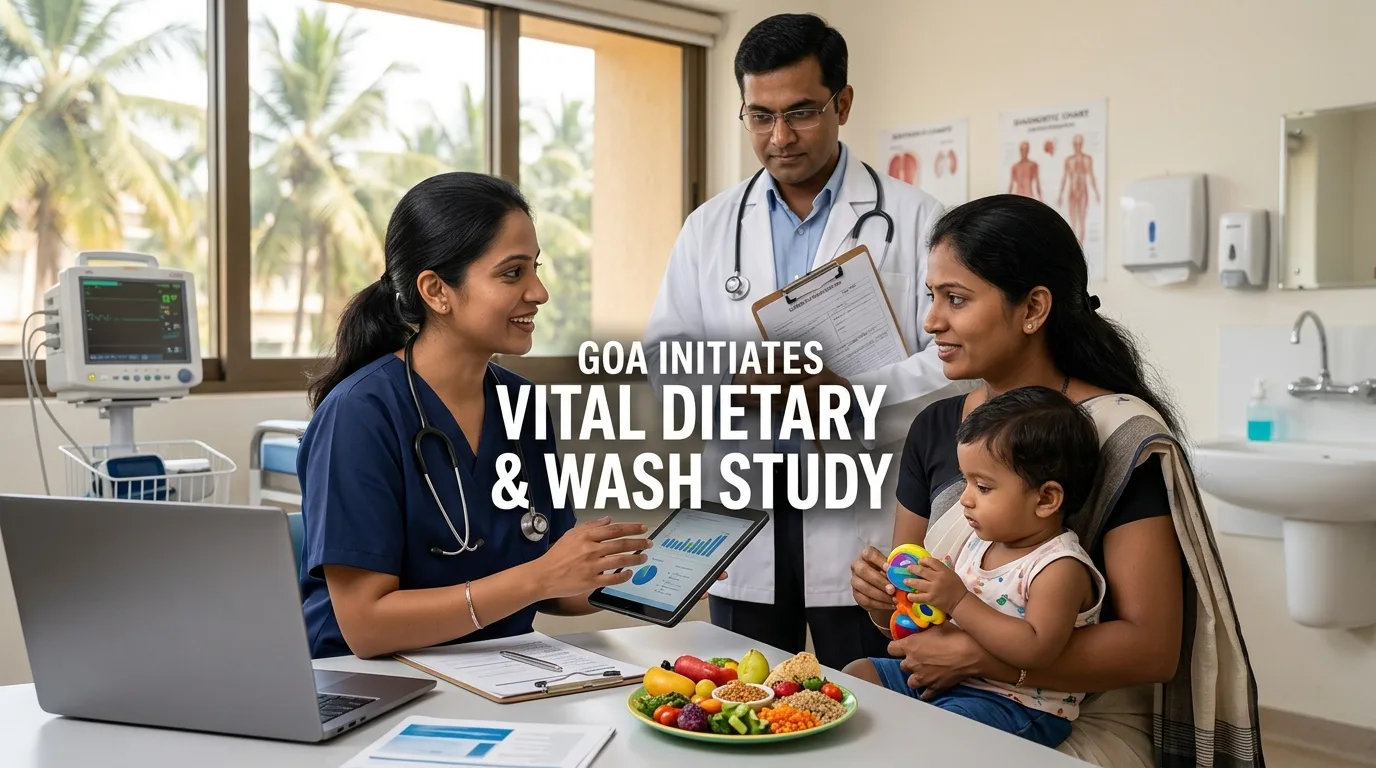
Goa is set to launch a landmark initiative to evaluate nutrition and health outcomes across the state. Specifically, the Goa state government will conduct a comprehensive Food, Nutrition, Health, and WASH (FNHW) study. This study will extensively analyze dietary diversity among vulnerable populations. Consequently, it will establish a clear baseline to track and monitor future nutritional progress.
Understanding the Goals of the Dietary Diversity Study
The assessment will target specific groups to gather precise clinical data. Specifically, researchers will collect samples from pregnant women, mothers of children under two years, and children under two. Furthermore, the team will organize village-level group discussions with at least 15 participants in each session.
This study aims to determine how household food security and complementary feeding practices impact child development. Consequently, the baseline findings will help health officials identify specific regional challenges. Additionally, an endline evaluation will later measure the direct effectiveness of subsequent state-level interventions.
Methodology and Monitoring Nutritional Indicators
To ensure high accuracy, researchers will employ a robust mixed-method approach. Indeed, the study will combine quantitative surveys with qualitative techniques. For the quantitative portion, the team will utilize cross-sectional surveys to compare data over time. However, they will not use an experimental control design for this specific project.
Simultaneously, qualitative techniques will capture deeper community insights. Therefore, the team will conduct Focus Group Discussions (FGDs) and Key Informant Interviews (KIIs). These qualitative interactions will involve local beneficiaries and key stakeholders. Consequently, the government can track critical markers like maternal care, anemia, and child malnutrition more effectively.
The Impact on Indian Healthcare and Policy
This study holds significant clinical and public health relevance for doctors across India. For instance, understanding regional nutritional baselines allows pediatricians to provide better complementary feeding advice. Moreover, integrating WASH indicators highlights the strong link between clean water, sanitation, and child growth. As a result, this research will support evidence-based decisions to combat malnutrition nationwide.
Frequently Asked Questions
Q1: What is the primary focus of the new study in Goa?
The study primarily assesses dietary diversity, household food security, and complementary feeding practices among pregnant women and young children.
Q2: Who are the target participants for this research?
Researchers will gather samples from pregnant women, mothers of children under two years, and children under two years of age.
Q3: How will the study measure the effectiveness of future health interventions?
By comparing baseline findings with endline data, the government can determine intervention effectiveness and measure progress over time.
References
- Goa to launch comprehensive study on dietary diversity among women, kids – ETHealthworld
- Ministry of Health and Family Welfare. Union Health Ministry Releases National Family Health Survey – 6 (NFHS-6). Press Information Bureau, 2026.
- Roy S, Gourav, Sharma R, Basu S. Impact of water, sanitation and hygiene (WASH) on child stunting and wasting in India: A propensity score matching analysis from the National Family Health Survey. Biodemography Soc Biol. 2026.
Disclaimer: This article was automatically generated from publicly available sources and is provided for informational and educational purposes only. OC Academy does not exercise editorial control or claim authorship over this content. It is not a substitute for professional medical advice, diagnosis, or treatment. Always consult a qualified healthcare provider and refer to current local and national clinical guidelines.