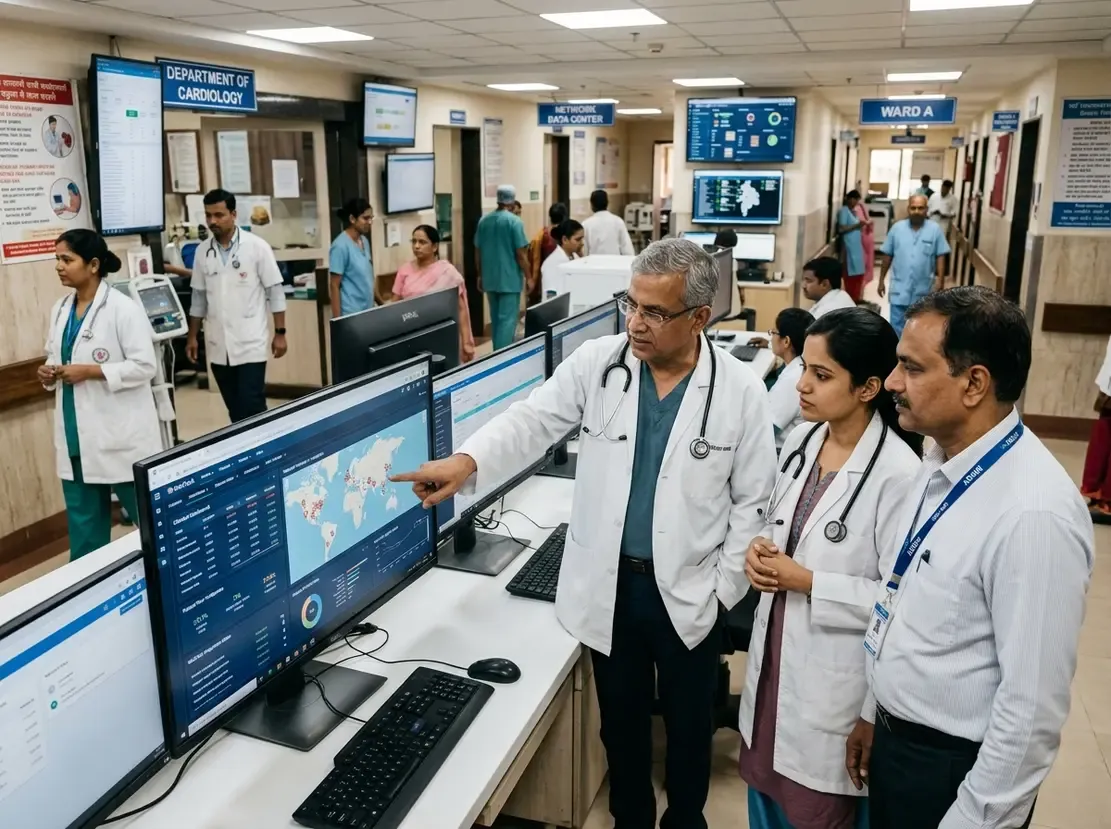
Why India Must Overhaul Breast Cancer Screening Urgently
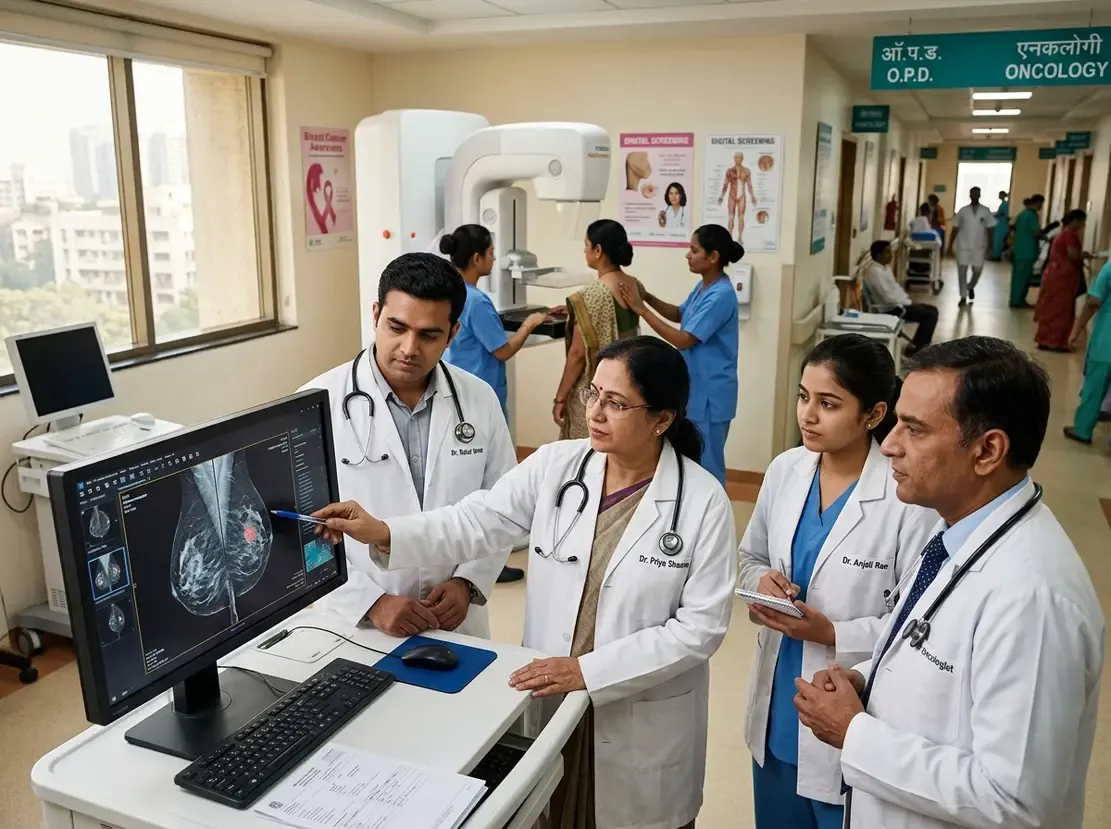
India faces an escalating oncology crisis that requires a decisive policy reset. Each year, nearly 237,000 Indian women receive a breast cancer diagnosis, and approximately 96,000 succumb to the disease. Consequently, the national mortality rate now stands at 12.7 per 100,000 women, surpassing North American figures. This stark difference reflects delayed presentation rather than disparate tumor biology. Therefore, scaling up organized mammogram screening in India represents an urgent public health imperative for clinicians and healthcare administrators.
The Diagnostic Divide and Late-Stage Presentation
Currently, clinicians detect most Indian breast cancer cases only after malignant cells spread to regional lymph nodes. In contrast, healthcare providers in the United States detect 63% of malignancies while tumors remain strictly localized. As a result, the five-year survival rate in India hovers around 66.4%, whereas Western survival exceeds 90%.
Furthermore, breast cancer develops at a substantially younger age among Indian women. The median age at onset is approximately 45 years, which is a decade earlier than Western averages. Because of this epidemiological reality, delayed detection deprives women of curative interventions during their most economically productive years.
Why Clinical Breast Examination Falls Short
India currently relies on clinical breast examination conducted by frontline health workers at primary health centers. However, significant discrepancies exist between administrative screening tallies and real-world population surveys. For instance, the National Family Health Survey revealed that less than 1% of eligible women had ever undergone a breast examination.
Moreover, clinical examination demonstrates clear biological limitations in younger populations. A landmark 20-year trial in Mumbai involving over 150,000 women showed a 30% mortality reduction among women aged 50 and older. Unfortunately, the same trial demonstrated no mortality benefit for women below age 50. Therefore, relying exclusively on manual palpation fails the demographic cohort that needs intervention most urgently.
Modernizing Mammogram Screening in India with Digital Infrastructure
To overcome diagnostic gaps, public health planners must establish a targeted screening framework for women aged 40 to 60. Rather than copying costly foreign programs, India can leverage its existing digital public health architecture. Specifically, authorities can utilize Ayushman Bharat Health Accounts to build an actionable population call-and-recall registry.
In addition, district coordination centers can schedule appointments and arrange local transport for vulnerable patients. Mobile imaging units can reach remote blocks, while accredited private centers provide supplementary capacity under PM-JAY. Consequently, public and private radiology suites can unite under a single standardized screening list.
Overcoming Workforce Constraints with Artificial Intelligence
India currently houses approximately 3,000 mammography machines, and severe shortages of specialized breast radiologists persist. Fortunately, artificial intelligence offers an effective triage mechanism to address this human resource bottleneck. In Sweden’s MASAI trial, AI-assisted triage reduced radiologist reading workloads by 44% while detecting more clinically relevant tumors.
Accordingly, validated AI algorithms can filter normal mammograms swiftly and flag suspicious lesions for subspecialist review. Centralized tele-radiology hubs can then interpret images captured by rural mobile vans within days. However, technical teams must rigorously calibrate and validate these software tools on Indian women with dense breast tissue.
Establishing an Integrated Hub-and-Spoke Care Continuum
Detecting early lesions provides little value without reliable downstream diagnostic and treatment pathways. Therefore, health systems must target World Health Organization benchmarks, including early detection and high treatment completion rates. To achieve this, district hospital hubs must replace open surgical biopsy with image-guided core-needle or vacuum-assisted techniques.
Furthermore, accredited pathology laboratories must ensure accurate biomarker testing for ER, PR, HER2, and Ki-67. Multidisciplinary tumor boards can convene virtually through the National Cancer Grid to direct individualized patient care. Meanwhile, district day-care chemotherapy centers eliminate unnecessary patient travel, preventing catastrophic financial toxicity for rural families seeking clinical oncology expertise.
Frequently Asked Questions
Q1: Why is clinical breast examination alone insufficient for younger Indian women?
Manual clinical examination often fails to detect small, non-palpable lesions in younger women with dense fibroglandular breast tissue. Furthermore, long-term clinical trial data shows that manual examination yields no statistically significant mortality benefit for patients younger than 50.
Q2: How can artificial intelligence support mammogram screening in India?
Artificial intelligence serves as a workload triage filter by rapidly classifying normal scans and highlighting suspicious findings for expert review. Consequently, this computational triaging reduces radiologist workload substantially and accelerates turnaround times for rural tele-radiology workflows.
Q3: What diagnostic techniques should replace open surgical excision?
Clinicians should prioritize image-guided core-needle biopsy or vacuum-assisted core biopsy over surgical excision. Indeed, these minimally invasive procedures provide rapid histological confirmation and preserve tissue architecture for essential biomarker profiling.
References
- The missing mammograms: why India must rethink breast cancer care - ETHealthworld
- Effect of screening by clinical breast examination on breast cancer incidence and mortality after 20 years: prospective, cluster randomised controlled trial in Mumbai - BMJ
- Screening performance and characteristics of breast cancer detected in the Mammography Screening with Artificial Intelligence trial (MASAI) - The Lancet Oncology
- National Academy of Medical Sciences (NAMS) Task Force Report on Breast Cancer in India