
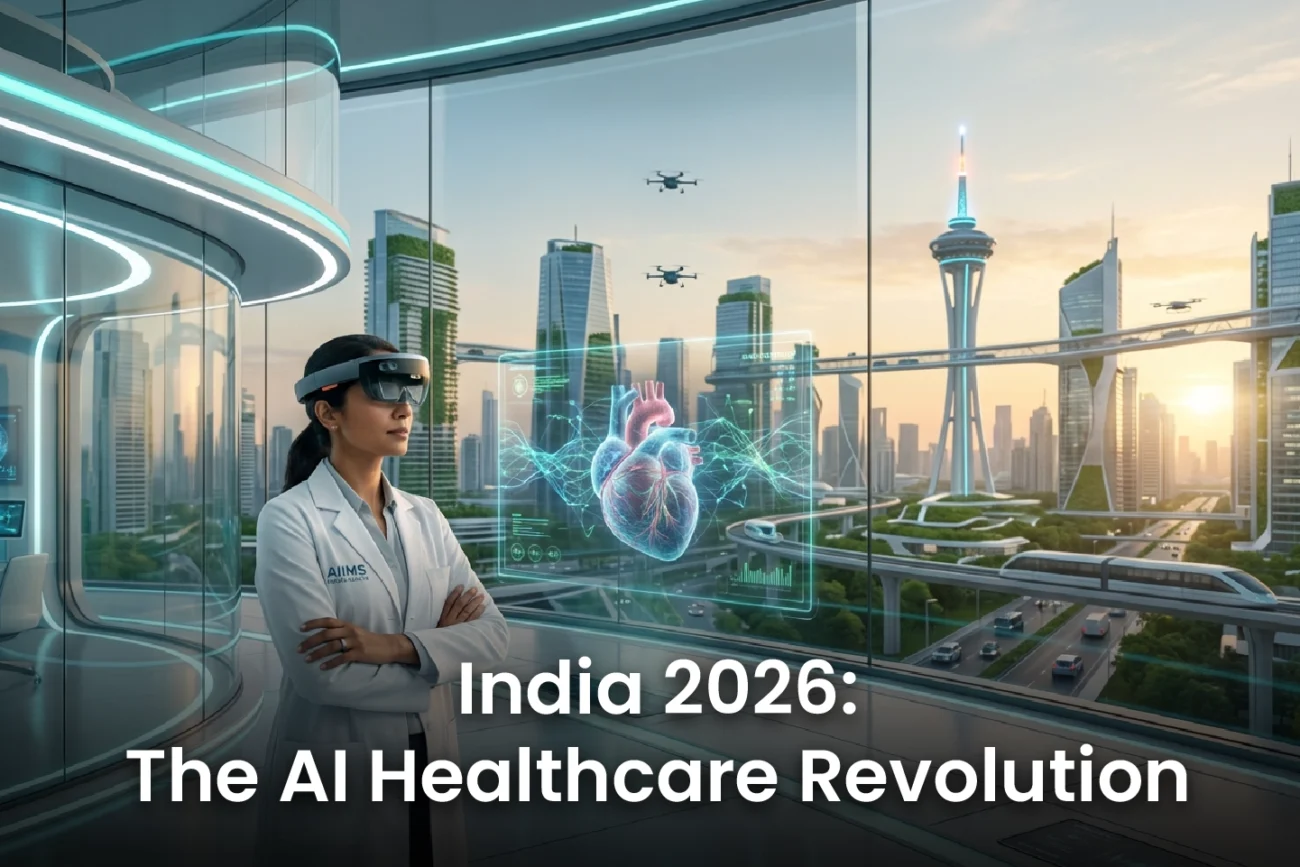
The Indian healthcare sector has moved from a period of incremental progress to decisive Healthcare Transformation. Consequently, 2025 proved an eventful year marked by key taxation reforms, deregulation efforts, and new R&D incentives for the private sector. Furthermore, the government rolled out a $12 billion research fund and project-based assistance under the PRIP scheme for pharma and MedTech innovators. This strategic funding addresses long-standing constraints faced by entrepreneurs. On the other hand, the public sector continued its upward momentum with commitments toward diseases like malaria and TB. These concerted efforts define a foundational phase in which India is laying down institutional and financial frameworks for a more resilient and equitable system.
AI and Digital Integration: From Buzz to Core Capability
Artificial intelligence (AI) is no longer a tool on the margins; instead, it has become a core capability across the entire care continuum. Global technology giants established Global Capability Centers (GCCs) in India, and new startups emerged rapidly, thereby creating a fresh model of accelerated innovation. Therefore, the sector’s increasing investments in automation, data infrastructure, and advanced technologies are being treated as essential foundations, not merely as future bets. This push for digital health is timely. Experts believe AI holds immense potential to revolutionize the Indian healthcare ecosystem by improving clinical outcomes and patient experience. For example, the government is backing AI with over $1 billion in funds, and digital integration is seen as a way to close gaps in specialist access, especially in Tier-II and Tier-III cities. The surge of HealthTech startups is now seen as a new era of innovation.
Private Sector Growth and Market Consolidation
In 2025, private hospital chains remained aggressive in their expansion strategies. Manipal executed the large Rs 6,400-crore Shayadri deal, and Apollo underwent major restructuring. Significantly, Max Healthcare surpassed the Rs 1-trillion valuation mark. Private sector CAPEX constraints did not stop top hospital chains. These companies pressed ahead with multiple greenfield projects while keeping robust balance sheets, low net leverage, and stable margins. Simultaneously, diagnostic chains ventured deeper into Tier-2 and Tier-3 pockets, which is cementing demand shifts and exploring untapped opportunities for their next growth phase. However, this expansion momentum was largely elusive to brownfield projects.
Policy and the Path to MedTech Self-Reliance
The MedTech sector is undergoing a major shift. Manufacturers in India, despite facing geopolitical uncertainty and ’50 per cent tariff wall’ pressures in markets like the US, demonstrated remarkable stability. Policy measures like the rollback of select QCOs on chemicals and greater regulatory alignment have substantially improved the ease of doing business. Consequently, India’s MedTech market is rapidly moving from import dependence to a global hub. The National Medical Devices Policy aims to reduce import dependence, strengthen R&D, and expand testing infrastructure. Industry stakeholders are calling for increased tariffs on imports, specifically raising them to 10–15% from the current 7.5%, and preferring ICMED certification over foreign approvals in public procurement to further support domestic manufacturing. This strategic push for localization will hinge on deeper localization of critical components, greater investment in high-value R&D, and faster clinical validation. The market is projected to reach $50 billion by 2030, which clearly indicates a powerful manufacturing story moving from aspiration to execution.
The 2026 Mandate for Healthcare Transformation
For 2026, the clear challenge and opportunity is converting technological possibility into measurable health impact. Furthermore, while 2025 was the year of intent, 2026 must be the year of implementation, according to NATHEALTH President Ameera Shah. The renewed focus of policymakers is now tackling emerging health challenges such as obesity and antimicrobial resistance (AMR), alongside concerns over patient access and affordability due to multinational monopolies on key drug patents. Healthcare Transformation success in 2026 will not just be measured by financial growth or technological adoption. Crucially, success will be determined by tangible improvements in patient outcomes, accessibility, and affordability. Therefore, strategic policy support, deeper localization, and accelerated R&D will position the sector to set new global benchmarks, paving the way for India to emerge as a true healthcare innovator on the world stage. Physicians looking to specialize in managing metabolic challenges can explore a Postgraduate Diploma in Obesity And Weight Management or focus on diabetes mellitus management.
Frequently Asked Questions
Q1: What major policy initiatives supported the Indian healthcare sector in 2025?
In 2025, the government rolled out a $12 billion research fund and provided project-based assistance under the PRIP scheme to address funding constraints for pharma and MedTech innovators. Additionally, GST rationalization zeroed out duty on critical insurance drugs and brought steep cuts in other sectors. Initiatives for cancer care, including day care centers and duty waivers, were also unveiled.
Q2: How is AI adoption changing the healthcare delivery model in India?
AI is shifting from a marginal tool to a core capability across the care continuum, driving significant investments in automation and data infrastructure. This integration is creating a fresh model of accelerated innovation and is leveraged to bridge gaps in specialist access, especially in Tier-II and Tier-III cities, and improve overall patient outcomes.
Q3: What is the primary focus for the MedTech sector’s growth in 2026?
The primary focus for MedTech in 2026 is moving from intent to implementation by strengthening India’s domestic and global market share. This goal hinges on deeper localization of critical components, greater investment in high-value R&D, and faster clinical validation to drive technology adoption. Industry stakeholders also advocate for increased import tariffs to support domestic manufacturing.
References
- AI Buzz to Real-World Impact: India’s Healthcare 2025 Sets the Stage for aTransformative 2026 – ETHealthworld
- indiatimes.com
- medicalbuyer.co.in
- isb.edu
- forbes.com
- indiaai.gov.in
- pharmabiz.com
- reportlinker.com
- youtube.com
- achalasolutions.com
- mdpi.com
- ey.com
- operonstrategist.com
- investindia.gov.in
Disclaimer: This article was automatically generated from publicly available sources and is provided for informational and educational purposes only. OC Academy does not exercise editorial control or claim authorship over this content. It is not a substitute for professional medical advice, diagnosis, or treatment. Always consult a qualified healthcare provider and refer to current local and national clinical guidelines.